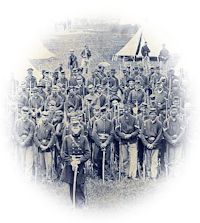
Following the American Civil War Sesquicentennial with day by day writings of the time, currently 1863.

November 2013

by John Beauchamp Jones

            NOVEMBER 14TH.—Some skirmishing between Chattanooga and Knoxville. From prisoners we learn that the enemy at both those places are on half rations, and that Grant intends to attack Bragg soon at LookoutMountain. Either Grant or Bragg must retire, as the present relative positions cannot long be held.

            Mr. A. Moseley, formerly editor of the Whig, writes, in response to a letter from the Secretary of War, that he deems our affairs in a rather critical condition. He is perfectly willing to resume his labor, but can see no good to be effected by him. He thinks, however, that the best solution for the financial question would be to cancel the indebtedness of the government to all except foreigners, and call it ($800,000,000) a contribution to the wars—and the sacrifices would be pretty equally distributed. He suggests the formation of an army, quietly, this winter, to invade Pennsylvania next spring, leaving Lee still with his army on this side of the Potomac. Nevertheless, he advises that no time should be lost in securing foreign aid, while we are still able to offer some equivalents, and before the enemy gets us more in his power. Rather submit to terms with France and England, or with either, than submission to the United States. Such are the opinions of a sagacious and experienced editor.

            Another letter from Brig.-Gen. Meredith, Fortress Monroe, was received to-day, with a report of an agent on the condition of the prisoners at Fort Delaware. By this report it appears our men get meat three times a day—coffee, tea, molasses, chicken soup, fried mush, etc. But it is not stated how much they get. The agent says they confess themselves satisfied. Clothing, it would appear, is also issued them, and they have comfortable sleeping beds, etc. He says several of our surgeons propose taking the oath of allegiance, first resigning, provided they are permitted to visit their families. Gen. M. asks for a similar report of the rations, etc. served the Federal prisoners here, with an avowed purpose of retaliation, provided the accounts of their condition be true. I know not what response will be made; but our surgeon-general recommends an inspection and report. They are getting sweet potatoes now, and generally they get bread and beef daily, when our Commissary-General Northrop has them. But sometimes they have little or no meat for a day or so at a time—and occasionally they have bread only once a day. It is difficult to feed them, and I hope they will be exchanged soon. But Northrop says our own soldiers must soon learn to do without meat; and but few of us have little prospect of getting enough to eat this winter. My family had a fine dinner to-day—the only one for months. As for clothes, we are as shabby as Italian lazzaronis—with no prospect whatever of replenished wardrobe, unless some European power will come and take us, as the French have done Mexico.
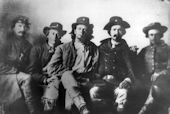
November 14.—The farmers of Warren, Franklin, and Johnson counties, N. C, having refused to pay the rebel tax in kind by delivering the government’s tenth to the quartermaster-general, James A. Seddon, the Secretary of War, issued the following letter of instructions to that officer:

“It is true the law requires farmers to deliver their tenth at depots not more than eight miles from the place of production; but your published order requesting them for the purpose of supplying the immediate wants of the army, to deliver at the depots named, although at a greater distance than eight miles, and offering to pay for the transportation in excess of that distance, is so reasonable that no good citizen would refuse to comply with it.

“You will, therefore, promulgate an addition to your former order, requiring producers to deliver their quotas at the depots nearest to them by a specified day, and notifying them that in case of their refusal or neglect to comply therewith, the Government will provide the necessary transportation at the expense of the delinquents, and collect said expense by an immediate levy on their productions, calculating their value at the rates allowed in cases of impressment.

“If it becomes necessary to furnish transportation, the necessary teams, teamsters, etc., must be impressed as in ordinary cases.

“All persons detected in secreting articles subject to the tax, or in deceiving as to the quantity produced by them, should be made to suffer the confiscation of all such property found belonging to them.

“The people in the counties named, and in fact nearly all the western counties of that State, have ever evinced a disposition to cavil at, and even resist the measures of the Government, and it is quite time that they, and all others similarly disposed, should be dealt by with becoming rigor. Now that our energies are taxed to the utmost to subsist our armies, it will not do to be defrauded of this much-needed tax. If necessary, force must be employed for its collection. Let striking examples be made of a few of the rogues, and I think the rest will respond promptly.”

—Major-General Schofield, from the headquarters of the Department of the Missouri, at St. Louis, issued an important order regarding the enlisting of colored troops.

Friday, 13th—I came over to Mr. Hatcher’s.

Lenoir, Tenn., November 13th, 1863.

As the men are confined to camp, they busy themselves by cleaning up the accumulated rubbish. Our camp begins to put on airs. The men must get some clothing before they can do so. I see no prospect of it yet. The day has been most delightful—warm, bright and mellow. The weather here, as with us at this season of the year, is subject to sudden changes. Today it may be warm as summer; tomorrow the wind may change to the north and be cold as winter. Wood is abundant and of good quality—mostly white oak and hickory. But should we stay here all winter, there will not be a tree left within five miles of here. We have already cleared about fifty acres.

Spite of appearances, I cannot think we will remain here until spring. I cannot see—perhaps I have no right to try to see—where our supplies are to come from, or, rather, how they are to come. We have only six weeks quarter rations on hand, and the roads over the mountains are nearly impassable. There is some wheat and corn in the valley, which is being gathered in for the use of the army, but this cannot last long. Such an army, like the locusts of Egypt, will soon “devour every green thing.” Even now hundreds of citizens are leaving for the North to escape the impending famine. In view of these facts, which are fully understood by every man in the regiment, one would expect them to be down-hearted and discouraged. Such is not the fact. The few men who are left are resolute, determined men, ready to suffer privation, to endure hardship, anything to advance the cause for which they are contending. An order is given to prepare for inspection. The Assistant Secretary of War is here to inspect the Ninth Corps. This may be an exception, but, as a rule, inspection means move.

I happened to get hold of a copy of the Detroit Free Press dated October 25th. From it I learn conscription has been postponed in Michigan until the 5th of November. By that time they hope to fill the quota by volunteers. I would like to see the North exhibit the energy and ability displayed by the South, but one-half seems to be asleep, the other half —mad.

Charles Francis Adams to his son, Charles

London, November 13, 1863

In the meanwhile the interest centres around Chattanooga. Mr. Jeff. Davis tells us the possession of that point is a vital question. So last year, he announced that the possession of Vicksburg was equally vital. Yet he now tells us that the state of his affairs is better now than it was a year ago, in spite of the loss of Vicksburg in the interval. Should he fail in recovering Chattanooga, he may find that his condition has after all been equally improved by that loss. There is nothing like keeping up a good heart. All hopes of the division of the Free States are gone. All hope of recognition from Europe is gone. All hope of any restoration of the currency is gone. All hope of ruling through the agency of King Cotton is gone. Yet Mr. Davis persists in believing his affairs improved. Well, if that be the kind of encouragement he wants, I only wish that he may continue to enjoy it in large measure. . . .

The only movement that has roused attention has been the speech of the Emperor of the French, proposing a fresh Congress to be held at Paris, for the purpose of devising some new arrangement of the balance of power that may prevent a war in the spring. In reality, he has got himself mounted on so high a horse that he finds he cannot get down, and he fears he may be thrown. If his friends will only build him a ladder he will try to change his seat to a smaller and more manageable pony. This seems to be the substance of the case. We now wait to see what answer he will get. It is pretty plain that the British Lion will not put out a paw to help, if it can be avoided. Neither will the Russian bear move far from his lair, unless he can see something to be gained by it. The German race seem to think it all means mischief, particularly to themselves. Thus stands the matter at this moment. Yet there may be a Congress in Paris after all. . . .

13th. Drew flour for the brigade. Set the butchers to killing hogs, 20. Some talk of moving. Wrote a short letter to the “blue eyed bonnie” I once called mine. No particular news. Wrote to Delos. Long time since I wrote to him. Weather pleasant. Got “Spike” shod. Oh my heart is sad and weary. Issued clothing.

Friday, 13th—My same old duty again—picket. There was no fatigue detail today, as the fortifications are almost completed. Two or three forts, however, are yet to be built just outside of the rifle pits.

13th.—My appointment to a clerkship in the Commissary Department has been received, with a salary of $125 per month. The rooms are not ready for us to begin our duties, and Colonel R. has just called to tell me one of the requirements. As our duties are those of accountants, we are to go through a formal examination in arithmetic. If we do not, as the University boys say, “pass,” we are considered incompetent, and of course are dropped from the list of appointees. This requirement may be right, but it certainly seems to me both provoking and absurd that I must be examined in arithmetic by a commissary major young enough to be my son. If I could afford it, I would give up the appointment, but, as it is, must submit with the best grace possible, particularly as other ladies of my age have to submit to it.

November 13 — Remained in camp. This camp is nine miles southwest of Fredericksburg and right in a clearing full of dry pine brush piles and rabbits. In attempting to smoke out a rabbit some of our boys set the clearing on fire, and the whole company had to turn out and fight the roaring flames in order to save our pieces and harness from the ravages of the devouring conflagration. After the fire was subdued we took an invoice of our stock to ascertain the damages sustained, and found that we lost nothing but a few bridles and one or two horse collars.

Thursday, November 13th.—Having recovered from my sickness, left home 8 A. M.; at Chickamauga Station, 11 A. M. Left my blanket and went one hundred yards and returned, but it was gone, and I never saw it again. Found regiment at foot of Lookout Mountain. After dark, marched up on the mountain at Summertown.