Friday, 9th—It is reported in camp that we are soon to go to Memphis for duty. Several cases of smallpox have broken out in the camp of the Sixteenth Iowa Regiment. All who had not been vaccinated before had to take their medicine. The country along the Charleston & Memphis Railroad from Memphis to Iuka, a distance of about one hundred miles, and for some miles on either side of the line where our armies are in camp and on the march, has been laid waste and is almost desolate. The men are desperate enough for anything. Vacant houses on plantations or in towns and villages have been burned. Many of these were substantial buildings with stone chimneys, which generally remained standing after the burnings. These the boys hilariously spoke of as headstones and on passing them would call out: “Here stands another Tennessee headstone,” or a “Mississippi headstone,” as the case might be.
January 2013
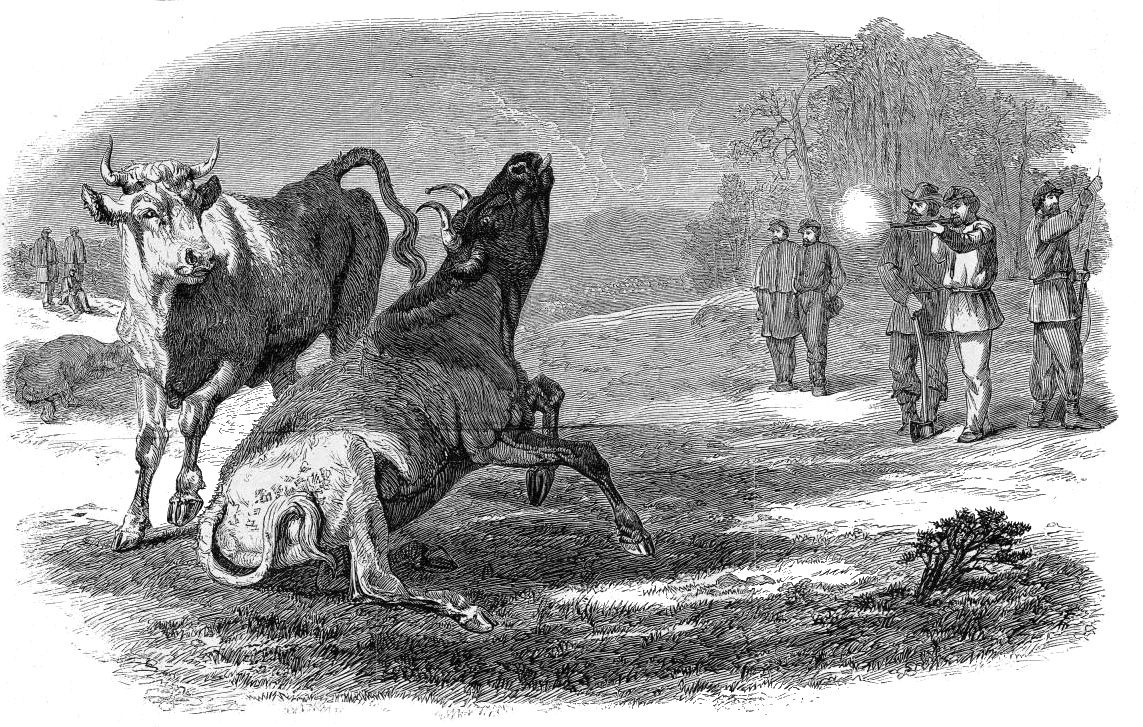
Union Soldiers Shooting Cattle for the Supply of the Army. – From a sketch by Edwin Forbes, published in February 7, 1863 issue of Frank Leslie’s Illustrated Newspaper.

by John Beauchamp Jones
JANUARY 9TH.—The Northern papers say the Federals have taken Vicksburg; but we are incredulous. Yet we have no reliable intelligence from thence; and it may be so. It would be a terrible blow, involving, for a time, perhaps, the loss of the Mississippi River.
But we have cheering news from Galveston, Texas. Several of our improvised gun-boats attacked the enemy’s war vessels in the harbor, and after a sanguinary contest, hand to hand, our men captured the Harriet Lane, a fine United States ship of war, iron clad. She was boarded and taken. Another of the enemy’s ships, it is said, was blown up by its officers, rather than surrender, and many perished. If this be Magruder’s work, it will make him famous.
Our public offices are crowded with applicants for clerkships, mostly wounded men, or otherwise unfit for field duty.
How can we live here? Boarding is $60 per month, and I have six to support! They ask $1800 rent for a dwelling—and I have no furniture to put in one. Gen. Rains and I looked at one to-day, thinking to take it jointly. But neither of us is able to furnish it. Perhaps we shall take it, nevertheless.
January 9.—In consequence of the destruction of a locomotive and construction train, upon the Nashville and Chattanooga Railroad, this day, by Richard McCann and Thomas Kilkird, leading a gang of outlaws, Col. R. S. Moore, of the Eighty-fifth Illinois volunteers, was ordered to proceed with his regiment to the houses of the above named persons, and to destroy their houses, barns, farms, and all property susceptible of destruction upon their respective grounds, by fire, or any other means at his command—General R. B. Mitchel’s Special Order.
—Colonel Ludlow, of General Dix’s staff, returned from City Point, Va., to Fortress Monroe, having accomplished an exchange of prisoners, by which twenty thousand men were restored to active service in the National army.—The army of the Cumberland, under the command of Major-General Rosecrans, was divided into three army corps, to be known as the Fourteenth, commanded by Major-General Thomas, Twentieth, commanded by Major-General A. McD. McCook, and the Twenty-first, under the command of Major-General T. L. Crittenden.—General Orders, No. 9.
—The lower branch of the Legislature of Indiana, adopted a series of resolutions, condemning the arrests made by order of the National War Department as “acts of tyranny and flagrant violations of the rights of the people.”
Buntyn Station, Friday, Jan. 9. Rather damp and cold. Infantry still felling trees and fortifying. Paymaster on the line paying off the troops, giving them two months’ wages. Scouts sent out several times a day. Weather damp. Health impaired somewhat. Troubled with diarrhea. No news from Vicksburg.
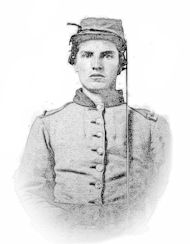
Thursday, 8th.—Passed Jonesboro 8 A. M.
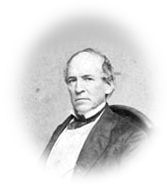
Washington Thursday January 8th 1863
This is the anaversary of the Battle of New Orleans. It brings to mind the exploits of Andrew Jackson. O that his old mantle and white hat were still in the “White House.” The present times require his energy, his fire and resolution. The Country has been calling for “Jacksons” to Lead our armies but as yet none has appeared. It is said that the crisis brings the Man, but the Man has not appeared as yet. Perhaps the crisis has not yet arrived, perhaps we have not yet suffered enough, have not sacrificed enough. We are not yet humbled enough, and our cause has not yet become desperate enough. Well, we must wait and suffer still. In Gods own time the black clouds of War will clear away and we shall behold again the sun of peace and National prosperity. Our news from Vicksburgh was premature. The City is not yet ours as was supposed. The Rebels are there in great strength but the City must fall, but only after much hard fighting. Went to the Pay office again today and succeeded in geting the “greenbacks” for Lieut Belden, at least fifty officers were waiting in the office. We pushed bye and got through in half an hour. There is nothing like pushing ahead in these “red tape” offices. Called at Mr Hartleys this evening. “Mat[ty]” has a bad cold and wants to see Julia. She is attending Madam [Burrs or Barrs?] School where they speak nothing but French. Julia would like that. It has been a fine winters day, bright but cold in the morning, indications of snow in the afternoon, a few flakes seen.
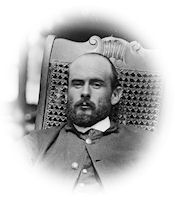
Camp of 1st Mass. Cav’y
Potomac Run, Va., January 8, 1863
It was clear that we were not going to the bridge, as Chamberlain of our regiment had charge of that party. I had the rear of the column and a ripping head-ache, otherwise I should have enjoyed the thing immensely, for it was a clear, cold, moonlight night and we went floundering through the marshes at a tremendous gait. All I could see was dissolving views of the rear of the column as we pelted through woods and across broad white marshes, intersected by creeks which we had to ford. Presently Ben [Crowninshield] came down the column and informed me that we were going up the railroad to destroy some smaller bridges and, if it took us long, we were to let the column go and find our own way home. Of course we lost the way and after riding up the road two miles and finding no bridge, we rode down two miles and a half, cutting down the telegraph poles as we went along, and then there was a halt and I heard the sound of the axes. “Ah,” thought I, “here is the bridge,” and my head-ache felt better.
So I rode up and looked at a miserable little culvert, about three yards long, on which some twenty destroyers were at work. This was, then, the greatest humbug of all. We had come with artillery and cavalry and infantry, through rain and snow and ice, without shelter or forage, all the way up here to cut up a miserable little culvert which ten men could rebuild in five hours. It would have been very amusing had I felt well. There we were a hundred of us, some eighty in line and ready to fire into any unsuspecting train which might come along, and the other twenty, without direction, or system or tools, tugging away at a remarkably well-built railroad which resisted their utmost efforts. Ye Gods! how the mismanagement did stick out!! Our tools were six axes and the ground was hard frozen. Every one directed and every one worked on his own hook. My second Lieutenant, a son of Judge Parsons, was ordered to do the work and he bellowed and swore, and the men laughed and minded him or not as they chose. White, quite nervous and anxious to get through, complained that too many orders were given and did nothing to remedy it. Ben Crowninshield, very anxious to get the job done while yet there was time, seeing that the men had worked an hour without getting up a single rail, encouraged them by dancing round in high excitement, exhorting them somewhat generally to “do something to turn the whole thing over at once, somehow,” and I sat on my horse in amused despair.
At length with immense effort we got up one rail and threw it into the creek, and White at once declared the bridge used up and we started back along the railroad. It was eleven o’clock now and the last half hour we had heard a spattering fire of carbines and musquetry towards the river, indicating that Chamberlain was at work, but no artillery, which seemed to indicate that it was n’t much of a job after all. As for us we went rapidly along the track and the first thing we knew we came to a bridge, as was a bridge. It was clear at once we had been at work on the wrong bridge hitherto, so we went to work again. It was the same old story, only a little better, for this time we made cleaner work, pulling up the track, cutting through the uprights and main beams and finally setting the middle pier on fire; having done which we mounted and went off better pleased.
Through the whole thing I must confess I felt like a fool. It was a small job and badly done; slight resistance would have turned us back and I have n’t as yet gotten over an old prejudice against going round destroying property which no one tries to protect. Anyhow it was done and the fire of the burning bridge threw a bright light across the marsh as we rode away. We rejoined the main body and waited for Chamberlain, who had been at work on the main bridge and had, after some slight resistance, resulting in nothing, destroyed about one hundred and twenty feet of it. The whole party was in by three o’clock, and we at once started back and, as I rode along in the clear, cold moonlight, I very soon made up my mind as to the whole affair.
I don’t know, but I imagine a newspaper success — “dashing raid” and all that — will be manufactured out of this. If it is I can only say it is a clap-trap and a humbug and was intended as such. It is, I fear, pure Joe Hookerism and wire pulling. The bridge was of no real value to the rebels or to us and was not protected. Even if it had been, Ned Flint, who is an engineer, said he would contract to repair with forty men all the damage done in four days. Anyhow, value or no value, two hundred cavalry could have done it twice as surely and effectually and in just half the time, and so Chamberlain had previously reported. But no! that would n’t answer for political effect, and so the sledge is brought out to crush the fly, and infantry, artillery and cavalry are paraded out in the depth of winter to burn a bridge which no one used or means to use, and I expect to see an immense pow-wow over it. If there is, rest assured it’s all a humbug. The thing amounted to nothing, was very badly done after no end of blunders and mismanagement, and was and is intended solely for political effect and has about as much bearing on the ends of the war as would the burning of Neponset Bridge or our barn at Quincy….
At last, at half past one, we marched into camp and were dismissed. This was Saturday afternoon. I had been on continuous duty for thirty-four hours and in the saddle twenty-eight; my horse had not eaten for thirty hours. I had last washed my face and hands on Wednesday morning, and in this week, the first in January and by far the most severe of the winter, I had passed two nights in my tent and five in bivouac. I got something to eat and washed my face and hands and then went out to see that the horses were cared for, but that night my blankets felt like a bed of down and I slept like an infant.
I have been specific about this trip as I regard it as finishing my education. I had tried most kinds before, dry and wet, hot and cold. We have steadily been at it for months and I have thought that terrible discomfort was yet to come. This combined cold and wet and hunger and sleeplessness and fatigue and all that men regard as hard to bear. We had slept in melting snow and rain, had passed days in the saddle with soaking feet and freezing clothes, had waited hours in a pelting rain, and yet I had enjoyed it all, and not for an instant had wished myself away. I do not now believe in outdoor hardships. None of us are sick, we have no colds and no diseases, we are all far better than we were at home, and yet there is but one greater hardship than we have felt. A long continued, disastrous winter retreat would be worse and in the line of exposure this alone I now fear….
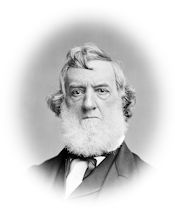
January 8, Thursday. Had a singular letter to-day from Chase, requesting that vessels with custom-house clearance might be allowed to pass the blockade. The arrangement is in accordance with an understanding which he has with the Secretary of War. Replied that I was prepared to give no such instructions until the blockade was raised or modified.
The Oaks, Sunday, February 8, 1863.
I have not yet spent any of the money. I think I may want to buy, or lease land with it. If the sales had been conducted as at first proposed, there would have been splendid speculations here, but the speculators found that out, and the best men here, General Saxton and others, sent word to Washington about it, and so the sale has been postponed, or, as another rumor says, Congress has decided that the land shall be bid in by Government unless it is bought for three-fourths of its estimated value. That will cut out all speculators. The house on this place cost about twelve thousand dollars, and there are five hundred acres belonging to The Oaks, of good cotton land mostly (cotton selling at $1.65 per pound), and yet it was thought the place would sell for less than one hundred dollars. All that fun is spoiled now, however, for the estimated value of the land of The Oaks in the tax-tables is $2000, and the bidding-in price $1500 — too much to be risked in these times. Whether the superintendents will be retained under the new leasing plan or not is a great question. I think it quite likely not. W. is disgusted just now with the people, because they have not worked and will not work enough; but what inducement they have to work, no one can see. They have not been paid for their work since September, and they begin to believe that Government never means to pay any more. It will take some management to get them to do the fencing W. wants done, willingly at least. They do not see the use of fences. Wherever the soldiers go they take the rails for firewood, and this is rather discouraging to the workmen who cut them upon a “promise to pay” merely.
There has been a rumor that no more letters were to go North till after the great doings at Charleston, but that order has not come yet. If a long time goes by without your hearing, you may suppose that the mails are stopped.


