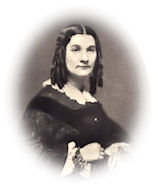
Mrs. Lyon’s Diary.
March 20, 1862.—There is to be a grand concert tonight on the Ewing, given by Professor Wootock. We are all invited and shall go.
Mrs. Lyon’s Diary.
March 20, 1862.—There is to be a grand concert tonight on the Ewing, given by Professor Wootock. We are all invited and shall go.
Friday, 20th—Our Squadron sent on post this morning. I joined Tom Taylor’s mess; Jessy also. I and Tom went out to Mr. Elmore’s and got some bacon and milk. I stood to-night.
March 20. This morning finds the storm unabated. The boat starts at daylight, passing Roanoke island, and enters the Albemarle, arriving at Plymouth late in the afternoon, where we make our quarters in a large warehouse on the wharf.
March 20th.—Severe snow-storm. This will retard the attack upon Fredericksburg, if the enemy designed it. We spent the morning in the parlour. N. P. read aloud the old-fashioned but amusing novel, “Pride and Prejudice,” in very spirited style. The event of the day was the arrival from Alexandria of a bundle, filled with useful articles for a lady, who, not wanting them all herself, allowed us to help ourselves at the price which they cost her in Alexandria. It was amusing to see with what avidity the girls seized on a calico dress at only seventy-five cents per yard (Confederate money); every thing was in such demand, that I only got a tooth-brush, at one dollar; they are two dollars and fifty cents in Richmond.
March 20th.—The slow shelling of Vicksburg goes on all the time, and we have grown indifferent. It does not at present interrupt or interfere with daily avocations, but I suspect they are only getting the range of different points; and when they have them all complete, showers of shot will rain on us all at once. Non-combatants have been ordered to leave or prepare accordingly. Those who are to stay are having caves built. Cave-digging has become a regular business; prices range from twenty to fifty dollars, according to size of cave. Two diggers worked at ours a week and charged thirty dollars. It is well made in the hill that slopes just in the rear of the house, and well propped with thick posts, as they all are. It has a shelf, also, for holding a light or water. When we went in this evening and sat down, the earthy, suffocating feeling, as of a living tomb, was dreadful to me. I fear I shall risk death outside rather then melt in that dark furnace. The hills are so honeycombed with caves that the streets look like avenues in a cemetery. The hill called the Sky-parlor has become quite a fashionable resort for the few upper-circle families left here. Some officers are quartered there, and there is a band and a field-glass. Last evening we also climbed the hill to watch the shelling, but found the view not so good as on a quiet hill nearer home. Soon a lady began to talk to one of the officers: “It is such folly for them to waste their ammunition like that. How can they ever take a town that has such advantages for defense and protection as this? We’ll just burrow into these hills and let them batter away as hard as they please.”
“You are right, madam; and besides, when our women are so willing to brave death and endure discomfort, how can we ever be conquered?”
Soon she looked over with significant glances to where we stood, and began to talk at H.
“The only drawback,” she said, “are the contemptible men who are staying at home in comfort when they ought to be in the army if they had a spark of honor.”
I cannot repeat all, but it was the usual tirade. It is strange I have met no one yet who seems to comprehend an honest difference of opinion, and stranger yet that the ordinary rules of good breeding are now so entirely ignored. As the spring comes on one has the craving for fresh, green food that a monotonous diet produces. There was a bed of radishes and onions in the garden, that were a real blessing. An onion salad, dressed only with salt, vinegar, and pepper, seemed a dish fit for a king, but last night the soldiers quartered near made a raid on the garden and took them all.

______
Note: To protect Mrs. Miller’s job as a teacher in New Orleans, the diary was published anonymously, edited by G. W. Cable, names were changed and initials were often used instead of full names — and even the initials differed from the real person’s initials.March 20th, 1863.—Mattie and I have the whooping cough very bad. She cannot retain her food, though I do not suffer in that way, it is extremely painful. When the spells of coughing take me the blood oozes from my eyes, nose and ears. Three doctors have been called in and they say they never saw such a case. It is well I am not going to school this winter for I do not believe I could study.
Sam Donelson went back to the army of the West today. Mother is with Aunt Nancy.
by John Beauchamp Jones
MARCH 20TH.—The snow is eight inches deep this morning, and it is still falling fast.
Not a beggar is yet to be seen in this city of 100,000 inhabitants!
Hood’s division, mostly Texans, whose march to the Rappahannock was countermanded when it was ascertained that the enemy had been beaten back across the river, were all the morning defiling through Main Street, in high spirits, and merrily snow-balling each other. And these men slept last night out in the snow without tents! Can such soldiers be vanquished?
Yesterday Floyd’s division of State troops were turned over to the Confederacy—only about 200!
We have no further particulars of the fight on the Rappahannock; we know, however, that the enemy were beaten, and that this snow-storm must prevent further operations for many days. Several Eastern Shore families, I learn, are about to return to their homes. This is no place for women and children, who have homes elsewhere. We are all on quarter-rations of meat, and but few can afford to buy clothing at the present prices.
March 20.—A battle was this day fought at Vaught’s Hill, near Milton, Tenn., between a body of Union troops under the command of Colonel A. S. Hall, of the One Hundred and Fifth Ohio, and the rebel forces under Generals Wheeler and Morgan, terminating, after a well-contested struggle, in the defeat and retreat of the rebels, with a loss of nearly four hundred of their number killed and wounded.—(Doc. 141.)
[Diary] March 19.
Our people are in such trouble about the draft. They trouble for their friends — Jenny for her old Dagus; young Moll for Hacklas. I wrote saying that Celia was a cripple and needed her husband Tom’s care. To-day nearly all the young men from our place went to Beaufort to offer to enlist. To-night Lucy came sobbing and crying past the house, Syke, her brother, crying with her, because her husband Tommy has gone. Rina says the men make too much fuss about going to enlist, and their wives too great cry after them, for folks who have been used to being sold away from all friends. “Dey used to catch we up like fowls and sell we when dey wanted a little money for spend.” Now that the masters have gone she says the people gather close to their parents — using parents as the French do “parents,” meaning relatives.
March 18-19, [1863]. — Went into Camp White (after Colonel White of the Twelfth), opposite the mouth of the Elk.
 Follow on facebook
 RSS
RSS email
email