March 16—A picket came in this morning and reported the enemy advancing. We were put in line of battle to receive them, and after marching one mile up the road to get to our brigade we were put at the extreme left of our line, and made breastworks out of rotten logs. Stayed here one hour, when another picket came and reported them ten miles away. So we resumed our march for camp and got there at 7 o’clock—twenty-one miles to-day. Tom Notter, Aaron Katz and myself pressed into service to-day a donkey and a cart with a negro, who took us to Kinston. Each of us drove at times, and I was fortunate enough to stall in a mudhole. We had to get out and lift the cart and donkey to dry ground again. Thus ends the march and fight at Deep Gully.
March 2013
March 16.—Our hospital has been divided; one division is called the Gilmer Hospital, in honor of Mrs. Gilmer, who is matron. There are now four hospitals in this place: the Academy, of which Dr. Hawthorne is chief surgeon, and Mrs. Newsom matron; the Foard, of which Mrs. Crocker of Mobile is matron, and Dr. Thornton surgeon; the Gilmer, of which Dr. Michelle is surgeon and Mrs. G. matron; and our own, the Newsom.
Dr. Hunter has divided the money he received from Mobile between those hospitals, giving each one hundred dollars, keeping two for the Newsom, which is twice the size of the others; we have accommodations for five hundred patients.
16th. Theodore was over awhile after the morning work. Good visit, letter from home. After class in the evening played two games of chess with Chester. One draw game and beat him once.
Near Helena, Monday, March 16. A fine spring day. Still troubled with diarrhea. All monotonous in camp. Spent most of the day patching. Vaccinated by George Fisher, hospital steward.
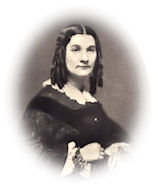
Mrs. Lyon’s Diary.
March 16, 1863.—The boys found a dead rebel in our quarters, buried about six inches below the surface.
Monday; 16th—Last night had a meeting of the Lodge; passed two and raised one; made the acquaintance of Dr. Moore and lady, also Miss Stern, a niece of the Doctor’s.
Monday, 16th—Another meeting; one passed and two raised.
March 16.—A boat laden with about two thousand dollars’ worth of contraband goods was captured while attempting to run the blockade on Elizabeth River, near Norfolk, Va.
—This evening a numerous and enthusiastic meeting was held in the City Hall, at Burlington, N. J., for the purpose of forming a Union League. Addresses were delivered by James W. Scovel and James C. Botts.
Headquarters Army of the Potomac, March 15, 1863.
Dear Mother, — We are having at this moment, 9 P.M., a delightful hail-storm, but as I am in a nice comfortable tent, I do not mind it much more than you do in the parlor at home.
General Benham went to Washington yesterday, and left me here to see that things went straight, although I really don’t see much to look after or attend to. James went to Washington this morning to get me a horse and a few mess stores.
The general told me to find him an aide, and so I went over to the 20th Massachusetts yesterday to try and get Ropes. He is a fine fellow, and would have been a great acquisition, but I am sorry to say that he did not like to leave his regiment. He is a very conscientious person, and felt that as there were so few officers left in his regiment, and so many of them permanently absent from loss of limbs, etc., he did not think it right to leave. I am very sorry indeed to lose him. I hardly know where to find any one who would suit me and the general, or rather the general and me. I shall keep my eyes open, however. I dined with the fellows at the 20th, and had quite a nice time there. I met Major Macy, Captains Abbott and Holmes, and Lieutenant Ropes, all of them well.
To-day I went to General Sedgwick’s headquarters and dined with Captain Whittier, a classmate of mine. I saw General S. there, and he told me that he considered General Benham the smartest man in our army, which, coming from General Sedgwick, is a great deal of praise. . . .


