Following the American Civil War Sesquicentennial with day by day writings of the time, currently 1863.

March 2013

MARCH 10TH.—No war news of importance.

Just at this time there is a large number of persons passing to and from the North. They are ostensibly blockade-runners, and they do succeed in bringing from the enemy’s country a large amount of goods, on which an enormous profit is realized. The Assistant Secretary of War, his son-in-law, Lt.-Col. Lay, the controlling man in the Bureau of Conscription, and, indeed, many heads of bureaus, have received commodities from Maryland, from friends running the blockade. Gen. Winder himself, and his Provost Marshal Griswold (how much that looks like a Yankee name!), and their police detectives, have reaped benefit from the same source. But this intercourse with the enemy is fraught with other matters. Communications are made by the disloyal to the enemy, and our condition—bad enough, heaven knows!—is made known, and hence the renewed efforts to subjugate us. This illicit intercourse, inaugurated under the auspices of Mr. Benjamin, and continued by subsequent Ministers of War, may be our ruin, if we are destined to destruction. Already it has unquestionably cost us thousands of lives and millions of dollars. I feel it a duty to make this record.

To-day we have a violent snow-storm—a providential armistice.

It has been ascertained that Hooker’s army is still near the Rappahannock, only some 20,000 or 30,000 having been sent to the Peninsula and to Suffolk. No doubt he will advance as soon as the roads become practicable. If Hooker has 150,000 men, and advances soon, Gen. Lee cannot oppose his march; and in all probability we shall again hear the din of war, from this city, in April and May. The fortifications are strong, however, and 25,000 men may defend the city against 100,000—provided we have subsistence. The great fear is famine. But hungry men will fight desperately. Let the besiegers beware of them!

We hope to have nearly 400,000 men in the field in May, and I doubt whether the enemy will have over 500,000 veterans at the end of that month. Their new men will not be in fighting condition before July. We may cross the Potomac again.

March 10.—Jacksonville, Florida, was captured by the First South-Carolina colored regiment, under the command of Colonel T. W. Higginson, and a portion of the Second South-Carolina colored regiment, under Colonel Montgomery. The people were in great fear of an indiscriminate massacre; but the negroes behaved with propriety, and no one was harmed.—(Doc. 132.)

—The sloop Peter, of Savannah, Ga., while attempting to run the blockade at Indian River Inlet, Fla., was this day captured by the gunboat Gem of the Sea.—General Granger came up with the rebels at Rutherford’s Creek, Tenn., and captured several of their number.

—President Lincoln issued a proclamation, ordering all soldiers, whether enlisted or drafted, who were absent from their regiments without leave, to return to their respective regiments before the first day of April, on pain of being arrested as deserters, and punished as the law provided.—(Doc. 133.)

—A detachment of National troops, consisting of the Sixth and Seventh regiments of Illinois cavalry, under the command of Colonel Grierson, attacked a body of rebel guerrillas, numbering four hundred men, under Colonel Richardson, encamped near Covington, Tenn., killing twenty-five, capturing a large number, and utterly routing and dispersing the rest. The camp and its contents were destroyed.

[Diary] March 9.

“The Oaks” reserved and to be our home still. Mr. Philbrick has not bought Coffin Point. Will bought nothing. The land sold for about a dollar and a quarter an acre; sometimes, once only, I believe, as high as three dollars — sometimes lower.

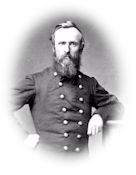
Camp Reynolds, March 9, 1863.

Dear Uncle: — Yours of last Sunday came to hand yesterday. Wife and boys still here — very happy. They fish and row skiff and ride horseback. They can all row. Webb and Birch rowed a large load of soldiers across the river and back — a large roaring river, almost like the Ohio in a fair fresh. They will go home in a week or two probably. We shall remain here two or three weeks and then probably go to Charleston.

The new conscript act strikes me as the best thing yet, if it is only used. I would only call enough men to recruit up weakened regiments, and compel the return of the shirks and deserters. Make our commanders give more time to drill and discipline; make the armies regulars — effectives; stand on the defensive except when we can attack in superior numbers; send no more regiments or gunboats to be gobbled up one at a time. Mass our forces and we shall surely conquer.

Sincerely,

R. B. Hayes.

S. BIRCHARD.

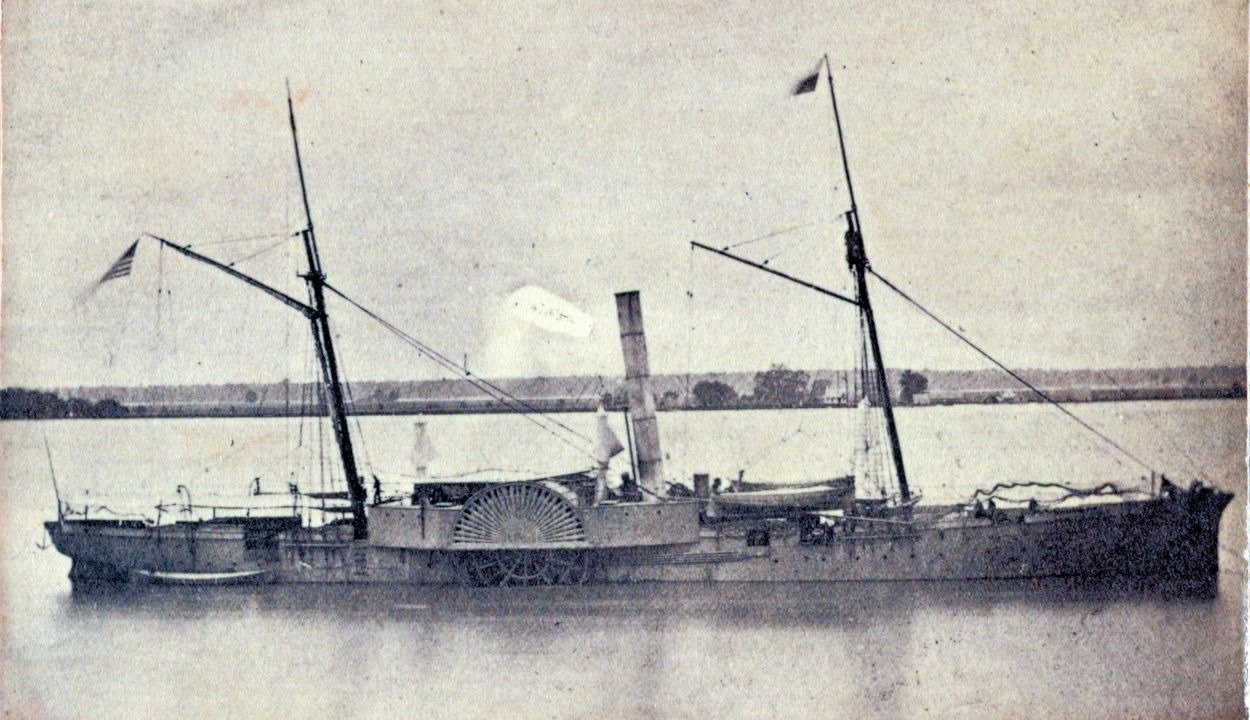
U.S.S. Genesee at Baton Rouge, La., March 1863

U.S.S. Genesee at Baton Rouge, La., March 1863.

Library of Congress image.

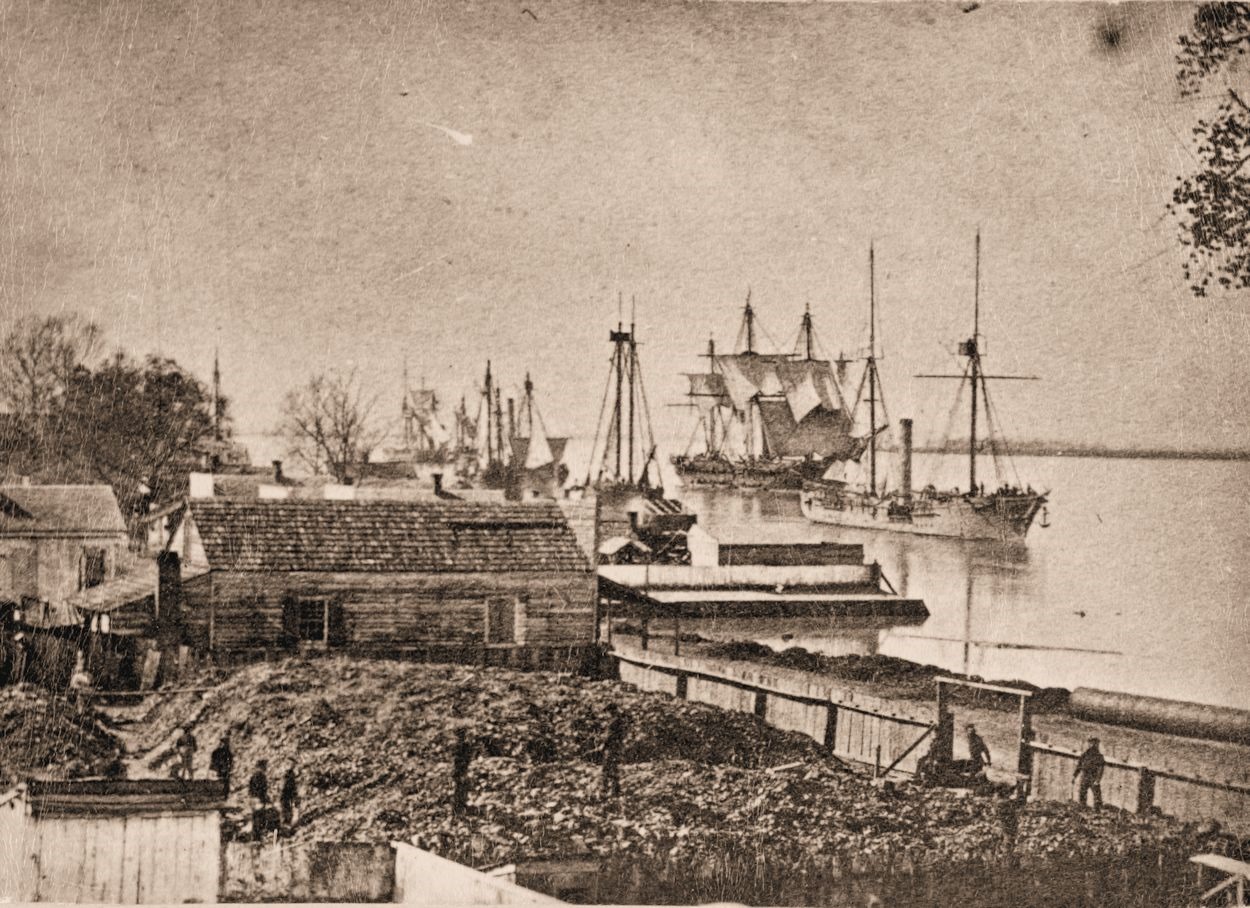
U.S.S. Kineo and Hartford at Baton Rouge

Stereograph showing gunboats at dock at the Baton Rouge coaling yard of Messrs. Hill & Markham at Baton Rouge, Louisiana, March 1863.

Library of Congress image.

March 9th. At ten A. M. called all hands to up anchor. At ten forty-five A. M., got under way, steaming up the river, followed by the U. S. steam sloop-of-war Richmond and Monongahela; while steaming up the river, the men were employed in snaking down the rigging. At seven P. M. brought the ship to anchor for the night.

Monday, 9th—We were relieved from picket at 9 o’clock this morning. The Thirteenth Iowa had battalion drill this afternoon. Hear some heavy cannonading in the direction of Vicksburg.

March 9, Monday. Had a call from Senator Dixon. Is depressed and unhappy. Regrets that he opposed the confirmation of Howard. Says if the subject was to be gone over again his course would be different. I did not attempt to soften or excuse his conduct, but told him I was sorry he did not listen to my suggestions. He proposed several names for the place. I had no other candidate than my old friend James G. Bolles, and he, though naming two or three others, fell in with it.

March 9.—Yesterday was a very warm day. Just before sunset we had one of the most terrific hail-storms I have ever seen; some of the hail-stones were the size of a hen’s egg. It broke nearly all of our windows on the west side of the house. It only lasted a few minutes. Had it been of much longer duration, I think the house would have fallen, as the rain poured through the windows in torrents, and would have swept all with it. We had a number of very sick men, and did what we could to have them cared for. Mrs. W. went up-stairs to see after the men there, and found Mr. Murray, a nurse, trying to hold in one of the window-sashes; all the glass being broken, the rain and hail poured right down on him. One of the patients, who we thought was dying, was lying so that he had the full benefit of the storm. Mrs. W., in her haste to save him from being drowned on dry land, gave his bunk a pull, and down came bunk, man, and all on the floor. Poor Mrs. W. thought she had killed him, and it gave her such a fright that she ran and left him. Much to the surprise of all, he has taken a turn for the better. None of the men are any the worse.

They get plenty of fresh air now; Dr. Hunter is a great believer in that any way. He says that when men have been living in the field as ours have, without even a tent to cover them at night, when brought into a close room, especially when wounded, they get worse right away. I have seen the truth of this exemplified.

When we first came here, there was a very sick man, whose wife was nursing him; he was in a small room, which the wife would not permit a breath of fresh air to enter, thinking it would kill him, as he had a very bad cough; we all thought he would die. One day Dr. Hunter ordered him to be put into a large ward, where there were about twenty patients; but it was well ventilated. The wife was in a terrible state, and said the moving would kill her husband, and asked me to beg Dr. Hunter to have him moved back. I did so, but he would not grant my request; he said fresh air was the only thing that would save the man, and he did not care to have his murder on his conscience. I found him inexorable, and thought him very hard-hearted. From that time the man commenced to improve, and in a week or two received a furlough, and went home with his wife.

The doctors do not like the wives of the men to come and nurse them; they say they invariably kill them with kindness. There are some ladies who come to take care of their relatives, who seem to understand nursing, and are a great help, not only to their own folks, but to others around them; these the doctors do not object to.