On the Mississippi, Saturday, March 7. Ordered to reimbark at early dawn. Arose at 4 o’clock but did not get loaded till in the afternoon on the same boats as before. Severe rainstorm and wind last night. Very . muddy. Part of the day the sun shone very bright. Health good. 2: 30 P. M. the fleet once more “swung loose” and headed up stream. The “Campbell” was aground, so had to be towed out by the “Gladiator” and “John H. Dickey”; after she got afloat we lashed to the former to get some coal. As night advanced we kept slowly going, and by night were the fourth in line.
March 2013
Saturday, 7th. Finished my letter to Ella. Col. Abbey went to town and sent a barrel of flour to mother. Good. A Democratic mass meeting to consider the best way for democrats to protect their property. Finished “Mistress and Maid.”
Saturday, 7th—I went out to Widow Ewell’s to get some bread. Regiment relieved and went into Camp. I got there after night.

MARCH 7TH.—The President is sick, and has not been in the Executive Office for three days. Gen. Toombs, resigned, has published a farewell address to his brigade. He does not specify of what his grievance consists; but he says he cannot longer hold his commission with honor. The President must be aware of his perilous condition. When in adversity, some of those he has trusted, discuss the bases of reconstruction; and when we are prosperous, others, in similar positions, agitate the question of re-organization—the motive of both being his ruin. But I suppose he has calculated these contingencies, and never anticipated paving a bed of roses to recline upon during the terrible, and sometimes doubtful struggle for independence.
The rumor that Vicksburg had fallen is not confirmed; on the contrary, the story that the Indianola, captured from the enemy, and reported to have been blown up, was unfounded. We have Gen. Pemberton’s official assurance of this.
Col. Gorgas, Chief of Ordnance, a Pennsylvanian, sent into the department to-day, with a request that it be filed, his oath of allegiance to this government, and renunciation of that of the United States, and of his native State. This would indicate that the location of his nativity has been the subject of remark. What significance is to be attributed to this step at this late day, I know not, and care not. An error was committed in placing Northern men in high positions to the exclusion of Southern men, quite as capable of filling them.
Camp 103d Illinois Infantry, Jackson, Tenn.,
March 7, 1863.
The rumors from Vicksburg in the Tribune of the 5th are enough to make one’s flesh creep, and more than sufficient to account for my little touch of the blues I do feel to-night as though some awful calamity had befallen our army somewhere. God grant it may not be so! We have another report in camp this evening that is not calculated to enliven me much, viz.; “Lawler and some four companies of the 18th Illinois Infantry have been captured some 30 miles east of town.” In my last I spoke of an expedition having started out to look for some of Van Dorn’s forces which were reported as being on the Tennessee river, looking for a crossing place. We don’t give credence to the story of Lawler’s being a prisoner. But if he is, and the Vicksburg rumor be true and we have been repulsed at Charleston, and were whipped at Tullahoma, I wouldn’t feel half as badly over it all if our people at home would quit their wicked copperheadism and give us the support and encouragement they should, as I do now when we are worsted in even a cavalry skirmish. For every little defeat we suffer only seems to make them so much bolder, as is shown in every new set of resolutions which reaches us through the Times and the Enquirer. So that miserable Davidson really published the lie that only one man in my company really voted for the resolutions. Every man in Company G voted for them and with a will, too. I don’t have any politics in my company, although there are some companies in the regiment which indulge considerably in discussing questions of State. Above all things I dislike to hear it. I am glad to hear that my men speak well of me in their letters. I think I have had less trouble in my company than most of the officers. Allen Roodcape, the man you sent your letter of the 1st inst. by, got here to-night. Poor fellow, he will never be fit for a soldier. Davidson has gone home again. The 50th Indiana went out yesterday morning to reinforce Lawler, so we will again be on picket every other day. When it is here, once in three days is the rule. I was out on the worst post last night and it rained nearly all night. It thundered and lightened most splendidly. I like to get pretty wet once and a while for a change. It’s raining hard now. I go on picket again to-morrow. I’m sleepy, tired, and the rain is coming through my tent so much that I believe I’ll get into bed.
March 7.—Major-General Schenck, commanding the Middle Department of the army of the United States, issued an order at Baltimore, Md., prohibiting the sale of secession music in his department, and commanding the publishers of the game to send to his office any such music as they had on hand at that time.
—The Mobile Register published the following: “Let every man, woman, and child at home, with a yard square of ground, scratch it and put in corn. Every grain carefully intrusted to the fruitful earth is a mite of contribution to the nation’s liberty. Every acre of cotton planted is a comfort to our enemies and a nail in the coffin of confederate independence.”—At New-Orleans a meeting was held to discuss the propriety of establishing a provisional State government in Louisiana.—New Orleans Era.
— This day the expedition, under Colonel Phelps, which left Belle Plain, Va., in steamers on Tuesday for Northumberland County, Va., returned to headquarters. The troops visited Heathsville, which they found deserted by the rebels. Then, throwing out large foraging parties from that base into Lancaster County and in other directions, they succeeded in capturing one thousand bushels of corn, fifty horses and mules, a large number of beef cattle and quite an amount of medical stores. Two post-offices and several stores were visited, and two important rebel mails captured. The cavalry also seized a large number of horses and mules. Some prisoners were also taken, among them Colonel Claybrook, a prominent rebel officer, and two clerks of the departments at Richmond, with a quantity of correspondence for citizens of Baltimore, and official papers addressed to parties in London, to the care of Baring Brothers.—New-York Tribune.

March 6th [1863]. Rained hard all day long. Could but pity the Federal soldiers soaking out at Camp Weitzel. Could but pity ourselves, too, shut up all day long with one who has not an idea in common with ourselves, but who will insist in talk about the war all the time, stopping long enough only to read the same sort of boasting stuff in the newspapers which have been filling them for months. Oh, how tired I am. I have never known before what ennui or loneliness meant, except when with uncongenial company. Mrs. N—— thinks we feel no interest in the war—if we don’t have peace soon I think I shall soon lose my senses. We had an “extra” this afternoon which I read aloud. Nothing in it worth the trouble. The loss of our Nashville boat and the capture of the Indianola and coal barges being all known before. I looked out just as I was going to bed; beautiful sight after a day of storm. The wet streets lay like pure silver beneath a lustrous full moon and stars, and soft white clouds strode the blue as peacefully as if we were all good and happy here below. The stars used to calm my most wretched moods—now they fill me with an unutterable longing.
March 6—Several of us out of our company went to Kinston and the battlefield. The Yankees are very poorly buried, as we saw several heads, hands and feet sticking out of the ground, where the rain had washed the dirt off of them.
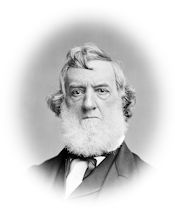
March 6, Friday. Appointments considered yesterday and to-day. Generally conceded that Field of California was the man for the Supreme Court. The Court of Claims seems a peace court. The Court for the District is more important, and unfortunately the hearts and sympathies of the present judges are with the Rebels.

Mrs. Lyon’s Diary.
March 6, 1863.—Raining, and no boat. I decided to go to Fort Donelson. We got there near dark, tired almost to death. Found Minerva quite sick. All the ladies came here and we got supper for them, two ambulance loads. William came out to help the ladies out. I came out first and he was so glad to see me that he took me into the house and forgot what he went out for, but was excused. They laughed at him and joked him. He had secured a large room in a large house for headquarters. We will try living in a house for awhile.


