Following the American Civil War Sesquicentennial with day by day writings of the time, currently 1863.

March 2013

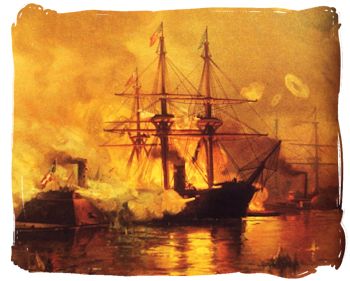
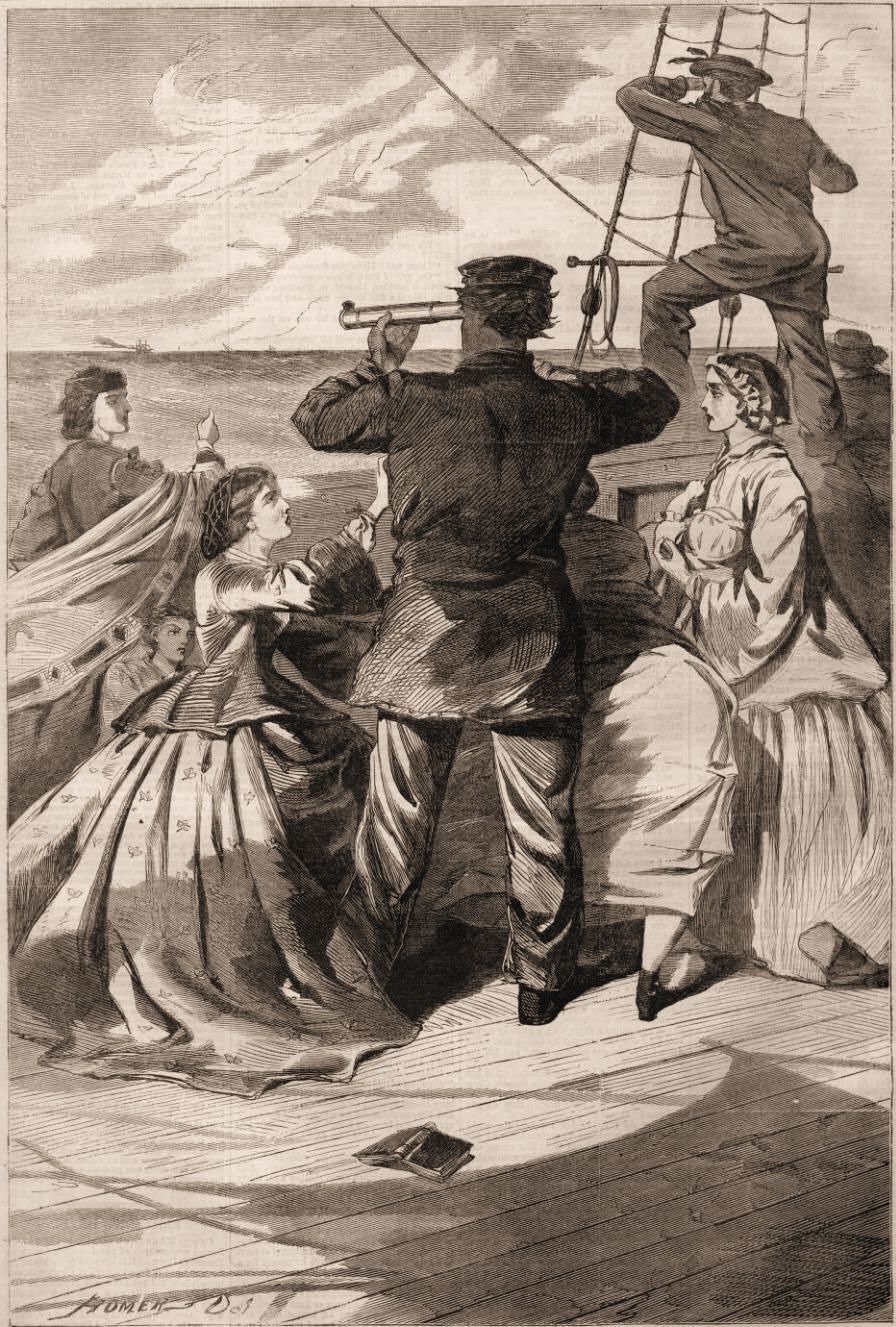
The Approach of the British Pirate Alabama

The Approach of the British Pirate “Alabama.”
______

IT is not to be disguised that our relations with Great Britain have reached a most critical pass. The speeches of the Solicitor-General of England and of Lord Palmerston, in Parliament, on 27th March, indicate a determined purpose on the part of the British Government to persevere in the work of fitting out piratical vessels in British ports to prey upon our merchant navy, It was well shown by Messrs. Forster, Baring, and others, that the equipment of the Florida and Alabama was in violation of the Foreign Enlistment Act; and that other similar vessels—some say eighteen, others fourteen—are being constructed for the rebels at Liverpool and other British ports, without let or hindrance by the Government, and will soon be at sea, manned by British sailors, armed with British guns, and as thoroughly British in every respect as the Warrior herself. The only answer to these cogent facts was some legal quips and quibbles in the Nisi Prius style by the Solicitor, and a sneer from Lord Palmerston about “the Americans always picking a quarrel with England whenever they got into trouble.”

Passing over the insolence of the latter speaker, who has been well said to represent the black-leg element in the British Cabinet, and the cheap erudition of the lawyer who was hired to defend the Government, the fact remains that we are practically at war with Great Britain without the power of reprisals. Every British dock-yard is now engaged in building steamers to capture and burn our merchantmen, to run our blockade, and to bombard our defenseless sea-board cities. The evidence points irresistibly to the conclusion that all the authorities and men in stations of influence in England are in the conspiracy against us. Lord Palmerston considers our complaints of the destruction of thirty odd American vessels by the British cruiser Alabama mere indications of our wish to pick a quarrel with England; Lord Russell sees no ground for arresting the Alabama until he has been assured she has got safely to sea, when he issues his tardy warrant; Member of Parliament Laird laughs—and the House of Commons re-echoes the laugh—at the objections which are made to his supplying the rebels with a navy; the Commissioners of Customs, with their ears stuffed with cotton and their pockets with the produce of Confederate bonds, are ready to swear off the most obvious Confederate steamer as a harmless craft intended for the Emperor of China; and the merchants, ship-builders, and newspapers of England all claim the right of furnishing the rebels with a navy, and denounce us furiously for objecting to their conduct.

These events have very naturally aroused a general and intense hostility to England among all classes in this country. There has never been a time when hatred of the English was so deep or so wide-spread as it is at present. There has never been a period at which war with England could have been more generally welcomed than at present—if we were free to engage in a foreign war.

Yet we do not believe that war is imminent. We can not afford the luxury. The struggle in which we are engaged taxes all our resources, and to carry it safely through to a successful issue will require our undivided energies. For this reason we do not anticipate that our Government will declare war against England— though it has ample ground for doing so; or will even declare an embargo, or seize British property to recompense our ship-owners for the losses they are suffering through the piratical acts of British vessels.

Our cue just now is to suffer every thing from foreigners for the sake of concentrating our whole strength on the suppression of the rebellion. When this is done, we shall have time to devote to our foreign enemies.

So soon as the restoration of the Union has been achieved, we look to see energetic measures adopted by our Government for the settlement of accounts with England. We expect to see every man who has lost a dollar by the depredations of the Alabama paid in full, with interest, by the British Government. The amount can always be collected in the port of New York. Half a dozen British steamers and a score of British ships seized and sold at auction by the United States Marshal would go far to make a balance. And when England next goes to war, let her look out for retaliation. Though her antagonist be only some Hottentot chief, the ocean shall bristle with American cruisers bearing his flag, and England may rely upon it, that for every peaceful American trader that has been burned during this war by British pirates, ten British vessels will then be destroyed. The next war in which England engages will be the end of her foreign commerce. We mistake our countrymen greatly, if, at the end of twelve months, they leave a ship bearing the British flag afloat in any sea from the German Ocean to Behring’s Straits.

But the watch-word now must be—Patience!

(Harper’s Weekly, April 25, 1863)

March 27. — Day clear and beautiful. There was a hurdle-race at General Birney’s headquarters, besides other amusements. One man was seriously injured by his horse falling on him. The general and staff went over to the race, and from there to Major Spaulding’s, where the general reviewed the detachment. I was at home all day. Received present of some fish from Major Cassin.

by John Beauchamp Jones

 MARCH 27TH.—This is the day appointed by the President for fasting and prayers. Fasting in the midst of famine! May God save this people! The day will be observed throughout the Confederacy.

The news from the West, destruction of more of the enemy’s gun-boats, seems authentic. So far we have sustained no disasters this spring, the usual season of success of the enemy by water.

Mr. G. W. Randolph was the counsel of the speculators whose flour was impressed, and yet this man, when Secretary of War, ordered similar impressments repeatedly. “Oh, man! dressed in a little brief authority,” etc.

Mr. Foote has brought forward a bill to prevent trading with the enemy. Col. Lay even gets his pipes from the enemy’s country. Let Mr. Foote smoke that 1

A gentleman Said, to-day, if the Yankees only knew it, they might derive all the benefits they seek by the impracticable scheme of subjugation, without the expenditure of human life, by simply redoubling the blockade of our ports, withdrawing their armies to the borders, and facilitating trade between the sections. We would not attack them in their own country, and in a month millions of their products would be pouring into the South, and cotton, tobacco, etc. would go to the North in vast quantities. I wonder the smart Yankee never thinks of this! Let both sides give passports freely, and an unlimited intercourse would be immediately established.

March 26th. To-day the men have been at work forming barricades on the poop deck and forecastle with hammocks and old sails; it will prove to be quite a protection to the men who are exposed at these points, as Minie balls are dealt out to us in a profuse manner generally.

We were honored to-day with a visit from Major-General Grant and staff. A consultation of war was held on board by them and our Admiral.

March 26th. At ten A. M., beat to quarters, and loaded port battery with 10-sec. shell. At eleven fifteen hove up port anchor, beat to general quarters, and steamed down past Warrenton, firing our port battery into the enemy’s casemates, but received no return. Came to anchor below Warrenton. Weather still stormy.

Thursday, 26. — A cold, rainy day. Last night the coldest of the season. Yesterday with Dr. Joe and four oarsmen rowed in his large skiff up Elk, three or four miles; caught in a wild storm of rain and sleet.

Had a dispatch today from Captain Simmonds at Gauley; he reports rumors of an early advance on all our posts. “Sensational!” General Scammon in a “stew” about it.

Thursday, 26th—It is very warm and pleasant, and the mud is drying up fast. We have no need for camp guards at this camp. We drew six days’ rations. The Eleventh and Fifteenth Iowa Regiments received orders to move at once down the river. We immediately struck our tents and by 10 o’clock p. m. were on board the “Superior” with all the quartermaster’s supplies, but the boat is to lie here all night. Everything seems to point to a movement upon Vicksburg, and the report is that the fleet, protected by the gunboats, will have to run the blockade, while the troops will have to move by land through Louisiana and cross the river below Vicksburg.

March 26.—Moses Compton has just died; he was a member of the First Alabama Regiment . I have written to his father, in Blount County, Alabama, and sent a lock of his son’s hair, which I always do when I can.

I have only put the names down here of those to whom I have paid the most attention. I take no note of those whom Mrs. W. attends, nor of any who have special friends here.

26th. In the morning played battledore with Melissa. Scored 711 and 637. Made us feel large. D. R. and C. G. who came in last night, were down an hour or two. Went to town. Met Minnie. Called on Lucy Randall at the store, then at Mr. Fairchild’s and at Mr. Lincoln’s door. C. G. and I went to F. A.’s F. H. came up. They played for us. Said goodbye all around. Left at 6:30 with C. G. and Mrs. Norton. Tried to be cheerful.

On Yazoo Pass, Thursday, March 26. A fine day. Health poor. Nausea and diarrhea very bad. Advanced very slowly to-day, the current being swifter than before, so that we are just tossed from tree to tree. Obliged to use the capstan continually. A limb took off one of the escape pipes, another entered the cook room on the second floor. It is with great trouble the men can save themselves from falling limbs. One fell on two boys which came very near proving serious. Passed at 2 P. M. by the “Hamilton Belle”, dispatch boat.