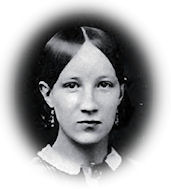
November 6.—We were saddened to-day by news of the death of Augustus Torrey Wilder in the hospital at Fort Ethan Allen.
November 2013
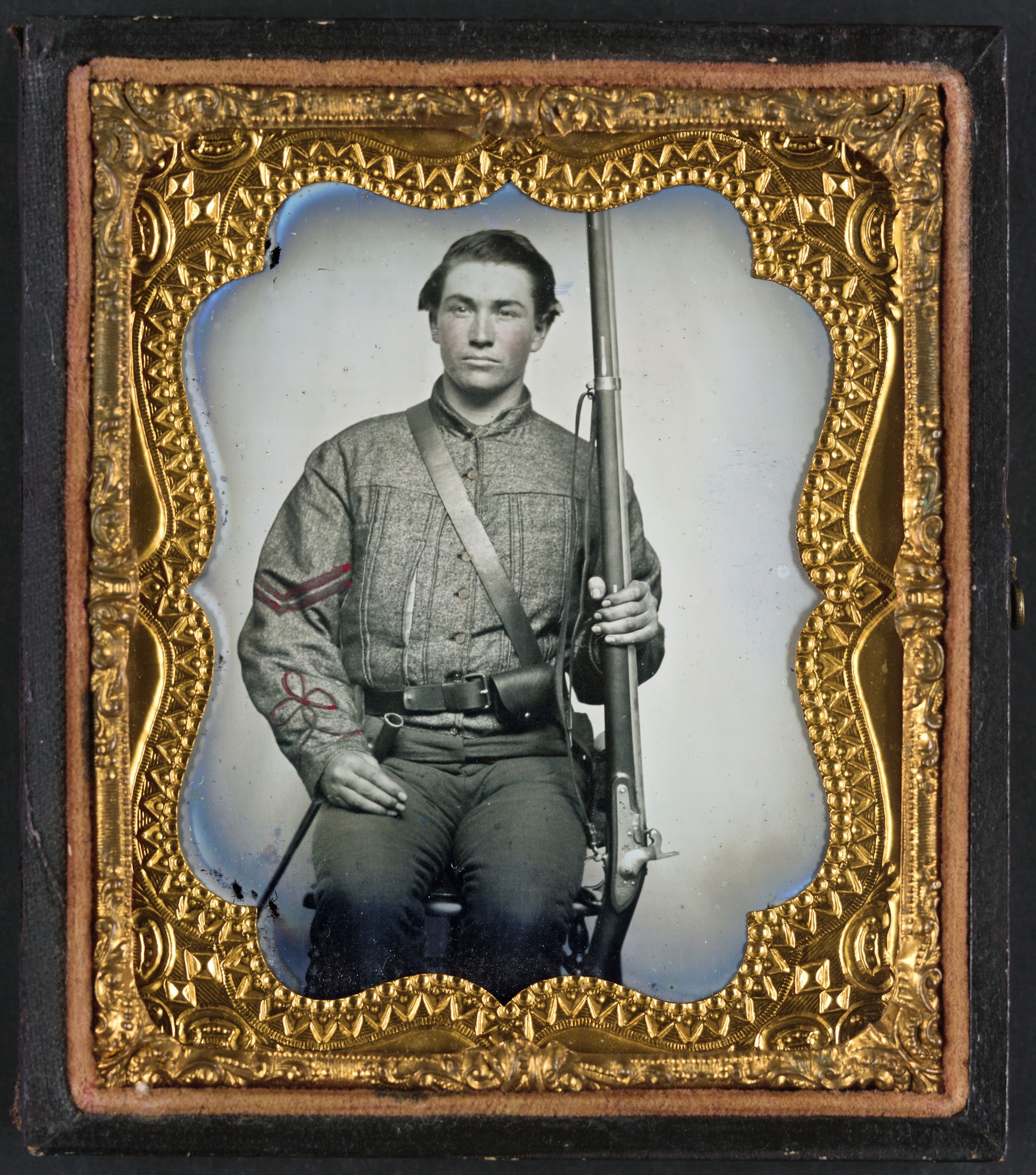
William Jenkins, North Carolina soldier, in artillery uniform, with percussion rifle converted from flintlock.
__________
Sixth-plate ambrotype, hand-colored ; 9.3 x 7.7 cm (case)
Liljenquist Family Collection of Civil War Photographs; Ambrotype/Tintype photograph filing series; Library of Congress Prints and Photographs Division.
Record page for image is here.
__________
 Note – This image has been digitally adjusted for one or more of the following:
- fade correction,
- color, contrast, and/or saturation enhancement
- selected spot and/or scratch removal
- cropped for composition and/or to accentuate subject matter
- straighten image
Civil War Portrait 085
NOVEMBER 6TH.—The President was to have returned to-day, but did not.
Various conjectures are made as to the object of his month’s tour of speech-making. Some deem the cause very desperate, others that the President’s condition is desperate. If the first, they say his purpose was to reanimate the people by his presence, and to cultivate a renewal of lost friendships, and hence he lingered longest at Charleston, in social intercourse with Gens. Beauregard and Wise, who had become estranged. The latter is the oldest brigadier-general in the service, and still they have failed to promote him. The President’s power is felt in the army, and his patronage being almost unlimited, it was natural, they say, that he should be received with cheers. From a lieutenant up to a general, all are dependent on his favor for promotion. At all events, his austerity and inflexibility have been relaxed, and he has made popular speeches wherever he has gone. I hope good fruits will ensue. But he returns to find the people here almost in a state of starvation in the midst of plenty, brought on by the knavery or incompetency of government agents.
What is remarkable is the estimate of $50,000,000 by the Commissary-General for the purchase of sugar, exclusively for the sick and wounded in hospitals, the soldiers in the field being refused any more. One-fourth of the whole estimates ($210,000,000) for sugar, and not an ounce to go to the army! And this, too, when it is understood nearly all the sugar in the Confederacy has been impressed by his agents at from 50 cts. to $1 per pound. It is worth $2.50 now, and it is apprehended that a large proportion of the fifty millions asked for will go into the pockets of commissaries. No account whatever is taken of the tithe in the Commissary-General’s estimates.
Flour sold at $125 per barrel to-day. There must be an explosion of some sort soon. Certainly Confederate notes have fallen very low indeed.
Another solution of the President’s tour, by the uncharitable or suspicious, is a preparatory or a preliminary move to assuming all power in his own hands. They say the people are reduced by distress to such an extremity that, if he will only order rations to be served them, they will not quarrel with him if he assumes dictatorial powers. Legislation has failed to furnish remedies for the evils afflicting the community; and, really, if the evils themselves were not imputed to the government, and the President were ambitious—and is he not?—he might now, perhaps, play a successful Cromwellian rôle. But can he control the State governments? The government of this State seems like potter’s clay in his hands, the Legislature being as subservient as the Congresses have hitherto been. It is observed—independence first—then let Cromwells or Washingtons come.
My wife, to-day, presented me with an excellent under-shirt, made of one of her dilapidated petticoats. A new shirt would cost $30. Common brown cotton (and in a cotton country!) sells for $3 per yard. I saw common cotton shirts sell at auction to-day for $40 per pair. Beef is $1.50 per pound, and pork $2. But these prices are paid in Confederate Treasury notes, and they mark the rapid depreciation of paper money.
The enemy, however, in spreading over the Southern territory, are not completing the work of subjugation. It would require a million of bayonets to keep this people in subjection, and the indications are that the United States will have difficulty in keeping their great armies up. It is a question of endurance.
November 6.—Jefferson Davis arrived at Wilmington, North Carolina, from Charleston, South Carolina, and was received by General Whiting, and welcomed by William A. Wright. Mr. Davis stated that he was proud to be welcomed by so large a concourse of North Carolinians to the ancient and honored town of Wilmington, upon whose soil he hoped the foot of an invading foe might never fall. He had given Wilmington for her defence one of the best soldiers in the Confederacy—one whom he had seen tried in battle, and who had risen higher as danger accumulated.
He felt the full importance of the harbor—the only one still open for trade—and would do all that could be done for its defence. He exhorted all to do their duty, either in the field or in supporting the army and relieving the families of soldiers, and spoke of the honor of the soldier, and the disgrace of the speculator. He referred to Chickamauga and Charleston, and spoke of the noble spirit of the army and people at both places. He paid a high tribute to the soldiers from the State, and exhorted all to strive nobly for the right, predicting a future of independence, liberty, and prosperity.—A fight occurred at Rogersville, Tennessee, in which the Nationals were defeated and compelled to retreat with some loss.—(Doc. 8.)
The ship Winged Racer, from Manilla for New-York, was captured and burned by the pirate Alabama, off Java Head.—A party of rebel guerrillas entered Blandville, Kentucky, twelve miles from Cairo, Illinois, and captured a courier together with a small mail.
—The battle of Droop Mountain, Virginia, between the National forces under Brigadier General Averill, and the combined forces of the rebel Generals Echols and Jenkins, occurred this day, resulting in the rout of the latter with a severe loss in men and material.—(Doc. 9.)
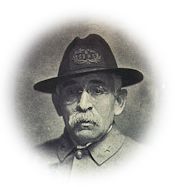
November 6—Were relieved to-day.
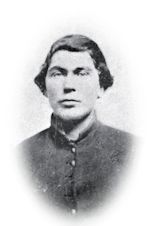
Gilbertsboro, Ala., Thursday, Nov. 5. Thanks to the corporal of the guard we did not get up till nearly 4 A. M. this morning, as he slept and did not wake the orderly at the proper time. But we had to hurry up to start at 5 A. M. which was a good while before daylight. Left the 3rd Brigade behind. They were just having reveille. A cloudy morning. Marched six miles through a flat country heavily timbered, with excellent soil, but entirely uncultivated. It lies in the hands of speculators. When we neared Sugar Creek it became bluffy and rocky, which was all fenced and cultivated by poor folks. Came up to the 2nd Brigade here and we halted three hours to allow them to get out of the way. We went to a neighboring corn crib, and shelled nose bags full of corn. Commenced raining very heavily. At 1 P M. we hitched and started out. The rain fell in torrents but the boys were as merry as ever and forgot the wet in singing. Halting, the infantry built a bridge across the stream with rails. Marched very lively over a hilly road but rich valley. The clay, which in dry weather made good roads, was soon converted into bottomless mud. Came into camp at sundown at Gilbertsboro, Limestone County, Alabama. A very rich plantation here surrounded by very high hills. A large amount of fodder and hay was stored away in the surrounding houses which were soon emptied by the boys and fed to the horses or made for beds. Hungarian grass and millet was the most of it. Division commissary issued out plenty of fresh meat for the boys and there was not much shooting. This evening thirty barrels of whiskey was found buried by the 48th Indiana close to camp, so there were several drunken men in camp.
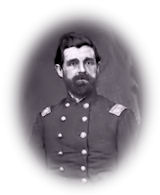
Colonel Lyons.
Nashville, Tenn., Nov. 5, 1863.—I am on a court of inquiry, to investigate a matter connected with the shooting and killing of one of his men by Colonel Meisner, of the 14th Mich., and shall be so occupied all of this week. We hold one session per day at the capitol, from 9 a. m. until noon. At the election last Tuesday, the 13th gave 400 majority for the Union ticket, only 18 or 20 votes cast for Palmer. I see by yesterday’s papers that the State has gone Union by a large majority.
I am on the track of a house two blocks from camp, which I think I can get. Boats are running up the river quite freely now, and occasionally get fired into between here and Clarksville. That region is full of guerillas now, since the troops are withdrawn from Donelson and Clarksville. The 83d is there yet, but can not do much for want of numbers.
Captain Hewitt and I have rented a house together and I moved into it on Tuesday. It is a brick house, two rooms, one story, in a quiet, pleasant spot, about 30 rods from the camp. We pay ten dollars per month rent. I send you a diagram. Mrs. Hewitt and you had better come on together. We shall have to mess together. The rooms are large and commodious, good walls and floors, and excellent fireplaces, don’t smoke a particle. We will live in our room and eat in their room. Jerry and Minerva have an outside room, and have in it a little stove that I had for my tent.
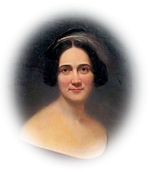
November 5th.—For a week we have had such a tranquil, happy time here. Both my husband and Johnny are here still. James Chesnut spent his time sauntering around with his father, or stretched on the rug before my fire reading Vanity Fair and Pendennis. By good luck he had not read them before. We have kept Esmond for the last. He owns that he is having a good time. Johnny is happy, too. He does not care for books. He will read a novel now and then, if the girls continue to talk of it before him. Nothing else whatever in the way of literature does he touch. He comes pulling his long blond mustache irresolutely as if he hoped to be advised not to read it—”Aunt Mary, shall I like this thing?” I do not think he has an idea what we are fighting about, and he does not want to know. He says, “My company,” “My men,” with a pride, a faith, and an affection which are sublime. He came into his inheritance at twenty-one (just as the war began), and it was a goodly one, fine old houses and an estate to match.
Yesterday, Johnny went to his plantation for the first time since the war began. John Witherspoon went with him, and reports in this way: ”How do you do, Marster! How you come on?”—thus from every side rang the noisiest welcome from the darkies. Johnny was silently shaking black hands right and left as he rode into the crowd.
As the noise subsided, to the overseer he said: “Send down more corn and fodder for my horses.” And to the driver, “Have you any peas?” “Plenty, sir.” “Send a wagon-load down for the cows at Bloomsbury while I stay there. They have not milk and butter enough there for me. Any eggs? Send down all you can collect. How about my turkeys and ducks? Send them down two at a time. How about the mutton? Fat? That’s good; send down two a week.”
As they rode home, John Witherspoon remarked, “I was surprised that you did not go into the fields to see your crops.” “What was the use?” “And the negroes; you had so little talk with them.”
”No use to talk to them before the overseer. They are coming down to Bloomsbury, day and night, by platoons and they talk me dead. Besides, William and Parish go up there every night, and God knows they tell me enough plantation scandal—overseer feathering his nest; negroes ditto at my expense. Between the two fires I mean to get something to eat while I am here.”
For him we got up a charming picnic at Mulberry. Everything was propitious—the most perfect of days and the old place in great beauty. Those large rooms were delightful for dancing; we had as good a dinner as mortal appetite could crave; the best fish, fowl, and game; wine from a cellar that can not be excelled. In spite of blockade Mulberry does the honors nobly yet. Mrs. Edward Stockton drove down with me. She helped me with her taste and tact in arranging things. We had no trouble, however. All of the old servants who have not been moved to Bloomsbury scented the prey from afar, and they literally flocked in and made themselves useful.
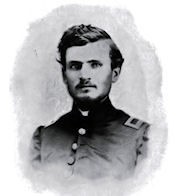
5th. Up at 4 A. M. Co. “C” ordered to go with Capt. Easton on scout. Got on wrong road, being dark. Trotted two or three miles, returned and fell in with the regt. Moved to near Rheatown and waited for 5th Ind. to come down from Leesburg. Rainy and unpleasant. 14th Ill. to front. Returned near old camp. During night rained heavily. Boys got very wet. Slept well and dry.
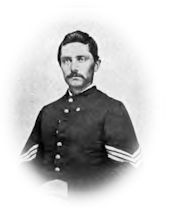
Thursday, 5th—It rained all day and on account of it the fatigue party did not work on the fortifications. Our camp number 3 is located on the town commons, and because of no timber near by the northwest wind has a full sweep over the camp. No news of importance.


