Following the American Civil War Sesquicentennial with day by day writings of the time, currently 1863.

November 2013

by John Beauchamp Jones

NOVEMBER 2D.-A refugee from Portsmouth reports the arrival of 6000 Federal troops at Newport News, and that Richmond is to be menaced again.

Brig.-Gen. H. W. Allen, Alexandria, La., reports 8000 deserters and skulking conscripts in that vicinity, and a bad state of things generally.

Gen. Lee has written three letters to the department, dated 30th and 31st October. 1st, complaining of the tardiness of the Bureau of Examination, and the want of efficient officers; 2d, complaining of the furloughs given Georgia officers as members of the legislature, causing a brigade to be commanded by a lieutenant-colonel, etc.; 3d, relating to an order from the Secretary to respite certain deserters, condemned to execution. He says executions are necessary to keep the army together, but he feels the painfulness of the sad necessity.

Mr. H. D. Whitcomb, Superintendent Central Railroad, applied for and obtained passports for his mother and sister to return to the United States. He is a Northern man.

Brig.-Gen. S. A. Meredith (United States) writes from Fortress Monroe, proposing that prisoners west of the Mississippi be exchanged at Galveston. Mr. Ould, our agent of exchange, indorses on it that there is no necessity for immediate action, for the United States are not exchanging any prisoners at all at this time.

Mr. Memminger writes for troops to be sent to Ashville, West North Carolina, which is menaced by the traitors, tories, and Federals. His family is there, having fled from South Carolina. Hon. Jas. Farron also writes that a bad state of things exists in that section, and communication is kept open with the enemy in East Tennessee.

From St. Helena Parish, Ark., we have letters stating that all restraint is thrown off, and everybody almost is trading with the enemy. Some 1500 bales of cotton per week is taken to the Yankees from that region. They say most of the parties have permits from the government or from commanding generals to trade with the enemy.

Gen. Whiting writes that his men are suffering for shoes, and as 15,000 pairs are in that town, asks if he shall not impress them. The Secretary is reluctant to do this, and asks the Quartermaster-General what he shall do. The Quartermaster-General advises that the shoes be bought at a fair price, and paid for in cotton. He says blankets may be had in the same way.
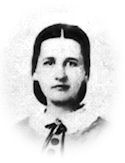
November 2nd, 1863.—Now, while Cousin Julia is with us, I am trying to make things as pleasant as possible for her. All the boys are away in the army, so we have what Aunt Dinah calls “hen parties.” We have been the rounds of the family to dinings; we have had picnics, to which we have taken the children from the various families in the neighborhood, rides on horseback, walks to look for chinquepins and hickory nuts and now we want some evening parties. As Cousin Julia is a minister’s daughter and does not dance or play cards, the question of amusement is a little difficult, but we will play games and next week we will set the ball rolling with a musicale. We have several fine musicians in the neighborhood and mother never fails to have plenty of good things to eat.

Brother Amos and sister Mag are with us and they are splendid help in entertaining. He is still on crutches but is as jolly as a cricket and she is so sweet everybody loves her.

November 2.—President Lincoln replied to the letter of Governor Bradford, of Maryland, on the subject of the election in that State.—W. G. Sparrow, son of the Rev. Dr. Sparrow, formerly principal of Fairfax Seminary, was arrested, on his arrival from Staunton, Virginia, with a rebel mail, containing letters of importance, and committed to the Old Capital Prison, at Washington.—A party of rebel guerrillas captured two trains of cars near Mayfleld, Kentucky.

—Jefferson Davis arrived at Charleston, S. C, from Savannah, and was escorted to the City Hall, where an address of welcome was made by Charles Macbeth, the Mayor of the city. Mr. Davis replied, in a speech setting forth the reasons of his visit, and urging upon the people the necessity of “harmonious cooperation with the commanding general. He who would attempt to promote his own personal ends in preference, would not take a musket and fight in the ranks, was not worthy of the confederate liberty for which we are fighting. He trusted the Yankee’s desire to possess Charleston would never be gratified; but if Providence ordered otherwise, he desired for her what he wished for his own town of Vicksburgh, that the whole should be a mass of ruins. He believed that Charleston would never be taken.”

Waterloo, Sunday, Nov. 1. I was called on guard at 3 A. M. and reveille was sounded at 5, so I got but little sleep. We expected to move, and prepared after breakfast, but as we did not go, I got my portfolio and wrote two letters. The citizens were quite communicative, squads of young ladies and old men walking through the camp. It is a small, insignificant looking place, country stores, houses, etc. known as Waterloo. Foragers doing a good business. The 3rd Brigade came down and went into camp 11 A. M. 3 P. M. while we were all taking it easy, “Boots and Saddles” was sounded, and we were told to hitch up as quickly as possible. In fifteen minutes we were on the road, tents in the wagons and everything ready. Double quicked it for nearly a mile, to get into our proper place. Marched very fast with no stoppages except rests given two or three times, thirty minutes in length. Marched through bluffy and steep country, the road winding. Did not come into camp until 9 P. M. Our road lay for the last three miles through a deep gorge with very high hills on both sides. Fires were built to guard us from the ditches. After we stopped I was obliged to sit up an hour waiting for the wagons, so as to feed my horses. Very sleepy and tired. Went to bed in open air and slept sound till reveille.

Colonel Lyons.


Headquarters 13th Regt. Wis. Vol., Camp Bigney, near Nashville, Tenn, Sun. p. m., Nov. 1, 1863.—It takes considerable writing, I find, to give you our exact ‘locus in quo,’ as the lawyers say, but you have the whole story in the heading to this letter. We named the camp yesterday, on parade, in honor of the major who selected it, and whose influence brought us here; and a beautiful camp with most beautiful surroundings it is, too. The weather is very pleasant today, but we have had a very severe rainstorm and have frosty nights.

It is a little rough lying on the ground, and I have neither floor nor fire in my tent, yet I stand it well. Jerry is quite indignant that I should live so. Says he, ‘Colonel, it’s enough to kill a hoss to sleep on that wet ground! Yes, sir, it’s enough to kill a good hoss!’ I have not yet secured any rooms for us, although I am diligently hunting for them. I would like to have the children here, but looking the thing all over my best judgment is that they will be better off at home. I have got a pony for you to ride when you get here—gentle as a lamb, and my horse is a beauty. I ride a good deal.

Sunday, 1st November—I went to town and mailed some letters, and out to Mr. Mooney’s, the tanner, and got dinner; came by Mr. Green’s, stopped awhile and on to Camp.

Florence, Ala., November 1, 1863.

We struck tents on the 27th ult. at Iuka, Miss., and marched to Eastport, eight miles, that night. We had in our division some 200 wagons, all of which with 1,200 horses and mules were to be crossed in a barge over the Tennessee river. I received a complimentary detail to superintend the crossing of the wagons belonging to one brigade. I think I never worked harder than I did from 7 o’clock that night until 6:30 o’clock the next day, a.m. It occupied two days and nights crossing the whole train, but we marched at 3 p.m., the 28th, and camped that night at Gravelly springs, 15 miles from Eastport. The road ran for some ten miles along the foot of the river bluff, and the numerous springs sparkling their beautifully clear and fresh jets of limestone water on the road, from which they rippled in almost countless little streamlets to the river, although adding much to the wild beauty of the country, made such a disagreable splashy walking for we footmen that (I speak more particularly for myself) we failed to appreciate it. We bivouacked for the night at about 9 p.m. The morn of the 29th we started at 8 o’clock, and after ascending the bluff, marched through a magnificent country to this place, 15 miles. Some three miles from here at the crossing of Cypress creek, something like 50 or 60 girls, some of them rather good looking, had congregated and they seemed much pleased to see us. All avowed themselves Unionists.

There had been a large cotton mill at this crossing, Comyn burned it last summer, which had furnished employment for these women and some 200 more. This is a very pretty little town. Has at present some very pretty women. Two of the sirens came very near charming me this a.m. Bought two dozen biscuits of them. Have been out of bread for two days before, but had plenty of sweet potatoes and apples. During the march on the 29th we heard Blair pounding away with his artillery nearly all day across the river, I should think about a dozen miles west of Tuscumbia. I was down to the bank the morning of the 30th ult. and the Rebels across shot at our boys, watering mules, but without effecting any damage. I saw a white flag come down to the bank and heard that Ewing sent over to see what was wanted, nothing more. There was some musketry fighting yesterday near Tuscumbia, but don’t know who it was. We are four and one-half miles from there. Two companies of the 4th Regular Cavalry reached here on the 30th from Chattanooga, bearing dispatches to Sherman. He is at Iuka. All of these movements beat me completely. Can’t see the point and doubt if there is one. We have commenced fortifying here. Have seen much better places to fight. We are “fixed up” most too nicely to hope to live here long. I have a stove, a good floor covered with Brussels carpet, plenty of chairs and a china table set under my tent. Eatables are plenty and would offer no objection if ordered to stay here a couple of weeks. Understand that not a farthing’s worth of the above was “jayhawked.” Got it all on the square. I wish I could send you the mate to a biscuit I just ate. Twould disgust the oldest man in the world with the Sunny South. By hemp, but it is cold these nights. Last night there was an inch of white frost. I was nearly frozen. Dorrance swears that Mattison and I were within an ace of killing him in our endeavors to “close up” and keep warm.

Sunday, Nov. 1st. Took a bath before breakfast. A beautiful Sabbath day. Wish I could spend it quietly at home. May the time soon come when we may all be at home in peace, but contentment we should ask for. I find myself uneasy nowadays. Mr. Brown preached at 2 from Ecclesiastes 12, 1. Very good. Read some in Burns and several chapters in the Bible. Good visit with several boys.

Sunday, 1st—We moved our camp about a half mile onto higher ground this morning. The quartermaster had our lumber and wood hauled from the old camp and we worked all day pitching our tents and rebuilding the bunks, fireplaces and chimneys. It has been a busy day with us, although it is the Lord’s Day, but a true soldier cannot halt when duty calls. I was very thankful that I did not have to be on the picket line, so that I could have a hand in fixing up our tent.

November 1.—The 4th New York Heavy Artillery is stationed at Fort Hamilton, N. Y. harbour. Uncle Edward has invited me down to New York to spend a month! Very opportune! Grandfather says that I can go and Miss Rosewarne is beginning a new dress for me to-day.