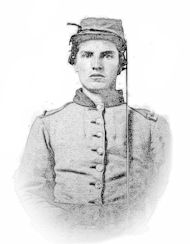
Saturday, 28th.—Regiment camped near Dalton; reported Pat Cleaborn’s Division held position in the gap at Ringgold yesterday, driving Federals back with heavy loss.
November 2013

November 28.—A gloomy day, but still gloomier news. I can not see one gleam of light either on nature’s horizon or the nation’s. Alas! for the fate of our brave army. It has had a battle; and, after fighting desperately, had to retreat leaving the wounded in the enemy’s hands. It is bad enough to be wounded, and with friends; but wounded and a prisoner, how dreadful that must be! May God comfort them, and be their stay in affliction! For once, the sight of the wounded coming in makes me perfectly happy, for I know that they at least are not in the hands of the enemy. The hospital is again filled with the same sad spectacle—men mutilated in every possible way.
Last night Lieutenant Payne breathed his last. He was a member of the Twelfth Tennessee Regiment, and was in his twentieth year. The only regret he had when dying, was being unable to see his father and mother, who are in the enemy’s lines. Major P., his brother, was with him, and his last wants were ministered to by the hands of loving friends. He suffered long and patiently. Mrs. W. had conversed with him on the subject of religion before he or any of us had the least idea of his being cut off so soon, and she found that he walked humbly with his God. She feels satisfied that he was fully prepared to join the redeemed in that land where there is no gloom, hunger, nor pain, and where God shall wipe away all tears from their eyes. “Blessed are the dead who die in the Lord.”
Mr. Davis, the young man who had his arm amputated, is doing pretty well. His father is nursing him. He has lost a son and a son-in-law in this war, and has five more sons in the army, and he has not heard from either of them in some time. He is sixty-four years old—nurses this one as well as any young man could. I have not yet heard one murmur from him. The son has suffered a good deal, as he has had gangrene.
We have some dreadful cases of that awful disease. One man, by the name of Deal, a large, fine-looking Texan, who was wounded at Chickamauga. We thought it was impossible to cast a cloud o’er his spirits, as he formerly laughed and made fun of every thing and every body. Since he has had gangrene he is grave enough. He is wounded I think in three places; in his back, in one of his knees, and his chest. The doctors are fearful they will not be able to stop the gangrene on his back before it eats inwardly and reaches some vital part; nor on his knee at all, and that he will likely lose his leg.
We have more just such cases. A Texan, named Hempflin, wounded at the same battle. When he first came here he was able to walk about for some weeks, but has taken gangrene in his wound, and is now hovering between life and death. The disease has eaten into one of the main arteries. Continued compression of the vessel is necessary to save him from instant death. A number of men are detailed for that purpose, who remain with him night and day. They relieve each other every twenty minutes.
A young man, who was slightly wounded on one of his legs, received a furlough, which elated him so much that he jumped around a good deal; the consequence was that he hit his wound against something, causing it to bleed. The surgeons, on examining, found one of the large arteries ruptured, and there was every likelihood of the man’s bleeding to death. Men were detailed to keep up manual compression for three weeks. The man is now well, and has gone home.
The manner in which some of our men’s lives are saved is a perfect miracle. I never expected to see this man get well, But our doctors never despair while there is life.
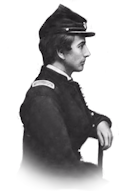
November 28th. Formed line of battle and marched forward, expecting to meet the enemy, but finding them gone, formed in column and closely followed their rear guard. Approaching Mine Run the enemy were found occupying the high ground, entrenched with rifle pits; we drove their pickets across the creek and lay in line of battle all night; the night was very cold and everybody suffered severely and was glad when daylight came, although the works were to be carried by assault. While the attack was being arranged, it was discovered the enemy had retired during the night, leaving us masters of the field.
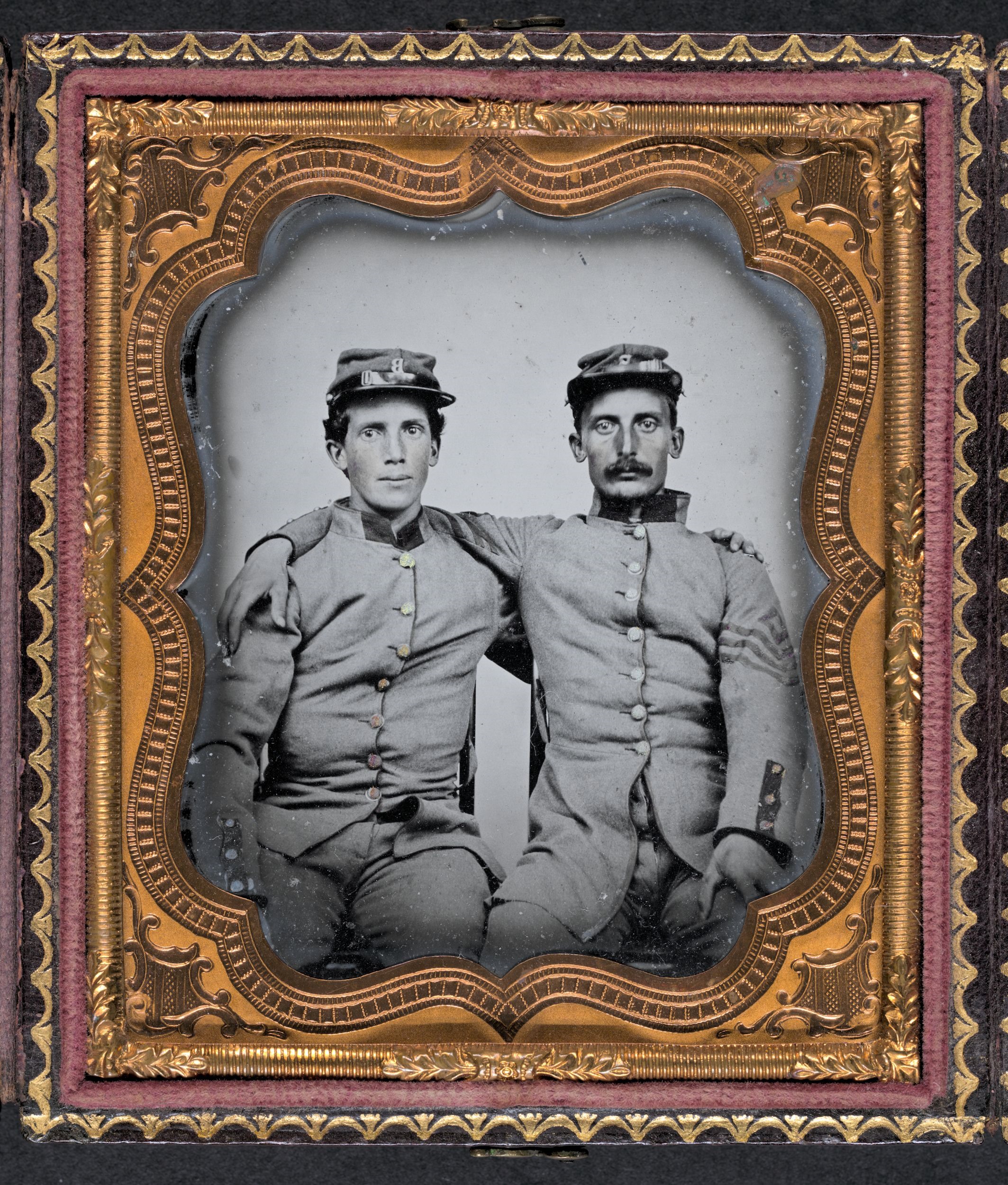
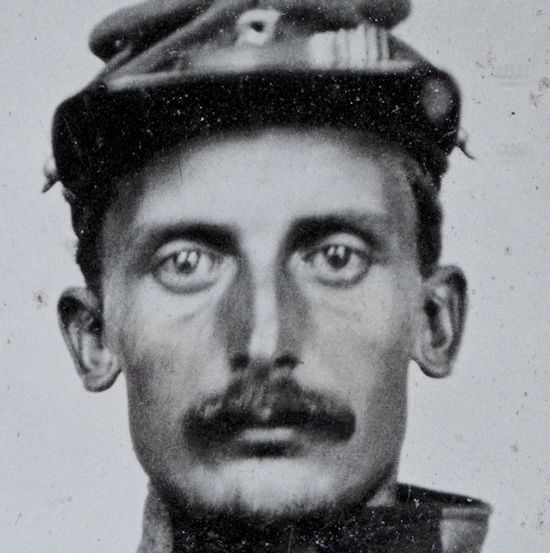
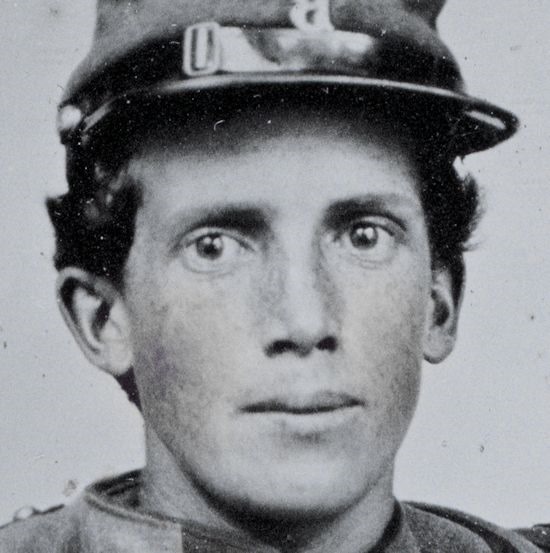
Brothers Private Henry Luther and First Sergeant Herbert E. Larrabee of Company B, 17th Massachusetts Infantry Regiment
__________
Close-up crops:
__________
sixth-plate ambrotype, hand-colored ; 9.3 x 8.3 cm (case)
Liljenquist Family Collection of Civil War Photographs; Ambrotype/Tintype photograph filing series; Library of Congress Prints and Photographs Division.
Record page for image is here.
__________
 Note – This image has been digitally adjusted for one or more of the following:
- fade correction,
- color, contrast, and/or saturation enhancement
- selected spot and/or scratch removal
- cropped for composition and/or to accentuate subject matter
- straighten image
Civil War Portrait 107
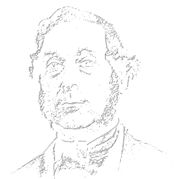
by John Beauchamp Jones
NOVEMBER 28TH.—It rained last night. To-day there is an expectation of a battle near Chancellorville, the battle-ground of June last. Meade is certainly advancing, and Pickett’s division, on the south side of the James River, at Chaffin’s Farm, is ordered to march toward Lee, guarding the railroad, and the local defense men are ordered out.
My son Custis goes with his battalion to Chaffin’s Farm in the morning.
There are rumors of six or eight thousand of the enemy marching up the line of the James River against Petersburg, etc. We have also a rumor of Gen. Rosser having captured the wagon train of two divisions of the enemy in CulpepperCounty.
From Bragg not a word since his dispatch from Ringgold, Ga., and nothing from Longstreet.
Gen. Whiting writes that a large number of Jews and others with gold, having put in substitutes, and made their fortunes, are applying for passage out of the country. They fear their substitutes will no longer keep them out of the army. Gen. W. says they have passports from Richmond, and that the spy who published in the North an account of the defenses of Wilmington, had a passport from Richmond. The government will never realize the injury of the loose passport system until it is ruined.
Never have I known such confusion. On the 26th inst. the Secretary ordered Gen. Pickett, whose headquarters were at Petersburg, to send a portion of his division to Hanover Junction, it being apprehended that a raid might be made in Lee’s rear. Gen. P. telegraphs that the French steam frigate was coming up the river (what for?), and that two Federal regiments and three companies of cavalry menaced our lines on the south side of the river. The Secretary sent this to Gen. Elzey, on this side of the river, asking if his pickets and scouts could not get information of the movements of the enemy. To-day Gen. E. sends back the paper, saying his scouts could not cross the river and get within the enemy’s lines. So the government is in a fog—and if the enemy knew it, and it may, the whole government might be taken before any dispositions for defense could be made. Incompetency in Richmond will some day lose it.
Three o’clock P.M. The weather is clear, and Lee and Meade may fight, and it may be a decisive battle.
I met Mr. Foote, of Tennessee, to-day. He asked me if I did not think our affairs were in a desperate condition. I replied that I did not know that they were not, and that when one in my position did not know, they must be bad enough.
November 28.—A cavalry fight took place at Louisville, Tenn., between a party of rebels and two hundred and twenty-five men belonging to the Sixth Illinois regiment, resulting in the rout of the rebels.
November 28—To-day the whole army is throwing up breastworks. The sharpshooters are out in front, my corps out to-day. We made ourselves small pits to lay in as a protection from the Yankee bullets. These pits are just about large enough to hold two or three men. Pinkney King, Sam Wilson and myself are in one. We are shooting at the enemy all day. They are returning the compliment. Late this evening we saw some of them opposite our pits, trying to get into a house. We jumped out of our pits; and fired at them several times, when poor King was shot and died in a few minutes. Another man was sent to relieve in his place, and we held our position. The other corps of sharpshooters fought all day.
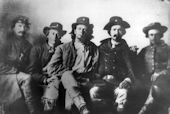
Friday, 27th—Remained in Camp all day.
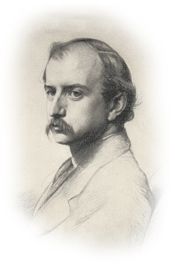
Henry Adams to Charles Francis Adams, Jr.
London, November 27, 1863
We received this week your two letters of 29th October and 5th November, for which we were very grateful. Your trials have my earnest sympathy, but I hope they are now drawing to a close. Mr. Lawley’s last letter to the London Times from the rebel army at Chickamauga is chaotic. He says it took him forty hours to go by rail the hundred and thirty miles from Atlanta to Chattanooga, in the filthiest, meanest cars he ever saw. They are wearing out, down there. Do you observe how they have concentrated? They meet us only at points now, and our cavalry cut into their sides and meet no resistance. A few plunges more! Some desperate kicking that will yet disturb our nerves, and I trust the end will come. They are looking for it here, and the worthy British people are turning their eyes away from the gashed and mangled giant whom their aristocracy wished so much to see successful.
Meanwhile you cannot conceive how differently we feel here in these days. There is no longer any perpetual bickering and sharp prodding necessary to exasperate this Government into doing its duty. All is oil and spikenard; attar of roses and eau sucrée. I have n’t succeeded in getting my eyes shut yet at the astounding energy with which they are making war here on the rebel outfits of vessels. Every day I am bewildered by new instances of the radical change of policy. Certainly the rebs put their foot very far into it, when they assumed such a high tone here against the Government, and if their policy is sound, then I’m sorry that their case is so hard. . . .
Meanwhile, the cloud that seems at length to be breaking away and letting sunlight over us, is settling down darker and darker over Europe. England has refused to join the Congress; so that chance is over. I am no Solomon, but such as I am, I read the English reply as the elegy over the entente cordiale. Napoleon must have allies. If England won’t, then who will? Germany won’t; that we know! Italy alone is not enough. Evidently the Emperor has no choice! He must draw up to Russia, and if he and Russia once declare that the Polish question and the Eastern question go hand in hand, and that free Poland means Russian Turkey, then there’ll be the devil to pay in Europe, and you’ll see a row in which the democracy is sure to come up in the end! That is the problem of the day, and I consider that Europe has practically already declared that our rebels must expect no aid or countenance from here, with such emergencies staring kings and aristocracies in the face. . . .
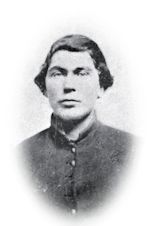
Graysville, Ga., Friday, Nov. 27. Started at 8 A. M. Our march lay through a poor country, thinly settled, covered with small pine, swampy soil. All along the road evidence could be seen of the haste of the enemy. Wagons, limbers, wheels, harness, etc. left, but all were destroyed. Reached Graysville at 3 P. M. and came into camp on a steep hillside, a lively little R. R. station on Chickamauga Creek, good water power, cabinet works and flouring mill. The latter was kept running by soldiers of the 11th Corps. A range of mountains commenced here, and our advance came upon the rear of the enemy here this morning, capturing a battery commanded by Beauregard’s son. It was harnessed up and ready to move. General Thomas manned it with infantry, took it after them. A brisk fight could be heard at Ringgold, five miles distant. Prisoners and deserters came in thick and fast from every direction. They say they are tired of running and being hunted like beasts. Bragg promised victory and gain to them, instead of which they received nothing but a dastardly retreat and shame with empty bellies.
Foragers doing a good business in the shape of geese, chickens, sheep, etc., few hogs. I was sent by Dixon after hay for the horses. Went about two miles south, and returned with a good bundle, quite tired in carrying it, but horses fared well for it.
Sat up till late cooking “dodgers” for the morrow’s march. It looked like rain, so we ditched about our bed, spread our ponchos over and laid down, tired and sleepy, and I felt nearly worn out, but the thought of following a retreating line kept up my strength and spirit.


