
21st. Regt. back at F. All trains leaving on Bowling Green. Got off at dark. 4 miles during the night.
May 2014
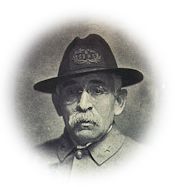
May 21—I heard to-day that my brother Morris was a prisoner at Fort Delaware, Pa. I asked for a parole to-day to go and see my parents in New York, but they could not see it.
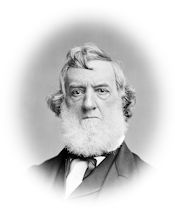
May 21, Saturday. Last night I was at a party at Mr. Chase’s, or his daughter Mrs. Sprague’s, and late in the evening he spoke to me of the great abuses in cotton speculations. It was a new and singular theme for him, and I said it could not be otherwise than demoralizing. He said, “Yes, your whole fleet out West is infected; Porter devotes his attention to getting cotton and has a boat to himself, with a piano and his pipe, on these cotton raids.” I replied this could not be so. The naval men could capture and retain nothing, which the courts do not adjudge to be good prize. We were interrupted at this point. I conclude the Committee on Commerce have notified Chase that they disapprove of his “Trade Regulations,” and this outburst on the Navy is to turn off attention from his officials. But we shall see.
Lieutenant-Commander S. L. Phelps has been with me this evening and given me many interesting details concerning the Red River expedition and the incompetency of General Banks. Among other matters he relates some facts in regard to cotton speculations by persons connected with General Banks — some of his staff — that are exceedingly discreditable. Among others whom he specially mentions is one Clark from Auburn, New York, who appears to be managing director of the cotton operations.
Our gunboats are detained above the falls at Alexandria and we may lose them, though it is possible there yet may be a rise before June. The expedition has many bad features, of which we shall be better informed hereafter.

by John Beauchamp Jones
MAY 21ST.—Sun all day, but a little hazy; perhaps a battle.
There was quite a battle yesterday on the south side. The accounts in the morning’s paper fall short of the whole of our success. The enemy, it is said to-day, did not regain the works from which they were driven, but are now cooped up at Bermuda Hundred. Nothing is feared from Butler.
Nothing from Lee, but troops are constantly going to him.
I saw some 10,000 rusty rifles, brought down yesterday from Lee’s battle-field. Many bore marks of balls, deeply indenting or perforating the barrels. The ordnance officer says in his report that he has collected many thousands more than were dropped by our killed and wounded. This does not look like a Federal victory!
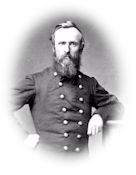
May 21. Saturday. — Rations of coffee, sugar, hard bread, etc., filled our camp with joy last night. It now looks as if Grant had failed to crush Lee merely on account of rain and mud. We seem to have had the best of the fighting and to have taken the most prisoners. I suspect we have gained the most guns and lost the most killed and wounded. General Crook thinks Grant will force the fighting until some definite result is obtained.
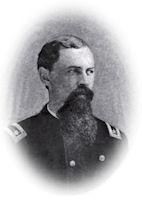
May 21, 1864.
The 23d Army Corps moved South yesterday. I hear that they found the enemy on the south bank of the Etowah river, and that he disputes the crossing. Grant seems to be checked in his “on to Richmond.” It seems that Rebel Iverson, whom I saw dead near Adairsville, was a brigadier general and a son of the ex-Congressman. This Kingston has been a gem of a little town, but the Rebels burned most of it when they left. Our railroad men are very enterprising. The cars got here the same night we did, and a dozen or 20 trains are coming per day, all loaded inside with commissary stores and outside with soldiers.

Henry Adams to Charles Francis Adams, Jr.
London, May 20, 1864
European politics that were so threatening three weeks ago, are now quiet again with a pretty strong tendency towards peace. England has backed down from every position she has taken, and this being the case, there seems to be no more reason for a fight. The Danish question is likely to be settled at the cost of Denmark, which is satisfactory to all parties except the Danes, and it was the very object of the war to squench these. I see no reason now for supposing that there will be any further trouble in Europe this year. Meanwhile, our iron-clad rams at Liverpool have been offered by their owners to the British Government, and M. Bravay was even so generous as to lower his original price, that the Government might take them. Accordingly the Government has taken them and they are now a part of Her Majesty’s Navy. Sic pereant! I wish things were in as prosperous a way on your side as they are here. . . .

Friday, 20th—We are having nice weather. We lay here at Pulaski all day in order to draw rations and to rest. We spent the day in washing clothes and cooking navy beans and fresh beef. The troops of our corps were ordered to pack all extra clothing in their knapsacks and turn them over to the quartermaster, who would then send them by rail to Huntsville, where they are to be stored. We are to go in light marching order from now on, having but a blanket apiece. There is but little sickness in the corps and the men are in fine spirits. All are anxious to get through to the main army.

May 20.—I went up to Atlanta again, but as the army is still retreating I came right back. While there, I met Doctor and Mrs. Hopping, just from Kingston. They came away in a great hurry, leaving a large portion of the hospital stores behind. They did not receive orders to move until our army had entered Kingston. The enemy was expected in by Rome, so Johnston has had to fall back.
Mrs. H. represented the scene among the inhabitants at Kingston as harrowing, at the prospect of having the enemy come among them, as they carry ruin and desolation in their path.
While in search of Mrs. H. I went into the Trout House, in the hall of which I saw a young man lying wounded. I learned he was from Mobile. His name is Leslie, and he is a member of the Seventeenth Alabama Regiment . His wound was not a bad one. He told me that his colonel was in the hotel severely wounded. I paid the latter a visit to see if I could be of any service to him, but found him doing much better than I had expected; his wife was with him.
The Seventeenth Regiment was in Mobile when I was there last; since then it has suffered very much.
I again visited the Gate City Hospital. There were not quite as many wounded as when I was last there. While standing on the gallery I heard a young man just come from a hospital in Cassville, grumbling very much at some doctor who had made him leave there in such a hurry that he had not time to get his clothes. He was giving it to officers in general, and spoke as if he was fighting to please them.
I listened awhile, and then asked him what he was fighting for. He replied, for his country. I then told him how he had been talking. He said he knew that it was wrong, but really the men had a great deal to endure from their officers.
I have heard many complaints of this kind; I think that often the men are to blame; they treat their officers with too much contempt.
Our officers should be the best of our men, and their rank respected if they are not.
Let the privates do their part, and if they have got petty officers over them who abuse the “little brief authority” with which they are clothed, take no notice of it, remembering that there are crosses which must be borne for the good of the cause, and that to “bear is to conquer.”
I know that our men have a good deal to contend with in that respect, as our officers are elected as our civilians are, and whoever is the best electioneerer gets the office, and often not from any personal merit. I am fearful that this same evil will be the means of doing much harm to our cause, if one half of the tales are true which we are constantly listening to, of the drunkenness and evil of all kinds of which these petty officers are guilty. I know of one instance, the truth of which I can vouch for.
The captain of a battery at one time was inebriated while the company was being drilled. He imagined that one of the men had treated him with contempt; so ordered him to be tied to one of the gun-carriages, and dragged behind for twenty miles. This was done by the order of a man who, I am told, was never sober enough at the time of any of the battles to lead his men.
The man who had been thus badly treated was so indignant at the insult, that he immediately applied for an exchange into a company of sharp-shooters—many thought for the purpose of shooting the captain.
I asked a gentleman who had been telling me about some of these misdemeanors, why the culprits were not brought to justice, as drunkenness was a thing which our commanding generals seem very strict about. He answered, that there was a compact between the petty officers to defend each other at all hazards, so it was impossible for a private to have justice.
But we must expect the evil as well as the good. On the other hand, I know of officers so much beloved that their men would lay down their lives in their defense. And the terrible slaughter of our officers shows that there is no lack of bravery mining them. It is said that in every battle we lose many more of them, in proportion, than we do privates.
I have seen enough of our men to know that they will do much better by good treatment than bad.
On the cars, coming back, I met Captain O’Rearin of the Twenty-ninth Alabama Regiment; he was wounded slightly. He told me that he did not believe Captain Haily was killed.
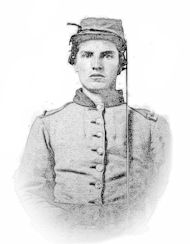
Friday, 20th.—After 12 o’clock last night we were ordered into line, and in short time were moving back rapidly; after leaving detail, to keep up hammering, to make Yanks think we were still fortifying. When Hardee’s Corps went to take position assigned it yesterday, found Federals had beaten to it, consequently we are falling back again. Passed Cartersville 8 A. M. Halted for the night two miles beyond the river on the Canton Road. Everything quiet generally.


