SATURDAY 2
Foggy and misty day with water driping from roofs all the time. A Salute of 34 guns was fired today at noon at the Armory on account of the Admission of Kansas into the Union. Many of the Citizens who did not know the cause of the firing were much alarmed thinking that the “fighting” had commenced. No particular news today. More talk now of an attack upon Forts Sumpter & Pickens now held by U.S. troops. In Congress the Republicans are giving ground for the sake of peace. The Peace Convention invited by Virginia meets Monday the 4th. Did not go down to the Ave tonight.

______
The three diary manuscript volumes, Washington during the Civil War: The Diary of Horatio Nelson Taft, 1861-1865, are available online at The Library of Congress.
1861. February 2.—A slight solace to one’s anxieties about home is found in the circumstances brought by successive steamers during the week. 1. The proposition of Mr. Crittenden, or “The Border States,” seems growing into favour. 2. There was a large minority on the question of secession before next 4th of March in the Georgia Convention. 3. The Alabama members of Congress have been instructed not to quit, but to wait further advices. 4. The South Carolina Commissioner, Colonel Hayne, has suspended his demand for the evacuation of Fort Sumter. 5. Charleston is suffering greatly from want of supplies. 6. Major Anderson is universally applauded. 7. Virginia has adopted as satisfactory the compromise of Crittenden. 8. Financial affairs are improving; the United States stock rose one per cent.
There would seem to be a most extraordinary departure from the chivalric honour in public life which has heretofore characterized Southern gentlemen in the disloyal treachery with which Cobb, Floyd, Thomson, Thomas, and Trescott have pursued secession in the very penetralia of Mr. Buchanan’s Cabinet. Nothing can relieve them from the charge of deceit and treachery but their having apprised the President, on entering his counsels, that, instead of recognizing as paramount their allegiance to the Union, they were governed by “a higher law” of duty to Georgia, Virginia, Mississippi, Maryland, and South Carolina respectively.
Persigny, recently appointed to the Ministry of the Interior in Paris, made a popularity-seeking plunge at his outset in relaxing restrictions on the Press. Suddenly he has turned a corner; giving, three days ago, an “avertissement” to the Cormier de Dimanche, and arbitrarily ordering the offensive writer, Ganeseo, out of the Kingdom. He says that Ganeseo is a foreigner, and cannot be allowed to criticise the principle of the Imperial Government.
—The United States revenue cutter Lewis Cass, Capt. Morrison, a Georgian, was surrendered by the officer at Mobile to the State of Louisiana.—(Doc. 31.)—N Y. Times, Feb. 6.
FORT SUMTER, S.C., February 2, 1861.
(Received A. G. O., February 6.)
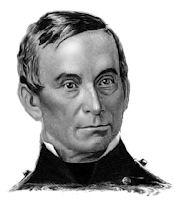
Col. S. COOPER, Adjutant-General:
COLONEL: I received a letter yesterday from Mr. Gourdin, in which he says: “I saw his excellency this evening, and he makes no objection to your groceries being sent you.” The South Carolinians were, we thought, occupied nearly all last night on the works at Cummings Point. One of them is now probably twelve or fifteen feet high, and appears to be bomb-proof, and may be intended to defilade a battery pointing on the channel from our fire. From the energy with which their operations are carried on it is evident that they regard them as very necessary, and that they consider that they are also important, and that they shall be pushed as rapidly as possible. The women and children are on board the steamer, but the wind is blowing so heavily that it is doubtful whether they will attempt to cross the bar with this tide.
I am, colonel, your obedient servant,
ROBERT ANDERSON,
Major, First Artillery, Commanding.