Montgomery, Ala., February 19, 1861.—The brand-new Confederacy is making or remodeling its Constitution. Everybody wants Mr. Davis to be General-in-Chief or President. Keitt and Boyce and a party preferred Howell Cobb¹ for President. And the fire-eaters per se wanted Barnwell Rhett.
My brother Stephen brought the officers of the “Montgomery Blues” to dinner. “Very soiled Blues,” they said, apologizing for their rough condition. Poor fellows! they had been a month before Fort Pickens and not allowed to attack it. They said Colonel Chase built it, and so were sure it was impregnable. Colonel Lomax telegraphed to Governor Moore² if he might try to take it, “Chase or no Chase,” and got for his answer, “No.” “And now,” say the Blues, “we have worked like niggers, and when the fun and fighting begin, they send us home and put regulars there.” They have an immense amount of powder. The wheel of the car in which it was carried took fire. There was an escape for you! We are packing a hamper of eatables for them.
I am despondent once more. If I thought them in earnest because at first they put their best in front, what now? We have to meet tremendous odds by pluck, activity, zeal, dash, endurance of the toughest, military instinct. We have had to choose born leaders of men who could attract love and secure trust. Everywhere political intrigue is as rife as in Washington.
Cecil’s saying of Sir Walter Raleigh that he could “toil terribly” was an electric touch. Above all, let the men who are to save South Carolina be young and vigorous. While I was reflecting on what kind of men we ought to choose, I fell on Clarendon, and it was easy to construct my man out of his portraits. What has been may be again, so the men need not be purely ideal types.
Mr. Toombs³ told us a story of General Scott and himself. He said he was dining in Washington with Scott, who seasoned every dish and every glass of wine with the eternal refrain, “Save the Union; the Union must be preserved.” Toombs remarked that he knew why the Union was so dear to the General, and illustrated his point by a steamboat anecdote, an explosion, of course. While the passengers were struggling in the water a woman ran up and down the bank crying, “Oh, save the red-headed man!” The red-headed man was saved, and his preserver, after landing him noticed with surprise how little interest in him the woman who had made such moving appeals seemed to feel. He asked her, ” Why did you make that pathetic outcry? ” She answered, “Oh, he owes me ten thousand dollars.” “Now, General,” said Toombs, “the Union owes you seventeen thousand dollars a year!” I can imagine the scorn on old Scott’s face.

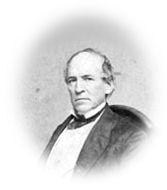
¹ A native of Georgia, Howell Cobb had long served in Congress, and in 1849 was elected Speaker. In 1851 he was elected Governor of Georgia, and in 1857 became Secretary of the Treasury in Buchanan’s Administration. In 1861 he was a delegate from Georgia to the Provisional Congress which adopted the Constitution of the Confederacy, and presided over each of its four sessions.
² Andrew Bary Moore, elected Governor of Alabama in 1859. In 1861, before Alabama seceded, he directed the seizure of United States forts and arsenals and was active afterward in the equipment of State troops.
³ Robert Toombs, a native of Georgia, who early acquired fame as a lawyer, served in the Creek War under General Scott, became known in 1842 as a “State Rights Whig,” being elected to Congress, where he was active in the Compromise measures of 1850. He served in the United States Senate from 1853 to 1861, where he was a pronounced advocate of the sovereignty of States, the extension of slavery, and secession. He was a member of the Confederate Congress at its first session and, by a single vote, failed of election as President of the Confederacy. After the war, he was conspicuous for his hostility to the Union.