SUNDAY, FEBRUARY 3, 1861.
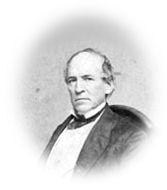
A little frozen this morning, but warm the rest of the day with plenty of mud. Wife and boys went to church. I did not go out till evening. Was in at “Willards” Hotel. Quite full of eastern and northern men. Was introduced to ex Gov Gardner of Mass. Very young man for an ex Governor. The “Peace Congress” meets tomorrow. Most of the Delegates are here. It is said that Virginia will demand as a preliminary that the U.S. troops now in this City be immediately withdrawn and that no State that “Secedes” shall be coerced. If such be the case it will make trouble & Virginia herself will be ignored altho she first called for the convention. It cannot mean Peace.

______
The three diary manuscript volumes, Washington during the Civil War: The Diary of Horatio Nelson Taft, 1861-1865, are available online at The Library of Congress.
HUNTSVILLE, ALA.,
February 3, 1861.
Hon. L. P. WALKER, Montgomery:
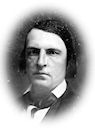
MY DEAR SIR: There is at Pensacola an immense quantity of powder, shot, and shells, which ought to be removed to the interior at the earliest possible moment. Where they now are they are constantly exposed to the danger of recapture, and if they are permitted to remain, one of Lincoln’s first movements will be to concentrate a sufficient force at that point to retake them.
In my judgment there is no hope of a peaceful settlement of our difficulties with the Government of the United States, and all our calculations should be made with reference to the breaking out of a war of vast magnitude and almost unparalleled ferocity. We had the subject of these munitions before the military committee of our Convention, but as they were on the soil of Florida, and beyond our jurisdiction, we could do nothing. Your convention will have more extensive powers.
There is still much discontent here at the passage of the ordinance of secession, but it is growing weaker daily, and unless something is done to stir it up anew will soon die away.
Last week Yancey was burned in effigy in Limestone, but I suppose it was rather a frolic of the “b’hoys” than a manifestation of serious feeling on the part of the older citizens.
I shall be glad to hear from you from time to time during the session of the Convention.
Very truly and respectfully, your friend and obedient servant,
JERE. CLEMENS.
FORT SUMTER, S.C., February 3, 1861.
Col. S. COOPER, Adjutant-General:
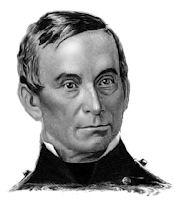
COLONEL: Yesterday and last night, in consequence of the continuance of a storm of wind and rain, very little work was done, as far as we could observe, around us. The rain is still (11 a.m.) continuing. The steamer has not yet left the harbor with the women and children.
I am, colonel, very respectfully, your obedient servant,
ROBERT ANDERSON,
Major, First Artillery, Commanding.