Following the American Civil War Sesquicentennial with day by day writings of the time, currently 1863.

February 2011

MONDAY 25

It has been a delightful day and the streets are nearly dry. Nothing in particular has occured in the City. Everything moves along as usual only there is getting to be a great crowd here. Called tonight with my wife on Mrs & Miss Butterfield at Willards Hotel. Mr & Mrs Lincoln were holding a Levee in their parlors and we went up and were introduced. Mrs L in one room and Mr L in an adjoining room. They are both quite ordinary looking people. I hope He is equal to the crises. To my Mind, appearances do not favor the conclusion that he is. A brilliant assembly at the Hotel, staid there two hours.

______

The three diary manuscript volumes, Washington during the Civil War: The Diary of Horatio Nelson Taft, 1861-1865, are available online at The Library of  Congress.

February 25th.—Find every one working very hard here. As I dozed on the sofa last night, could hear the scratch, scratch of my husband’s pen as he wrote at the table until midnight.

After church to-day, Captain Ingraham called. He left me so uncomfortable. He dared to express regrets that he had to leave the United States Navy. He had been stationed in the Mediterranean, where he liked to be, and expected to be these two years, and to take those lovely daughters of his to Florence. Then came Abraham Lincoln, and rampant black Republicanism, and he must lay down his life for South Carolina. He, however, does not make any moan. He says we lack everything necessary in naval gear to retake Fort Sumter. Of course, he only expects the navy to take it. He is a fish out of water here. He is one of the finest sea-captains; so I suppose they will soon give him a ship and send him back to his own element.

At dinner Judge _____ was loudly abusive of Congress. He said: “They have trampled the Constitution underfoot. They have provided President Davis with a house.” He was disgusted with the folly of parading the President at the inauguration in a coach drawn by four white horses. Then some one said Mrs. Fitzpatrick was the only lady who sat with the Congress. After the inaugural she poked Jeff Davis in the back with her parasol that he might turn and speak to her. “I am sure that was democratic enough,” said some one.

Governor Moore came in with the latest news—a telegram from Governor Pickens to the President, “that a war steamer is lying off the Charleston bar laden with reenforcements for Fort Sumter, and what must we do?” Answer: “Use your own discretion!” There is faith for you, after all is said and done. It is believed there is still some discretion left in South Carolina fit for use.

Everybody who comes here wants an office, and the many who, of course, are disappointed raise a cry of corruption against the few who are successful. I thought we had left all that in Washington. Nobody is willing to be out of sight, and all will take office.

“Constitution” Browne says he is going to Washington for twenty-four hours. I mean to send by him to Mary Garnett for a bonnet ribbon. If they take him up as a traitor, he may cause a civil war. War is now our dread. Mr. Chesnut told him not to make himself a bone of contention.

Everybody means to go into the army. If Sumter is attacked, then Jeff Davis’s troubles will begin. The Judge says a military despotism would be best for us—anything to prevent a triumph of the Yankees. Al l right, but every man objects to any despot but himself.

Mr. Chesnut, in high spirits, dines to-day with the Louisiana delegation. Breakfasted with “Constitution” Browne, who is appointed Assistant Secretary of State, and so does not go to Washington. There was at table the man who advertised for a wife, with the wife so obtained. She was not pretty. We dine at Mr. Pollard’s and go to a ball afterward at Judge Bibb’s. The New York Herald says Lincoln stood before Washington’s picture at his inauguration, which was taken by the country as a good sign. We are always frantic for a good sign. Let us pray that a Cffisar or a Napoleon may be sent us. That would be our best sign of success. But they still say, “No war.” Peace let it be, kind Heaven!

Dr. De Leon called, fresh from Washington, and says General Scott is using all his power and influence to prevent officers from the South resigning their commissions, among other things promising that they shall never be sent against us in case of war. Captain Ingraham, in his short, curt way, said: “That will never do. If they take their government’s pay they must do its fighting.”

A brilliant dinner at the Pollards’s. Mr. Barnwell¹ took me down. Came home and found the Judge and Governor Moore waiting to go with me to the Bibbs’s. And they say it is dull in Montgomery! Clayton, fresh from Washington, was at the party and told us “there was to be peace.”

____

¹ Robert Woodward Barnwell, of South Carolina, a graduate of Harvard, twice a member of Congress and afterward United States Senator. In 1860, after the passage of the Ordinance of Secession, he was one of the Commissioners who went to Washington to treat with the National Government for its property within the State. He was a member of the Convention at Montgomery and gave the casting vote which made Jefferson Davis President of the Confederacy.
SUNDAY, FEBRUARY 24, 1861.

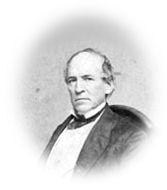
A very windy day and rather cool but not freezing. The mud is drying up in the streets. The Lincolns are all here and it is understood that satisfactory terms have been agreed upon for a settlement of the difficulties as far as the North and the border Slave states are concerned. There is a week (at least) of excitement in prospect in view of the Inauguration on the 4th. No Trouble is now apprehended then. Mr Lincoln did not stand upon his dignity yesterday but called upon the Prest, Genl Cass, and the Cabinet who returned his in evening at Willards. There is a full moon and it is very pleasant out tonight.

______

The three diary manuscript volumes, Washington during the Civil War: The Diary of Horatio Nelson Taft, 1861-1865, are available online at The Library of  Congress.

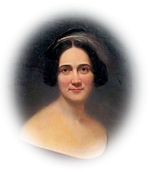
Feb. 24, 1861.—The toil of the week has ended. Nearly a month has passed since I wrote here. Events have crowded upon one another. A lowering sky closes in upon the gloomy evening, and a moaning wind is sobbing in every key. They seem in keeping with the national sorrow, and in lieu of other sympathy I am glad to have that of Nature to-night. On the 4th the cannon boomed in honor of Jefferson Davis’s election, and day before yesterday Washington’s Birthday was made the occasion of another grand display and illumination, in honor of the birth of a new nation and the breaking of that Union which he labored to cement. We drove to the race-course to see the review of troops. A flag was presented to the Washington Artillery by ladies. Senator Judah Benjamin made an impassioned speech. The banner was orange satin on one side, crimson silk on the other, the pelican and brood embroidered in pale green and gold. Silver crossed cannon surmounted it, orange-colored fringe surrounded it, and crimson tassels drooped from it. It was a brilliant, unreal scene; with military bands clashing triumphant music, elegant vehicles, high-stepping horses, and lovely women richly appareled.

Wedding cards have been pouring in till the contagion has reached us; Edith will be married next Thursday. The wedding dress is being fashioned, and the bridesmaids and groomsmen have arrived. Edith has requested me to be special mistress of ceremonies on Thursday evening, and I have told this terrible little rebel, who talks nothing but blood and thunder, yet faints at the sight of a worm, that if I fill that office no one shall mention war or politics during the whole evening, on pain of expulsion. The clock points to ten. I must lay the pen aside.

______

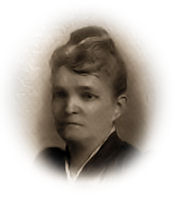
Note: To protect Mrs. Miller’s job as a teacher in New Orleans, the diary was published anonymously, edited by G. W. Cable, names were changed and initials were often used instead of full names — and even the initials differed from the real person’s initials.

SATURDAY 23

Another pleasant morning but rainy towards night. I had numerous calls today in the office from NY friends and two or three letters requesting me to attend to business for the writers. Mr Lincoln arrived today by the morning train direct from Harrisburg without stopping in Baltimore. It is said that a dispatch was sent him from here to come immediately. He is here at Willards and seeing his friends at his room. The Hotel seemed jamed full tonight. I went to market with the black “chattel” behind me, a feat on her part which seems to satisfy her ambition entirely.

______

The three diary manuscript volumes, Washington during the Civil War: The Diary of Horatio Nelson Taft, 1861-1865, are available online at The Library of  Congress.

Feb. 23.—President-elect Abraham Lincoln arrived in Washington.  The published programme of his journey had been abandoned at Harrisburg, which city he left secretly last night.—(Doc. 38.)—Commercial, Feb. 28.

—United States property, to a great amount, together with the various army posts in Texas, were betrayed to that State by General Twiggs. —(Doc. 39.)—Times, Feb. 26.

MONTGOMERY, ALA.,
February
23, 1861.

Maj. W. H. C. WHITING:

MY DEAR SIR: You will proceed to Charleston and deliver the note addressed to Governor Pickens, which you will find herewith inclosed. After conferring with him as to the time and mode of visiting the different posts in Charleston Bay, you will enter upon a reconnoissance of the harbor of Charleston and its approaches. You will inspect the various works in our possession and gain such knowledge as circumstances will permit of Fort Sumter. In inspecting the works of the Confederate States you will bear in mind the double relation they may have as works of offense and of defense. You will make an inventory of the armament and of the munitions at the forts and in store, noting particularly the different qualities of cannon powder, as indicated by grain. Generally, I desire you to perform all the duties which devolve upon an engineer charged with the examination of works, and the preparation for active operations under circumstances such as those of Charleston, in this emergency.

Very respectfully, truly, yours,

JEFF’N DAVIS.

WAR DEPARTMENT, February 23, 1861.

Maj. ROBERT ANDERSON,
First Artillery, Commanding Fort Sumter, Charleston Harbor, S.C.:

SIR: It is proper I should state distinctly that you hold Fort Sumter as you held Fort Moultrie, under the verbal orders communicated by Major Buell, subsequently modified by instructions addressed to you from this Department, under date of the 21st of December, 1860.

In your letter to Adjutant-General Cooper, of the 16th instant, you say:

I should like to be instructed on a question which may present itself in reference to the floating battery, viz: What course would it be proper for me to take if, without a declaration of war or a notification of hostilities, I should see them approaching  my fort with that battery? They may attempt placing it within good distance before a declaration of hostile intention.

It is not easy to answer satisfactorily this important question at this distance from the scene of action. In my letter to you of the 10th of January I said:

You will continue, as heretofore, to act strictly on the defensive, and to avoid, by all means compatible with the safety of your command, a collision with the hostile forces by which you are surrounded.

The policy thus indicated must still govern your conduct.

The President is not disposed at the present moment to change the instructions under which you have been heretofore acting, or to occupy any other than a defensive position. If, however, you are convinced by sufficient evidence that the raft of which you speak is advancing for the purpose of making an assault upon the fort, then you would be justified on the principle of self-defense in not awaiting its actual arrival there, but in repelling force by force on its approach. If, on the other hand, you have reason to believe that it is approaching merely to take up a position at a good distance should the pending question be not amicably settled, then, unless your safety is so clearly endangered as to render resistance an act of necessary self-defense and protection, you will act with that forbearance which has distinguished you heretofore in permitting the South Carolinians to strengthen Fort Moultrie and erect new batteries for the defense of the harbor. This will be but a redemption of the implied pledge contained in my letter on behalf of the President to Colonel Hayne, in which, when speaking of Fort Sumter, it is said:

The attitude of that garrison, as has been often declared, is neither menacing, nor defiant, nor unfriendly. It is acting under orders to stand strictly on the defensive, and the government and people of South Carolina must know that they can never  receive aught but shelter from its guns, unless, in the absence of all provocation, they should assault it and seek its destruction.

A dispatch received in this city a few days since from Governor Pickens, connected with the declaration on the part of those convened at Montgomery, claiming to act on behalf of South Carolina as well as the other seceded States, that the question of the possession of the forts and other public property therein had been taken from the decision of the individual States and would probably be preceded in its settlement by negotiation with the Government of the United States, has impressed the President with a belief that there will be no immediate attack on Fort Sumter, and the hope is indulged that wise and patriotic counsels may prevail and prevent it altogether.

The labors of the Peace Congress have not yet closed, and the presence of that body here adds another to the powerful motives already existing for the adoption of every measure, except in necessary self-defense, for avoiding a collision with the forces that surround you.

Very respectfully, your obedient servant,

J. HOLT.

—The people of Charleston, S. C., celebrated Washington’s birthday with great enthusiasm. The Pickens cadets paraded for the first time, and were presented to Governor Pickens by Lieutenant Magrath. The Governor made the company a brief address, urging upon its members the bright and shining example of Washington as deserving imitation. Subsequently a banner was presented to the Washington Light Infantry, and in the evening the company reassembled in Hibernian Hall, where it was addressed by Colonel Edward Carroll, in an oration of a rather sanguinary hue. Other companies also celebrated the day in their own w ay.—Louisville Journal.

—The Collector of Charleston gives official notice that all vessels from foreign States, except Texas, will be treated as “foreign vessels,” and subjected to the port dues and other charges established by the laws of the Confederated States.—Charleston Courier.

FRIDAY 22

This has been a delightful day, rather cool, but pleasant. The celebration of Washingtons birth day called out a grand display of the Military of the District in the morning. The U.S. troops paraded afterwards by themselves. The order for their appearance in the morning with the Militia was for some reason not now understood countermanded. Wife and family went to the Ave at 10. o’clock and witnessed the display from C Woodwards Balcony. I dined by invitation at the National with some Gentlemen from NY City. A salute of 34 guns was fired, and the “Stars & Stripes” were flying from every point today. Spent the evening at home.

______

The three diary manuscript volumes, Washington during the Civil War: The Diary of Horatio Nelson Taft, 1861-1865, are available online at The Library of  Congress.