
16th. Monday. Issued rations to several companies. Stayed at the Commissary most of the day.
June 2012
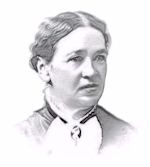
Written from the Sea islands of South Carolina.
[Diary] 16th.
To-day Mr. McKim, Lucy, Ellen, and I went over to Gabriel Caper’s, Edgar Fripp’s, Dr. Scott’s, and to Oliver Fripp’s, where we dined with Mr. Sumner, Mr. Park, and Mr. Gannett. They rode beside our carriage on their horses, and as the rains made the roads bad, they explored the broken bridges and fords. We had a jolly time except when Mr. McKim was questioning the people about their treatment in the old time. Such dreadful stories as they told! Dr. Scott’s own daughter and granddaughter had marks of their mistresses’ whip to show. They lived in a very nice house built entirely by the husband of one of them.
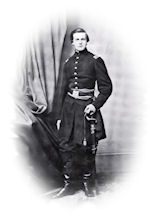
Camp at Gaines’ Mill, Va.,
Monday, June 16, 1862.
Dear Mother:—
I received your letter of the 10th yesterday. I was writing at the time and intended to answer yours as soon as I finished the one I was writing, but a thunder storm came up and prevented me. I suppose you would think at home that was a singular excuse, but anyone who has lived in these shelter tents any length of time can appreciate the difficulties of writing in a heavy shower, perfectly. The wind blows and the rain comes down in great drops that spatter right through our light canvas tents. It whirls round and comes driving in the door, and by the time we have something hung up to stop that fun, there is a pretty large creek running right through where we want to sleep, and as that won’t do, why that must be attended to also, and so it goes. This is a great country for rain. It rains for two days and the next day it rains, and then we have some rain and wet weather. For a wonder we had three or four very hot days last week, but the rain yesterday afternoon was cold and last night we slept cold. Night before was very hot and we could not sleep for the heat.
I feel better this morning than I have in some time before. I have been quite unwell since the fight. I got very weak and couldn’t eat, but I’m just about all right again now. It seems wonderful that I have stood it so well.
With regard to Captain Austin’s complimentary remarks, I presume he was conscientious in what he said, but I must say if that was a specimen of his judgment, he is a very poor judge of military matters. I think, however, that I have done tolerably well in some things. I’ve been in the service over a year now and I’ve never been “pricked” (marked absent without leave) or had any extra duty imposed on me for misconduct. I’ve never been in the guardhouse or had any serious difficulties with officers or men. The nearest I have come to that was two or three days ago when I turned around and struck a fellow a tolerable crack in the face for his extra exertions to get his feet entangled with mine in the ranks. It made some little stir for the time being, but the captain did not say a word. I know he did not blame me much, but it would not do to say anything in defense of such conduct in the ranks, and so he said nothing. I feel well enough satisfied myself and I have an idea that the fellow, who is the veriest bloat and bully in the company, will conclude to let me alone. I suppose he thought as some others did, because I never wrestle or scuffle or box, that I hadn’t much spunk, and could be snubbed round by a bigger fellow with impunity. I don’t know as my temper is any better than it used to be, but I control it rather more. I suppose you won’t think the above is evidence of the fact, but my ideas of non-resistance are different from Father’s and, perhaps, from yours.
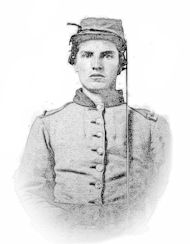
Monday, 16th.—Got to Knoxville at 4 A. M.; went one mile to camp. Regiment ordered to Loudon. Being sick, I was left at camp. J. M. Badgett and W. T. Swanson were also left, and waited on me very well.
(Note: picture is of an unidentified Confederate soldier.)
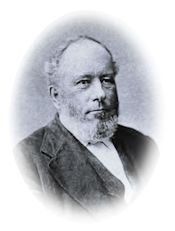
Hot Weather.
June 16. It is so hot most of the time we are scarcely able to do anything more than keep ourselves as comfortable as possible. All duty is suspended except guard duty and dress parade, and we are getting almost too lazy to eat; in fact do miss a good many meals unless they happen to have something we like. We lie around in our tents or in the shade of the trees from 9 o’clock in the morning till 4 in the afternoon, brushing away the flies, and trying to keep cool. I thought I had seen some flies at home but they are no comparison to what we have here. I really believe there are more flies in this camp than there are in the whole state of Massachusetts. Besides they are regular secesh ones, and by the way they bite, one would think he was among a nest of hornets. I am often reminded of the old minstrel song:
“If you perchance in summer time
Should visit Carolina’s sultry clime,
And in the shade should chance to lie
You’d soon find out the blue tail fly.”
We were visited last evening by a thunder storm which makes it quite comfortable today. For several days past the weather has been very hot, the thermometer ranging about 100 degrees in the shade. Just before sunset last evening the clouds began to gather and we soon heard the low mutterings of thunder. We knew very well what that meant and set about fastening our tents by driving down the pins a little firmer. We got ready for it just in season, and such a storm! a regular bombardment, with rivers of water, lasting about two hours. Why our thunder storms at home are only a slight skirmish compared with this. After four or five days so hot we can but just live we get one of these storms, and then we have one cool, comfortable day. It is so cool today I expect the colonel will have us out for drill towards night. He says when it is cool we must work a little or we shall get so lazy we can’t stir, and will forget all we ever knew.
Dress Parade.
Next to a good choir of singers, the colonel takes great pride in a dress parade; and he certainly has good ones, as good, perhaps, as any regiment here. The boys like to please him and at dress parade put in their best work, especially if there happens to be a good many looking on. They have got so used to him, they can anticipate the order, and it is executed together as one man. I reckon Gen. Foster thinks pretty well of us, as he is out here two or three times a week to witness our dress parades.

June 16.—Max got back this morning. H. and he were in the parlor talking and examining maps together till dinner-time. When that was over they laid the matter before us. To buy provisions had proved impossible. The planters across the lake had decided to issue rations of corn-meal and peas to the villagers whose men had all gone to war, but they utterly refused to sell anything. “They said to me,” said Max, “‘ We will not see your family starve, Mr. K.; but with such numbers of slaves and the village poor to feed, we can spare nothing for sale.’” “Well, of course,” said H., “we do not purpose to stay here and live on charity rations. We must leave the place at all hazards. We have studied out every route and made inquiries everywhere we went. We shall have to go down the Mississippi in an open boat as far as Fetler’s Landing (on the eastern bank). There we can cross by land and put the boat into Steele’s Bayou, pass thence to the Yazoo River, from there to Chickasaw Bayou, into McNutt’s Lake, and land near my uncle’s in Warren County.”

______
Note: To protect Mrs. Miller’s job as a teacher in New Orleans, the diary was published anonymously, edited by G. W. Cable, names were changed and initials were often used instead of full names — and even the initials differed from the real person’s initials.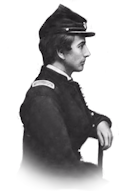
June 16th. The rumor of a night attack proved utterly groundless, nothing out of the usual happened. We slept in our blankets in line of battle, and slept pretty well, too. When an alarm is sounded now, all hands rush to the color line, nobody waiting for orders. This makes it easier for me, and saves time. Food still poor for officers on account of the non-appearance of the sutlers. The men get fresh beef twice a week; bean soup, salt pork, dessicated vegetables, and occasionally canned peaches. In appearance, we are almost as dark as Indians, the regulation fatigue cap being the worst possible protection for the face. All the officers wear soldiers’ trousers and blouses, the latter simply ornamented with gilt buttons and shoulder straps. We buy these things from the quartermaster, paying cost price for them. Our full dress hat is the slouch soft hat, with gold cord and acorn tassles; gold wreath in front encircling for infantry, a bugle; artillery, crossed cannons; cavalry, crossed sabres; and staff and general officers, U. S. We have long ago done away with the gold sword knot, and now use a strong leather one, which is serviceable. Seth I find the greatest of all treasures. He is indefatigable in his attention to my comfort; and never neglects anything belonging to me; books, horses, swords, buckles, and clothes are always in order; and when I want to be amused, he is ever ready to talk interestingly upon a great variety of subjects, and knows when to stop and when to go ahead.
BOOK II
“I hope to die shouting, the Lord will provide!”
Monday, June 16th, 1862.
There is no use in trying to break off journalizing, particularly in “these trying times.” It has become a necessity to me. I believe I should go off in a rapid decline if Butler took it in his head to prohibit that among other things. . . . I reserve to myself the privilege of writing my opinions, since I trouble no one with the expression of them. . . . I insist, that if the valor and chivalry of our men cannot save our country, I would rather have it conquered by a brave race than owe its liberty to the Billingsgate oratory and demonstrations of some of these “ladies.” If the women have the upper hand then, as they have now, I would not like to live in a country governed by such tongues. Do I consider the female who could spit in a gentleman’s face, merely because he wore United States buttons, as a fit associate for me? Lieutenant Biddle assured me he did not pass a street in New Orleans without being most grossly insulted by ladies. It was a friend of his into whose face a lady spit as he walked quietly by without looking at her. (Wonder if she did it to attract his attention?) He had the sense to apply to her husband and give him two minutes to apologize or die, and of course he chose the former.[1] Such things are enough to disgust any one. “Loud” women, what a contempt I have for you! How I despise your vulgarity!
Some of these Ultra-Secessionists, evidently very recently from “down East,” who think themselves obliged to “kick up their heels over the Bonny Blue Flag,” as Brother describes female patriotism, shriek out, “What! see those vile Northerners pass patiently! No true Southerner could see it without rage. I could kill them! I hate them with all my soul, the murderers, liars, thieves, rascals! You are no Southerner if you do not hate them as much as I!” Ah ça! a true-blue Yankee tell me that I, born and bred here, am no Southerner! I always think, “It is well for you, my friend, to save your credit, else you might be suspected by some people, though your violence is enough for me.” I always say, “You may do as you please; my brothers are fighting for me, and doing their duty, so that excess of patriotism is unnecessary for me, as my position is too well known to make any demonstrations requisite.”
This war has brought out wicked, malignant feelings that I did not believe could dwell in woman’s heart. I see some of the holiest eyes, so holy one would think the very spirit of charity lived in them, and all Christian meekness, go off in a mad tirade of abuse and say, with the holy eyes wondrously changed, “I hope God will send down plague, yellow fever, famine, on these vile Yankees, and that not one will escape death.” O, what unutterable horror that remark causes me as often as I hear it! I think of the many mothers, wives, and sisters who wait as anxiously, pray as fervently in their faraway homes for their dear ones, as we do here; I fancy them waiting day after day for the footsteps that will never come, growing more sad, lonely, and heart-broken as the days wear on; I think of how awful it would be if one would say, “Your brothers are dead”; how it would crush all life and happiness out of me; and I say, “God forgive these poor women! They know not what they say!” O women! into what loathsome violence you have abased your holy mission! God will punish us for our hard-heartedness. Not a square off, in the new theatre, lie more than a hundred sick soldiers. What woman has stretched out her hand to save them, to give them a cup of cold water? Where is the charity which should ignore nations and creeds, and administer help to the Indian and Heathen indifferently? Gone! All gone in Union versus Secession! That is what the American War has brought us. If I was independent, if I could work my own will without causing others to suffer for my deeds, I would not be poring over this stupid page; I would not be idly reading or sewing. I would put aside woman’s trash, take up woman’s duty, and I would stand by some forsaken man and bid him Godspeed as he closes his dying eyes. That is woman’s mission! and not Preaching and Politics. I say I would, yet here I sit! O for liberty! the liberty that dares do what conscience dictates, and scorns all smaller rules! If I could help these dying men! Yet it is as impossible as though I was a chained bear. I can’t put out my hand. I am threatened with Coventry because I sent a custard to a sick man who is in the army, and with the anathema of society because I said if I could possibly do anything for Mr. Biddle — at a distance — (he is sick) I would like to very much. Charlie thinks we have acted shockingly in helping Colonel McMillan, and that we will suffer for it when the Federals leave. I would like to see any man who dared harm my father’s daughter! But as he seems to think our conduct reflects on him, there is no alternative. Die, poor men, without a woman’s hand to close your eyes! We women are too patriotic to help you! I look eagerly on, cry in my soul, “I wish —”; you die; God judges me. Behold the woman who dares not risk private ties for God’s glory and her professed religion! Coward, helpless woman that I am! If I was free —!
[1] This passage was later annotated by Mrs. Dawson as follows: “Friend (Farragut). Lady (I know her, alas!). Husband (She had none!).”

June 16.—A few days ago Mrs. Thornton received news that her eldest son had been wounded in the late battle near Richmond. She is a good deal worried about him, but bears the news with fortitude. She is one who would think life a disgrace, received as the price of liberty. She is very hopeful as to his being well cared for, and is certain that some good woman is administering to his wants in that grand old patriotic state—Virginia. We hear much about the kindness of the people there to the sufferers.
Bayonet Charge at Secessionville, SC, June 16, 1862 – Frank Leslie’s Illustrated Newspaper
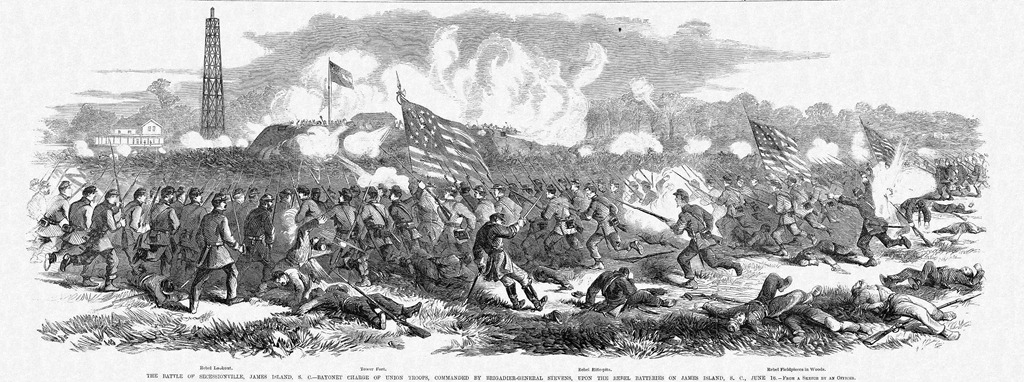
Click on image to view larger version.
The Battle of Secessionville.
(from The days of the Swamp Angel by Mary Hall Leonard, 1914)
Since the taking of Port Royal the United States had gradually gained possession of nearly all the Sea Islands south of Charleston, as the Confederates left them one by one. Now it was said at the War Department in Washington that if the Union forces were suddenly concentrated on James Island, and if Fort Johnson could be taken, the city itself might be reached by Federal batteries. So from Hilton Head the troops embarked, landing at Old Battery on the Stono River. But by this time the Confederates had erected the new fortification, afterward called Fort Lamar, to keep off the invaders. The commander of the Union forces now attempted by a sudden overwhelming movement to capture this fort.
On the morning of June 16 the people of Charleston were startled by the discharge of guns and by smoke in the direction of James Island. Messengers soon began to arrive in the city and telegrams from the nearest points came pouring in.
The whole town was in a tremor of excitement. People thronged the streets, watching the smoke of the battle, listening to the sounds of the firing, and eagerly asking one another for news.
Thus was precipitated the battle of James Island, or Secessionville, resulting in the repulse of the United States troops, who fell back, leaving their killed and wounded on the field.
With the retreat of the invaders a great wave of rejoicing swept over the community. But there was no time for idle exultation. The wounded must be cared for. Mourners must be comforted. Preparations must be made for further defense in case of renewed attack.
Frampton Place, near the scene of the battle, was at once made into a temporary hospital, though as soon as possible the wounded and the prisoners were brought into the city. The hospitals were filled with the injured of both armies, and many of the ladies of Charleston found a new field for service as volunteer nurses. As for Dr. MacPherson, he seemed to be in a dozen places at once, attending personally to the most important cases, and organizing and superintending the work of other surgeons.
To the relief of the Confederates, the Northern general did not renew the attack. The defeat at Secessionville terminated this invasion, and no more attempts were made to enter Charleston from the rear.


