Following the American Civil War Sesquicentennial with day by day writings of the time, currently 1863.

June 2012

Georgeanna Woolsey to her mother.

June 6, Wilson Small.

We have on our boats nine “contraband” women from the Lee estate, real Virginia darkeys but excellent workers, who all “wish on their souls and bodies that the rebels could be put in a house together and burned up.” “Mary Susan,” the blackest of them, yielded at once to the allurements of freedom and fashion, and begged Mr. Knapp to take a little commission for her when he went to Washington. “I wants you for to get me, sah, if you please, a lawn dress, and a hoop skirt, sah.” The slave women do the hospital washing in their cabins on the Lee estate, and I have been up to-day to hurry them with the Knickerbocker’s eleven hundred pieces. The negro quarters are decent little houses with a wide road between them and the bank, which slopes to the river. Any number of little darkey babies are rushing about and tipping into the wash-tubs. In one cabin we found two absurdly small ones, taken care of by an antique bronze calling itself grandmother. Babies had the measles which would not “come out” on one of them, so she had laid him tenderly in the open clay oven, and with hot sage tea and an unusually large brick put to his morsels of feet, was proceeding to develop the disease. Two of the colored women and their husbands work for us at the tent kitchen. The other night they collected all their friends behind the tent and commenced in a monotonous recitative, a condensed story of the creation of the world, one giving out a line and the others joining in, from Genesis to the Revelation, followed with a confession of sin, and exhortation to do better ; till—suddenly—their deep humility seemed to strike them as uncalled for, and they rose at once to the assurance of the saints, and each one instructed her neighbor at the top of her voice to


“Go tell all de holy angels

I done, done all I kin.”


Just as they came to a pause, the train from the front with wounded arrived—midnight, and the work of feeding and caring for the sick began again. Dr. Ware was busy seeing that the men were properly lifted from the platform cars and put into our Sibley tents. Haight was “processing” his detail with blankets, and our Zouave and five men were going the rounds with hot tea and fresh bread, while we were getting beef tea and punch ready for the sickest through the night. By two o’clock we could cross the plank to our own staterooms on the Wilson Small.
June 6. [Okolona, Mississippi]—The enemy are still in Corinth, and are fortifying it. They do not seem inclined to follow us.

I have just received a letter from my brother, who is in camp near Baldwin.

June 6th.—Paul Hayne, the poet, has taken rooms here. My husband came and offered to buy me a pair of horses. He says I need more exercise in the open air. “Come, now, are you providing me with the means of a rapid retreat?” said I. “I am pretty badly equipped for marching.”
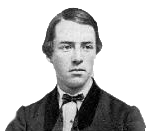
Mrs. Rose Greenhow is in Richmond. One-half of the ungrateful Confederates say Seward sent her. My husband says the Confederacy owes her a debt it can never pay. She warned them at Manassas, and so they got Joe Johnston and his Paladins to appear upon the stage in the very nick of time. In Washington they said Lord Napier left her a legacy to the British Legation, which accepted the gift, unlike the British nation, who would not accept Emma Hamilton and her daughter, Horatia, though they were willed to the nation by Lord Nelson.

Mem Cohen, fresh from the hospital where she went with a beautiful Jewish friend. Rachel, as we will call her (be it her name or no), was put to feed a very weak patient. Mem noticed what a handsome fellow he was and how quiet and clean. She fancied by those tokens that he was a gentleman. In performance of her duties, the lovely young nurse leaned kindly over him and held the cup to his lips. When that ceremony was over and she had wiped his mouth, to her horror she felt a pair of by no means weak arms around her neck and a kiss upon her lips, which she thought strong, indeed. She did not say a word; she made no complaint. She slipped away fron the hospital, and hereafter in her hospital work will minister at long range, no matter how weak and weary, sick and sore, the patient may be. “And,” said Mem, “I thought he was a gentleman.” “Well, a gentleman is a man, after all, and she ought not to have put those red lips of hers so near.”

June 6.—At five o’clock A.m., the United States fleet in the Mississippi river, near Memphis, engaged the rebel fleet of eight rams and gunboats, and after a two hours’ fight, seven of the rebel craft were either captured or destroyed. On the conclusion of the battle, the Mayor of Memphis surrendered the city.—(Doc. 60.)

—Gen. Fremont’s army reached Harrisonburgh, Va., at two o’clock this afternoon, and drove out the rebel rear-guard from the town. At four o’clock the First New-Jersey cavalry, after driving the enemy through the village, fell into an ambuscade, and Colonel Windham, its commander, was captured. The regiment sustained considerable loss. General Bayard subsequently engaged the rebels with his brigade, drove them from his position, capturing their camp. They then continued their retreat—(Doc. 63.)

—The tax bill was passed by the Senate of the United States, by a vote of thirty-seven to one, Mr. Powell, of Kentucky, voting in the negative.

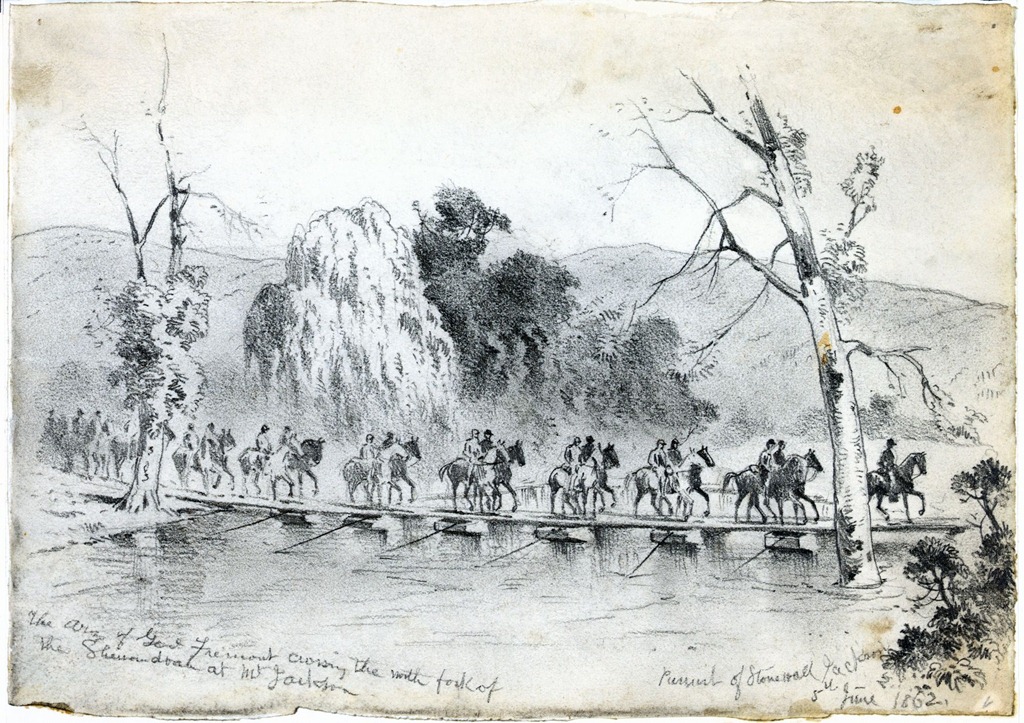
The army of General Fremont crossing the north fork of the Shenandoah at Mt. Jackson--Pursuit of Stonewall Jackson

The army of General Fremont crossing the north fork of the Shenandoah at Mt. Jackson – Pursuit of Stonewall Jackson

1862 June 5.

Artist: Edwin Forbes.

Part of Morgan collection of Civil War drawings. Library of Congress Prints and Photographs Division Washington, D.C. 20540 USA

Record page for this image: http://www.loc.gov/pictures/item/2004661889/

Camp near New Bridge, June 5, 1862.

Dear Father, — . . . As an instance of the advanced state of civilization and refinement in these regions, and to show the progress the F. F. V.’s make in the treatment of insane people, let me tell you the following true story. Captain Locke and some others of our staff went off to ride on one of the numerous side roads which abound in this country, the other day, and in the course of their ride stopped at a house by the way. Here they found a crazy man, the son of the man who owned the place, who was confined in a small out-house or den separate from the house. Here he was chained naked, and with no furniture but a small quantity of straw to lie on. His food was conveyed to him on the end of a stick which was thrust through the window. Just imagine a human being chained like a wild beast in a cage, and this in the middle of the nineteenth century. They said his howls and shrieks were terrible, and made them shudder to hear them. A fair sample of most of the poor whites and farmers. Ignorant, and as superstitious as the people of a hundred years ago. No idea in their head, but that of secession, and this slowly dawning on them as a humbug, and meaning ruin to them and advancement to the rich.

I am glad to hear you say that you have confidence in McClellan. You may think him slow, but remember, he is sure. He is hampered by Stanton, whose orders and commands have delayed, worried and retarded McClellan, and lengthened this war. McClellan had the whole campaign arranged in a most perfect manner. He would have had a large force in New Mexico, threatening Texas, and keeping the rebels from carrying on a protracted warfare there, which they threaten to do, if he had been let alone. Richmond also would have been ours some time ago. But hampered by the want of troops, he is compelled to advance cautiously and slowly. General Porter thinks now, however, that the rebels are on their last legs, and that the rebellion will be speedily closed. With the exception of _____’s division, which ran in the most disgraceful manner, our troops behaved splendidly and have given our generals great confidence in the result of the impending battle. I feel sure that we shall whip them, and that thoroughly. Casey lost ten guns in the fight, but we licked them well afterwards, and drove them at the point of the bayonet. The prisoners say that they expected to bag 30,000 of our men, who had no bridges to cross the Chickahominy, but that after the fight they thought we had 200,000 men and plenty of bridges. General Porter is as brave a soldier and as good a general as any in the army. He is modest, but will make his mark in this war. He has made himself many enemies on account of his sticking by McClellan, and this prevented his confirmation by the Senate until near the end of the Yorktown siege.

JUNE 5TH.—I reopened my office in the department.

Thursday, 5th—We received marching orders with one day’s rations. It is reported that General Buell will move with the Army of the Ohio into central Tennessee. It is clear and hot today.

June 5th.

Last night I determined to stay. Miriam went after our trunks at daylight. A few hours after, Lilly wrote we must go back. McClellan’s army was cut to pieces and driven back to Maryland, by Jackson; the Federals were being driven into the swamp from Richmond, too. Beauregard is undoubtedly coming to attack Baton Rouge; his fire would burn the town, if the gunboats do not; the Yankees will shell, at all events, if forced to retire. It cannot stand. We can’t go to New Orleans. Butler says he will lay it in ashes if he is forced to evacuate it, from yellow fever or other causes. Both must be burned. Greenwell is not worth the powder it would cost, so we must stand the chance of murder and starvation there, rather than the certainty of being placed between two fires here. Well, I see nothing but bloodshed and beggary staring us in the face. Let it come. “I hope to die shouting, the Lord will provide.”

June 5 — This morning we moved about a mile south of where we were camped last night, remained there till nearly midday, then moved up the Valley to within half a mile of Harrisonburg, and camped.