Following the American Civil War Sesquicentennial with day by day writings of the time, currently 1863.

June 2012

Flat Top Mountain, June 5, 1862. Thursday. — Rained most of the day. Want of exercise these rainy days begets indigestion, indigestion begets headache, blue devils, ill nature, sinister views, and general disgust. Brightened up a little by news that General Pope has taken ten thousand men and fifteen thousand stand of arms from Beauregard’s retreating army. It looks as if Beauregard’s army was breaking up. Later. News of the taking of Memphis and Fort Pillow.

General Cox read me a letter from General Garfield in which he speaks of the want of sympathy among army officers with the cause of the war; that they say Seward, Chase, and Sumner are more to blame than Davis and Toombs! General Sherman said he was “ashamed to acknowledge that he had a brother (Senator John Sherman) who was one of these damned Black Republicans”!

These semi-traitors must be watched. — Let us be careful who become army leaders in the reorganized army at the end of the Rebellion. The man who thinks that the perpetuity of slavery is essential to the existence of the Union, is unfit to be trusted. The deadliest enemy the Union has is slavery — in fact, its only enemy.

June 5th. Learned and ordered the number of pounds of beef needed, also issued it. Issued rations for the five days’ expedition under Doubleday. Took us till “taps.” Orders came from Col. Wier, Tenth Kansas, to delay further movements. The Colonel (Doubleday) resolves to resign immediately, so enraged at the intrigue and rascality of Kansas officers and politicians in making Wier rank him. Officers sent a paper to him begging him not to do it. Seemed to regret the idea very much. Concluded to go on with the expedition anyway.

“Wilson Small,” June 5.

Dear Mother, — I finished my last letter (to A., I believe) on the afternoon of the day when we took eighty men on the “Small,” and transferred them to the “Webster.”

“We had just washed and dressed, and were writing letters, when Captain Sawtelle came on board to say that several hundred wounded men were lying at the landing; that the “Daniel Webster No. 2” had been taken possession of by the medical officers, and was already half full of men, and that the surplus was being carried across her to the “Vanderbilt;” that the confusion was terrible; that there were no stores on board the “Daniel Webster No. 2” (she having been seized the moment she reached the landing on her return from Yorktown, without communicating with the Commission), nor were there any stores or preparations, not even mattresses, on board the “Vanderbilt.”

Of course the best in our power had to be done. Mrs. Howland and I begged Mr. Olmsted not to refrain from sending us, merely because we had been up all night. He said he would n’t send us, but if we chose to offer our services to .the United States surgeon, he thought it would be merciful. Our offer was seized. We went on board; and such a scene as we entered and lived in for two days I trust never to see again. Men in every condition of horror, shattered and shrieking, were being brought in on stretchers borne by “contrabands,” who dumped them anywhere, banged the stretchers against pillars and posts, and walked over the men without compassion. There was no one to direct what ward or what bed they were to go into. Men shattered in the thigh, and even cases of amputation, were shovelled into top berths without thought or mercy. The men had mostly been without food for three days, but there was nothing on board either boat for them; and if there had been, the cooks were only engaged to cook for the ship, and not for the hospital.

We began to do what we could. The first thing wanted by wounded men is something to drink (with the sick, stimulants are the first thing). Fortunately we had plenty of lemons, ice, and sherry on board the “Small,” and these were available at once. Dr. Ware discovered a barrel of molasses, which, with vinegar, ice, and water, made a most refreshing drink. After that we gave them crackers and milk, or tea and bread. It was hopeless to try to get them into bed; indeed, there were no mattresses on the “Vanderbilt.” All we could do at first was to try to calm the confusion, to stop some agony, to revive the fainting lives, to snatch, if possible, from immediate death with food and stimulants. Imagine a great river or Sound steamer filled on every deck,—every berth and every square inch of room covered with wounded men; even the stairs and gangways and guards filled with those who are less badly wounded; and then imagine fifty well men, on every kind of errand, rushing to and fro over them, every touch bringing agony to the poor fellows, while stretcher after stretcher came along, hoping to find an empty place; and then imagine what it was to keep calm ourselves, and make sure that every man on both those boats was properly refreshed and fed. We got through about 1 A. M., Mrs. Howland and Georgy having come off other duty and reinforced us.

We were sitting for a few moments, resting and talking it over, and bitterly asking why a Government so lavish and perfect in its other arrangements should leave its wounded almost literally to take care of themselves, when a message came that one hundred and fifty men were just arriving by the cars. It was raining in torrents, and both boats were full. We went on shore again: the same scene repeated. The wretched “Vanderbilt” was slipped out, the “Kennebec” brought up, and the hundred and fifty men carried across the “Daniel Webster No. 2” to her, with the exception of some fearfully wounded ones, who could not be touched in the darkness and rain, and were therefore made as comfortable as they could be in the cars. We gave refreshment and food to all; Miss Whetten and a detail of young men from the “Spaulding” coming up in time to assist, and the officers of the “Sebago,” who had seen how hard pressed we were in the afternoon, volunteering for the night-watch. Add to this sundry Members of Congress, who, if they talked much, at least worked well. One of them, the Hon. Moses F. Odell, proposed to Mr. Olmsted that on his return to Washington he should move that the thanks of Congress be returned to us! Mr. Olmsted, mindful of our feelings, promptly declined.

We went to bed at daylight with breakfast on our minds, and at six o’clock we were all on board the “Daniel Webster No. 2,” and the breakfast of six hundred men was got through with in good time. Captain Sawtelle kindly sent us a large wall-tent, twelve caldrons and camp-kettles, two cooks, and a detail of six men. The tent was put up at once; Dr. Ware giving to its preparation the only hour when he might have rested during that long nightmare. We began to use it that (Tuesday) morning. It is filled with our stores; there we have cooked not only the sick-food, but all the food needed on the Government boats. It was hard to get it in sufficient quantity; but when everything else gave out, we broke up “hard-tack” into buckets full of hot milk and water a little sweetened, — “bread and milk” the men called it. Oh, that precious condensed milk, more precious to us at that moment than beef essence!

Tuesday was very much a repetition of Monday night. The men were cleared from the main-deck and gangways of the “Daniel Webster No. 2” on to the “Kennebec.” The feeding business was almost as hard to manage as before. But still it was done, and we got to bed at 1 A. M. Mrs. M. and I were to attend to the breakfast at six next morning. By some accident Mrs. Howland, who was ready quite as soon as I was, was carried off by the “Small,” which started suddenly to run down to the “Spaulding.” I had, therefore, to get the breakfast alone. I accomplished it, and then went ashore and fed some men who were just arriving in the cars, and others who were in tents near the landing. The horrors of that morning are too great to speak of. The men in the cars were brought on board the “Daniel Webster No. 2” and laid about the vacant main-deck and guards and on the deck of a scow that lay alongside. I must not, I ought not to tell you of the horrors of that morning. One of the least was that I saw a “contraband ” step on the amputated stump of a wretched man. I took him by the arm and walked him into the tent, where I ordered them to give him other work, and forbade that he should come upon the ships again. I felt white with anger, and dared not trust myself to speak to him. While those awful sights pass before me I have comparatively no feeling, except the anxiety to alleviate as much as possible. I do not suffer under the sights; but oh! the sounds, the screams of men. It is when I think of it afterwards that it is so dreadful.

All yesterday (Wednesday), after the early morning, things went better. Our tent-kitchen worked to a charm. Dinner was well through by 2 P. M., and we had time to look after the men individually, and to make preparations for two hundred more, who were expected by the railway at 4 P. M. They did not come, however, till 1 A. M. While my letter has been in progress (with countless interruptions) Mrs. Griffin and Mr. Woolsey have come in to report that the two Government boats, the “Louisiana” and “State of Maine ” (which have taken the place at the landing of the “Vanderbilt” and the “Daniel Webster No. 2”), are in good order, have excellent hospital stewards; that the Commission has supplied them with ample stores; and that the two hundred men who came down this morning have gone quietly on board the “State of Maine” and are comfortable. I hope, I pray, the worst is over.

About nine hundred wounded remain to be brought down. Mr. Olmsted says our boats have transported one thousand seven hundred and fifty-six since Sunday; the Government and Pennsylvanian boats together about three thousand. Mr. Clement Barclay was with us on Monday night on the “Vanderbilt.” I believe he went with her to Fortress Monroe. He was working hard, with the deepest interest and skill. I went with him to attend to a little “Secesh” boy, wounded in the thigh; also to a Southern colonel, a splendid-looking man, who died, saying to Mr. Barclay, with raised hand: “Write to my wife and tell her I die penitent for the part I have taken in this war.” I try to be just and kind to the Southern men. One of our men stopped me, saying: “He’s a rebel; give that to me.” I said, “But a wounded man is our brother!” (rather an obvious sentiment, if there is anything in Christianity); and they both touched their caps. The Southerners are constantly expressing surprise at one thing or another, and they are shy, but not surly, at receiving kindness. Our men are a noble set of fellows, so cheerful, uncomplaining, and generous.

Remember that in all that I have written, I have told you only about ourselves, — the women. What the gentlemen have been, those of our party, those of the “Spaulding” and of the other vessels, is beyond my power to relate. Some of them fainted from time to time.

Several regiments have come up yesterday and to-day as reinforcements. Their bands are gay, and the trim look of the men almost amusing. The Southerners wear no uniforms, and are the shabbiest set of fellows. Short gray spencers, and trousers of any color or no color, are the nearest approach to regimentals that I have seen.

Last night, shining over blood and agony, I saw a lunar rainbow; and in the afternoon a peculiarly beautiful effect of rainbow and stormy sunset, — it flashed upon my eyes as I passed an operating-table, and raised them to avoid seeing anything as I passed.
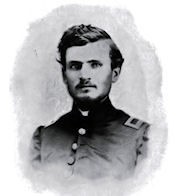
5th.—This day Franklin’s Corps crossed from the left to the right bank of the Chickahominy, and encamped near Goldon’s farm. I was again ordered to the charge of Liberty Hall, Surgeon Jayne and most of my assistants withdrawn.

This is as I expected. Our wing of the army has crossed, no doubt in anticipation of a battle soon, and I am again detached from my regiment in the hour of its trial. I called on the Medical Director this morning, and stated in the strongest language I could command, my wishes to be with my regiment when it went to battle. The reply was that it would not be consistent with the good of the service to have me withdrawn from the large hospital at this time. I then asked to be permitted, in case of a battle, to ride to my regiment, after I had seen and cared for all the patients in hospital, to remain with it what time I could, and return to hospital in time to again see all the patients, during the afternoon and evening. The Director hesitated. I urged, stating that, in consequence of my having been so much separated from my regiment by orders, the friends of the regiment at home were complaining of me for it; that it was being noticed even in the public papers, to my prejudice. Besides, I had many intimate personal friends in the regiment, the sons, too, of my neighbors and friends, who looked to me for aid and comfort in the time of trial, and I would like to be present, even if only long enough to receive their dying messages. 1 did not get the permission. I have returned to my hospital sad and discouraged, but with the determination that, if I am denied the privilege of caring for those under my especial supervision, I will do the best I can for the poor fellows here who are accidentally or rather arbitrarily under my charge.

June 5—We were marched to town and received our arms—Springfield muskets. Next day went off very quietly.

June 5th. Early this morning the colonel sent me to General Richardson’s headquarters to report the wretched position the regiment was in and get permission, if possible, to move it. I rode over the battlefield of the thirty-first and first on my way, and found it in many places knee deep in water; the dead had been buried by digging little ditches around them, and throwing the earth over the bodies; when it rained, it washed the earth away, particularly at each end of the mound, leaving the feet or head exposed in a most horrible manner. I saw scores of such cases, most of whom were rebels, but that did not make the picture any the less horrible. The general gave permission to change the regiment’s position. I heard at division headquarters that the wounded have not yet been all collected; several were brought in to-day, who have been lying three days and nights on the drenched battlefield, in the woods; some of them were burnt, as well as wounded. Detailed Company B to complete the burial of the rebel dead about our front; in the course of two hours they picked up ninety-one men, and buried them in one long ditch.

Eliza Woolsey Howland to her husband, Colonel Joseph Howland:—

I enclose some comments about Casey’s division, and we all agree here that justice was not done to the men. It is surely hard enough to lose as terribly as they did without being reproached for cowardice. Abby says in a late letter— “Anna Jeffries came on from Boston yesterday in the train which brought many of the Daniel Webster load, scattering them all along at or near their homes. One gentleman was asking another whether Casey was of Rhode Island or Connecticut, when a wounded soldier cried out from some seat nearby, overhearing Casey’s name—a cry of anguish and anger—`They didn’t run! they didn’t run!’ He tried to stagger to his feet, being wounded in both ankles, and then added—’I can’t stand, but I tell you they only broke, they didn’t run.'”

June 5th.—Beauregard retreating and his rear-guard cut off. If Beauregard’s veterans will not stand, why should we expect our newly levied reserves to do it? The Yankee general who is besieging Savannah announces his orders are “to take Savannah in two weeks’ time, and then proceed to erase Charleston from the face of the earth.”

Albert Luryea was killed in the battle of June 1st. Last summer when a bomb fell in the very thick of his company he picked it up and threw it into the water. Think of that, those of ye who love life! The company sent the bomb to his father. Inscribed on it were the words, “Albert Luryea, bravest where all are brave.” Isaac Hayne did the same thing at Fort Moultrie. This race has brains enough, but they are not active-minded like those old Revolutionary characters, the Middletons, Lowndeses, Rutledges, Marions, Sumters. They have come direct from active-minded forefathers, or they would not have been here; but, with two or three generations of gentlemen planters, how changed has the blood become! Of late, all the active-minded men who have sprung to the front in our government were immediate descendants of Scotch, or Scotch-Irish—Calhoun, McDuffie, Cheves, and Petigru, who Huguenotted his name, but could not tie up his Irish. Our planters are nice fellows, but slow to move; impulsive but hard to keep moving. They are wonderful for a spurt, but with all their strength, they like to rest.

June 5.—The Twenty-fourth regiment of Massachusetts, while on a scouting expedition on the Pactolus road, near Washington, N. C, were attacked from an ambush by a rebel regiment, and had seven men killed and several wounded.— (Doc. 59.)

—The Twelfth regiment New-York State militia, under the command of Col. William S. Ward, left New-York for Washington, D. C—The volunteer recruiting service in the United States, discontinued by General Orders No. 33, of April third, 1862, was restored, and orders to that effect were published by General Thomas.

—The rebel artillery opened upon the National forces at New-Bridge, on the Chickahominy River, Va., from five different points, attempting to prevent General McClellan’s troops from rebuilding the bridge; their fire was returned, and after an engagement of over two hours, the rebels were compelled to retire.

—A heavy storm, which had lasted two whole days, raised the Chickahominy River, Va., to an unprecedented height—President Lincoln complimented First Lieut. D. C. Constable, commanding the revenue steamer E. A. Stevens, by handing him personally a commission as captain in the revenue cutter service, in recognition of his gallantry in leading with his steamer the attacking forces in their ascent of the James River and bombardment of Fort Darling.—Second Lieutenant J. Wall Wilson was also promoted to a first lieutenancy for gallant bearing during the same action.

—Nathaniel S. Berry was inaugurated Governor of New-Hampshire, at Concord, in the presence of both branches of the Legislature and a large concourse of citizens. In his message, alluding to National affairs, the Governor says there can be but one result to the struggle in which we are engaged — submission to the first principles of the government inaugurated and established by our fathers. The base rebellious spirit which designed to reverse the free and humane policy of our fathers, must fail. The fearful lesson we have had in the conflict with slavery, its disasters to all its promoters, its evident weakness in its death-struggle with freedom, all portend a change in the estimation in which this great evil will be hereafter held, and foretell in legible characters, written in view of all the nations, that its days are numbered. For these reasons the Governor rejoices in the late message of President Lincoln, and in the abolishing of slavery in the District of Columbia, and its prohibition in the territories. But he affirms the principle that each State submitting to the provisions of the Constitution should control its own local institutions; but such submission should be regarded as a pre-requisite to the employment of the benefits of that instrument.

—Judge Birch, who was arrested at Holla, Mo., for expressing disloyal sentiments, was released from arrest and paroled, with the understanding that he was to report himself whenever required.—James Trabue, one of the principal dry-goods merchants of Louisville, Ky., was arrested to-day by the military authorities at that place. He refused to take the oath of allegiance. —Two companies of the Pennsylvania “Roundhead” regiment, on James Island, S. C, were cut off by the rebels, but after a sharp fight were rescued by the Eighth Michigan regiment.— The United States gunboat fleet and mortar fleet arrived before Memphis, Tenn., at nine P.M.

June 4, 1862. No. 10.

We’ve been living out here a week without any tents until to-night, and General Pope is ripping and swearing because we dared to move them up here without orders. He says we shall not move a thing back. The colonel I am with is a regular army officer and he shows it all over, but I like him very much so far. I won’t get to go out on near as many scouts, for will only go when the whole brigade moves.

Camp near Boonville, Miss., June 4, 1862.

Since the evacuation of Corinth we have been pushing after them after a fashion. That is follow them until we catch up with their rear guard and then retreat three-fourths the distance we have advanced. Have been five or six days following them 25 miles. Yesterday we advanced some 10 miles beyond this point, skirmishing with them all the last five miles, and then we all returned to camp here. I think we must have had 40,000 men out yesterday and yet it was only a reconnoisance in force. But what the devil was the use thereof I cannot see, for the day previous some of our cavalry was out farther than we went. Our regiment had the first skirmish with the Rebels after they left Corinth. ‘Twas about seven miles out of the town. We had two killed and three wounded. They were of the Decatur Company. Our boys killed five of them. This is the most masterly retreat yet. They have positively left nothing of any value. I don’t think they left tents enough for one regiment. They left not one cannon. No arms of any value and very few of any kind. We have only found one wagon since we passed Corinth, although there were a number in the place that they did not need. We haven’t taken 50 prisoners, although they have lost hundreds, maybe thousands, by desertion. There is not the least evidence that they yere in haste at any point, and just 20 hours before we entered Corinth we were ordered to saddle our horses and be in perfect readiness for a fight, as it was expected that the enemy would attack us before three hours. At that time they could not have had more than enough men in Corinth to do the required picket duty. They are now, or at least a large body of them, in camp within 12 miles of us, and the story through the army is they are marching on us. Our boys are fairly wild to be on after them But then another rumor from a tolerably reliable source, is we are going to fall back to Corinth and camp until plans are more fully matured. Still another says Pope’s army is ordered down the Mississippi river again. I hope the last is not so, for I have a dread of that river in the summer season. I am acting assistant adjutant general for Colonel Mizner, commanding 1st Brigade Corps.