Following the American Civil War Sesquicentennial with day by day writings of the time, currently 1863.

September 2012

September 20, Saturday. Am troubled by Preble’s conduct. There must be a stop put to the timid, hesitating, and I fear sometimes traitorous course of some of our officers. Tenderness, remonstrance, reproof do no good. Preble is not a traitor, but loyal. An educated, gentlemanly officer of a distinguished family and more than ordinary acquirements, but wants promptitude, energy, decision, audacity, perhaps courage. I am inclined to believe, however, an excess of reading, and a fear that he might violate etiquette, some point of international law, or that he should give offense to Great Britain, whose insolence the State Department fears and deprecates and submits to with all humility, had its influence. He paused at a critical moment to reflect on what he had read and the state of affairs. A man less versed in books would have sunk the pirate if she did not stop when challenged, regardless of her colors. No Englishman had a right to approach and pass the sentinel on duty. Preble was placed there to prevent intercourse, — was a sentinel to watch the Rebels and all others, — and no Englishman had a right to trespass. A board of officers would be likely to excuse him, as in the case —— of and ——,[1]on account of his amiable qualities, general intelligence, and good intentions. The time has arrived when these derelictions must not go unpunished. I should have preferred that some other man should have been punished. I have had the subject under consideration with some of the best minds I could consult, and found no difference of opinion. I then took the dispatches to the President and submitted them to him. He said promptly: “Dismiss him. If that is your opinion, it is mine. I will do it.” Secretary Seward and Attorney-General Bates, each of whom I casually met, advised dismissal. It is painful, but an unavoidable duty. I am sorry for Preble, but shall be sorry for my country if it is not done. Its effect upon the Navy will be more salutary than were he and fifty like him to fall in battle.

Commander Joe Smith,[2] who died at his post when the ill-fated Congress went down from the assault of the Merrimac, perished in the line of duty. I have never been satisfied with the conduct of the flag-officer[3] in those days, who was absent in the waters of North Carolina, — purposely and unnecessarily absent, in my apprehension, through fear of the Merrimac, which he knew was completed, and ready to come out. It was like dread of the new Merrimac at Richmond, which was nearly ready, that led him finally to resign his squadron command. He has wordy pretensions, some capacity, but no hard courage. There is a clan of such men in the Navy, varying in shade and degree, who in long years of peace have been students and acquired position, but whose real traits are not generally understood. The Department is compelled to give them commands, and at the same time is held responsible for their weakness, errors, and want of fighting qualities.

Nothing conclusive from the army. The Rebels have crossed the river without being hurt or seriously molested, — much in character with the general army management of the war. Little is said on the subject. Stanton makes an occasional sneering remark, Chase now and then a better one, but there is no general review, inquiry, or discussion. There is no abatement of hostility to McClellan.


[1] No names in original.

[2] Lieutenant Joseph B. Smith.

[3] Captain, afterwards Rear-Admiral, Louis M. Goldsborough.
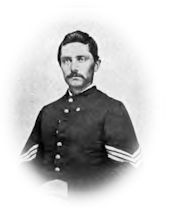
Saturday, 20th—We remained in line of battle all night and early this morning advanced in a line about two miles, when we received orders to march on into Iuka. The rebels retreated during the night, and General Rosecrans’ forces are after them. We learned this morning that a battle had been fought yesterday here by Rosecrans’ forces alone. When we were waiting for the sound of Rosecrans’ cannon, we could not hear them on account of an unfavorable wind. The rebels attacked him and made the fight come off a day before the time set for our capture of them. The Sixteenth Iowa of Crocker’s Brigade had been detached from us and sent forward, being the only regiment of our brigade engaged in the fight. Their loss was fourteen killed. The Fifth Iowa in Rosecrans’ army was trapped in an ambush which was made with a battery masked in green leaves, and lost forty-one killed. The rebels were driven out and left their dead and wounded on the field. Quite a number of our wounded are now being brought into town from the battlefield. Iuka is a nice place with some good buildings. It is well supplied with good water from splendid springs. There is poor farming land around here, it being quite rolling in this part of Tennessee. The timber, mostly pine, is rather scrubby.

September 20. — Got a dispatch from Platt. Fear Lucy has not heard of my wound; had hoped to see her today, probably shan’t. This hurts me worse than the bullet did.

Saturday, 20th. Reveille at sunrise. Boys got the coffee and bacon ready at the creek. Went down with Archie, washed and breakfasted.

As we passed the Big Drywood, we noticed our bed of rough crooked poles. Reached Lamar at 4 P. M. Orders for no man to enter any house or to disturb any property whatever. Some complaining at first but boys soon saw it was the better way. Capt. bought a sheep for breakfast. Noticed several rather tasty girls.

Saturday, 20th.—Big Eagle Creek has ceased to run, and we have to drink pond water, along with the horses, cows, hogs, etc. Orders to move at 6 in the morning.

We Lose Our Bands.

Sept. 20. All the regimental bands have been mustered out and have gone home. Ours left the first of this month, and it seems quite lonely to have them gone. They were the solace of many a weary hour. I understand that this is in the interest of economy, the bands costing so much it was thought best to let them go. I also learn that the officers’ pay has been raised, so just where the saving comes in does not appear. As I am only an enlisted man I am not supposed to see things quite so clearly, so I presume it is all right any way, but we think it is rather sharp economy.

Miss Sallie L. Roberts.–Antietam

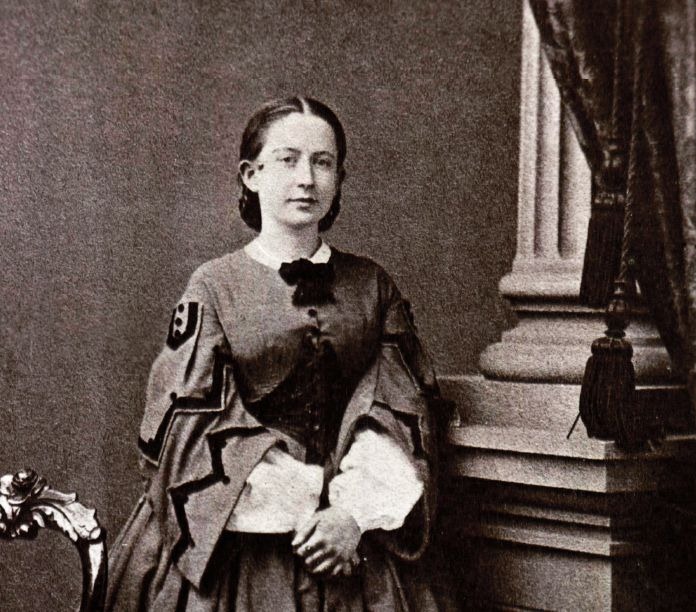
Immediately upon receipt of news of the battle of Antietam, a call was made in behalf of the wounded who needed nurses and supplies of food and raiment. Among the first to respond from Montgomery county to the call were Mrs. Rachel P. Evans, of Bridgeport; Mrs. Alice H. Holstein, Mrs. Anna Carver, and Miss Sallie L. Roberts, of Upper Merion; Miss Sarah Priest, of Bridgeport; and Miss Lizzie J. Brower, of Norristown. These patriotic and humane ladies freely gave their services to the sick and wounded men who fell in battle or were stricken with disease resulting from exhaustion and exposure. Many of the men of the 51st Regiment of Pennsylvania Volunteers received attention from the ladies named, who remained on the field of battle and near Sharpsburg for some two weeks. – Clifton Swenk Hunsicker; Montgomery County, Pennsylvania; a history (Volume 1), pub. 1923

September 20—Resumed our march at 6 o’clock this morning. Arrived at Blacks Church after three hours’ march, then turned about and tramped nine miles and camped for the night at Joyner’s Church.

SEPTEMBER 20TH.—While Jackson was doing his work, McClellan, who has been restored to command, marched at the head of 100,000 men to the rescue of Harper’s Ferry, but D. P. Hill, with his single division, kept him at bay for many hours, until Longstreet came to his assistance; and night fell upon the scene.

But Lee soon concentrated his weary columns at Sharpsburg, near Shepherdstown, and on the 17th inst. gave battle. We got the first news of this battle from a Northern paper—the Philadelphia Inquirer—which claimed a great victory, having killed and taken 40,000 of our men, made Jackson prisoner, and wounded Longstreet! But the truth is, we lost 5000 and the enemy 20,000. At the next dawn Lee opened fire again—but, lo! the enemy had fled!

[September 20]

General Lee conducted his retreat with much skill, crossing the Potomac, and saving all his material with little or no loss. Our victory, considering the immense interests at stake, is certainly of the very utmost importance. The invading hosts have quickly been driven back to their piney forests, lifting an immense load from the hearts of the loyal North, but for all that our movements have been very supine. Lee’s army ought not to have got away so easily, but should have been pushed to the wall, and fought without mercy every day. From experience, however, we know that General McClellan is not equal to great occasions, and therefore it is useless to expect brilliant results while he is in command. The militia are going home again, and the Nation’s pulse will soon regain its normal condition, while our dear Maryland friends may resume their peaceful occupations, and have something to talk about as long as they live.