Written from the Sea islands of South Carolina.
[Diary] 11th.
We had a large school to-day — forty-seven scholars. We are taking Nelly’s scholars during her absence at the North, and teach in the corner room of the Oaks.
Written from the Sea islands of South Carolina.
[Diary] 11th.
We had a large school to-day — forty-seven scholars. We are taking Nelly’s scholars during her absence at the North, and teach in the corner room of the Oaks.
Thursday, 11th.—Company A and our company were sent out on advance picket line and remained there all night. Yankees worked all night on their works; could hear their spades rattle; and could ‘hear trains and steamboats running and blowing all night over in Cincinnati. Relieved from picket 8 A. M., and returned to regiment, when we gave up our position to an Arkansas brigade, and went back one mile and cooked rations.
Corinth, Saturday, Oct. 11. The Battery returned from its chase after the retreating rebs, of a week in length. In the evening the Captain and Sergeant Simpson rode into our camp, the Battery being in camp two and one half miles out.
SEPTEMBER 11TH —And Cincinnati is trembling to its center. That abolition city, half foreign and half American, is listening for the thunder of our avenging guns.
September 11, 1862. In bivouac near Clarksburg, there is great anxiety in regard to the enemy’s movements, which does not, however, prevent our enjoying this magnificent country. The contrast between Virginia and Maryland is so extraordinary, that Maryland seems an elysium, where the most charming and delightful views are unfolded day by day, as in a panorama. Every part appears to be cultivated, and the farms, villages, farm houses and buildings, are models of good taste, and evidences of wealth and enterprise. Some of the country houses indeed are abodes of luxury, which remind one of the stately homes of England.
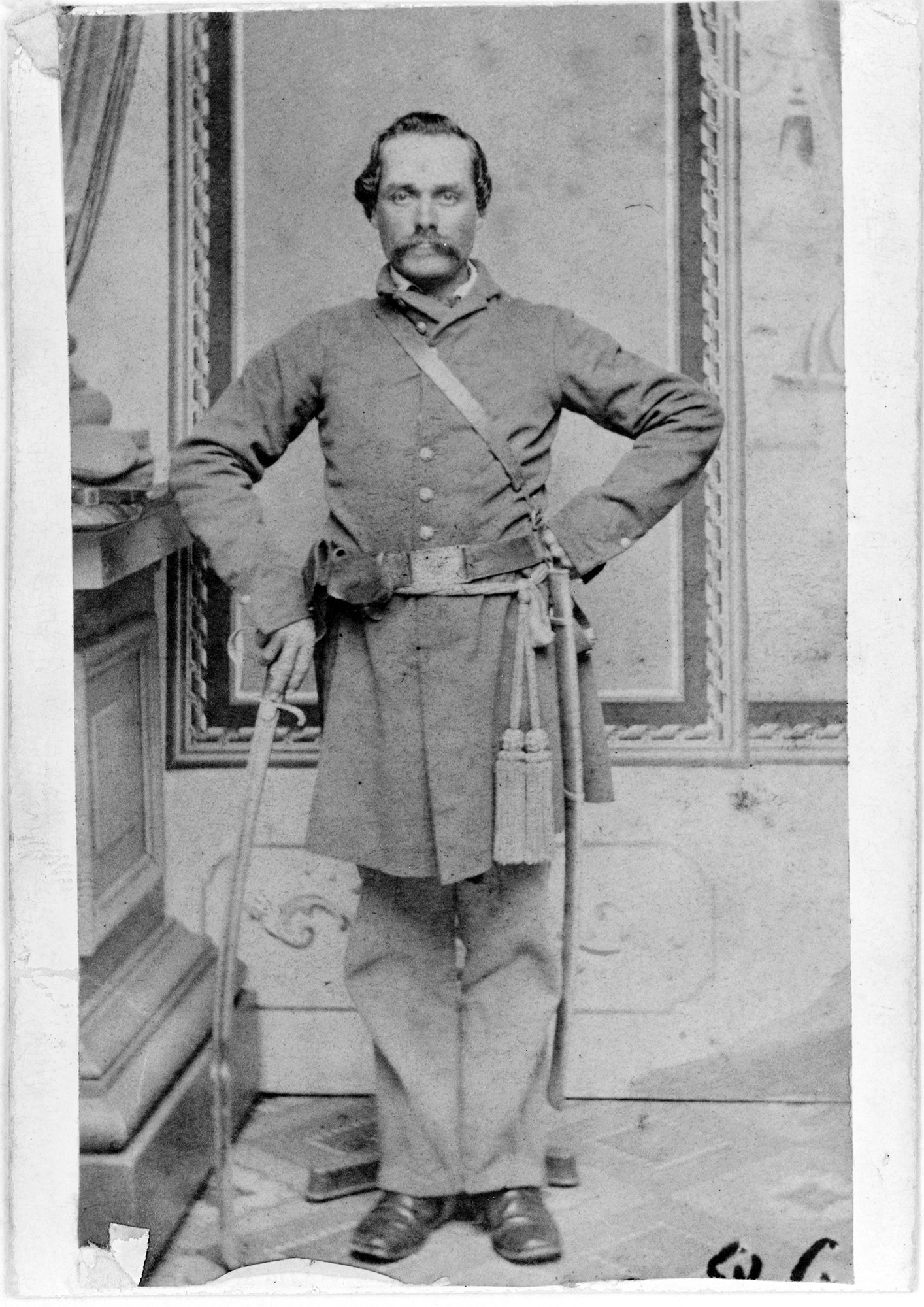
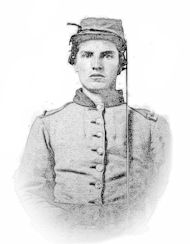
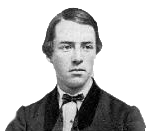
“Unidentified Confederate(?) officer, full-length portrait, standing, with sword in right hand”
photographic print on carte de visite mount: albumen.
Library of Congress image.
Civil War Portrait 008
September 11.—This morning a force of rebel cavalry entered Ilagerstown, Md. They immediately seized twelve hundred barrels of flour, and commenced tearing up the railroad in the vicinity of the depot. The United States Marshal, the sheriff, and other officials left the town as soon as the rebels entered, carrying with them the public records and other valuables in their different offices. Hundreds of private citizens also left the place.
—In consequence of the reported approach of the rebel army under General Lee, the greatest excitement existed in Pennsylvania, and especially in the cities of Philadelphia and Harrisburgh. In the latter city, the Governor of the State issued a proclamation, calling for fifty thousand men, “for immediate service to repel the now imminent danger from invasion by the enemies of the country.” He also telegraphed to the Mayor of Philadelphia to send him twenty thousand men. The latter immediately issued an address to the citizens, in which he embodied the Governor’s despatch, and called upon all able-bodied men to assemble next morning at the precinct-houses of the election districts, in readiness to obey the summons to immediate service.
—The New-Hampshire Eleventh regiment left Concord to-day, en route for the seat of war.—A Union meeting was held at Beaufort, N. C, at which an address was made by C. H. Foster, of North-Carolina. The meeting was largely attended, and resolutions of a highly patriotic character were adopted.—A party of rebels made a descent on the National pickets at Ridgeville, Va., and carried off three of them and several of the Union men of the place. Captain Fiery rallied a small force, and, pursuing the rebels, succeeded in capturing three prisoners and a number of horses.— Wheeling Intelligencer, September 13.
—Maysville, Ky., was occupied by the rebel forces under Brig.-Gen. R. M. Gano, of General E. Kirby Smith’s division of the rebel army.— Maysville Eagle, September 13.
—In compliance with orders from the Secretary of War, Gen. Schofield ordered the Provost-Marshal-General for the district of Missouri to proceed without delay to carry into effect the confiscation act, so far as the provisions of said act were subject to be carried into effect by the miltary authorities of the United States in the district. The property liable to confiscation in the district was estimated at fifty millions.
—Westminster, Md., was taken possession of by five hundred rebel cavalry, under the command of Col. Rosser. They came dashing into the town at a rapid rate, and immediately proceeded to place pickets around the town, to prevent the citizens from leaving. A gentleman named Crothers, in endeavoring to make his escape, was fired upon and killed. The rebels seized the post-office and the depot; ascertaining that there was a locomotive and two passenger and four freight-cars a short distance from the town, they also despatched a force and brought them in. Upon being established in the town, the rebels proceeded to lay hands upon all the boots, shoes, and clothing that they could find in the stores, for which they tendered in payment confederate money. Secession sympathizers suffered in common with the Union residents, the rebels stating that they had been deceived relative to the secession feeling in Maryland.—Baltimore Clipper, September 13.
—New-Market, Md., was occupied by the National forces.
—The Union forces stationed at Gauley, Va., under the command of Colonel Lightburn, having been threatened by an overwhelming rebel force in front, flank, and rear, were compelled to evacuate that place, after destroying all the Government stores they were unable to carry away.
—To-day the rebel army under Gen. E. Kirby Smith had reached Latonia Springs, Ky., within seven miles of Cincinnati, Ohio, and skirmishing between the rebel and Union pickets commenced on the banks of the West-Licking River, in the vicinity of that city. At night the rebels began to throw up breastworks in front of Fort Wallace. The Union forces in Cincinnati were being largely reenforced from all parts of the State, and also from Gen. Grant’s army, several regiments of which having arrived there to day. Considerable excitement existed in the city, although it was considered perfectly safe.
—Bloomfield, Mo., was captured by a large body of rebel guerrillas, after a fight of two hours. The town was defended by fifteen hundred State militia, who, being outnumbered, retired.—The Twentieth regiment of Connecticut, commanded by Col. Samuel Ross, left New-Haven for Washington.
—The Union army under Gen. Buell was on the march to the support of Nashville, Tenn., which was menaced by the rebel army under General Bragg, and eight thousand men from the army of General Rosecrans, under command of General Jefferson C. Davis, arrived there to-day for the purpose of reenforcing General Buell.
Sept. 10.
Pope, I think, must have given up all idea of bringing any charges against General Porter, for I hear no more said about them. . . .
General Porter has charge of all the forts from Fort Bennett to Fort Ellsworth, inclusive. I have had a great deal of riding to do, between the forts, picking out encampments, etc. We moved here to Arlington House from Fort Corcoran yesterday, and shall probably stay here for some time. I think I shall have a commission as first lieutenant in my regiment soon. . . .
We have a very pleasant officer here as chief of staff, Lieutenant Colonel Webb of the regular army, — a very gentlemanly officer. . . .
September 10 — We moved back to camp this morning at Urbana. We were there not an hour before Colonel Munford sent for the battery to go back on picket, to the very same place we left this morning. We started back immediately after we received the order. We moved back to camp this evening.
September 10th.
Yesterday I was interrupted to undertake a very important task. The evening before, mother and Lilly happened to be in a store where two officers were buying materials for making shirts, and volunteered to make them for them, which offer they gladly accepted, though neither party knew the other. They saw that they were friends of Charlie, so had no scruples about offering their services; the gentlemen saw that they were ladies, and very kind ones, besides, so made no difficulty about accepting. Lilly undertook one of purple merino, and I took a dark blue one. Miriam nominally helped her; but her very sore finger did not allow her to do much. Mother slightly assisted me; but I think Lilly and I had the best of the task. All day we worked, and when evening came, continued sewing by the light of these miserable home-made candles. Even then we could not finish, but had to get up early this morning, as the gentlemen were to leave for Port Hudson at nine o’clock. We finished in good time, and their appearance recompensed us for our trouble. Lilly’s was trimmed with folds of blue from mine, around collar, cuffs, pockets, and down the front band; while mine was pronounced a chef d’œuvre, trimmed with bias folds of tiny red and black plaid. With their fresh colors and shining pearl buttons, they were really very pretty. We sent word that we would be happy to make as many as they chose for themselves or their friends, and the eldest, with many fears that it was an “imposition” and we were “too good,” and much more of the same kind, left another one with Charlie for us. We cannot do too much, or even enough, for our soldiers. I believe that is the universal sentiment of the women of the South.
Well, but how did we get back here? I hardly know. It seems to me we are being swayed by some kind of destiny which impels us here or there, with neither rhyme nor reason, and whether we will or no. Such homeless, aimless, purposeless, wandering individuals are rarely seen. From one hour to another, we do not know what is to become of us. We talk vaguely of going home “when the Yankees go away.” When will that be? One day there is not a boat in sight; the next, two or three stand off from shore to see what is being done, ready, at the first sight of warlike preparation, to burn the town down. It is particularly unsafe since the news from Virginia, when the gunboats started from Bayou Goula, shelling the coast at random, and destroying everything that was within reach, report says. Of course, we cannot return to our homes when commissioned officers are playing the part of pirates, burning, plundering, and destroying at will, with neither law nor reason. Donaldsonville they burned before I left Baton Rouge, because some fool fired a shotgun at a gunboat some miles above; Bayou Sara they burned while we were at General Carter’s, for some equally reasonable excuse. The fate of Baton Rouge hangs on a still more slender thread. I would give worlds if it were all over.
At Mrs. Haynes’s we remained all night, as she sent the carriage back without consulting us. Monday we came to town and spent the day with Lilly. How it was, I can’t say; but we came to the conclusion that it was best to quit our then residence, and either go back to Linwood or to a Mrs. Somebody who offered to take us as boarders. We went back to Mrs. McCay’s, to tell her of our determination, and in the morning took leave of her and came back home.
We hear so much news, piece by piece, that one would imagine some definite result would follow, and bring us Peace before long. The Virginia news, after being so great and cheering, has suddenly ceased to come. No one knows the final result. The last report was that we held Arlington Heights. Why not Washington, consequently? Cincinnati (at last accounts) lay at our mercy. From Covington, Kirby Smith had sent over a demand for its surrender in two hours. Would it not be glorious to avenge New Orleans by such a blow? But since last night the telegraph is silent.
News has just come of some nice little affair between our militia in Opelousas and the Yankees from New Orleans, in which we gave them a good thrashing, besides capturing arms, prisoners, and ammunition. “It never rains but it pours” is George’s favorite proverb. With it comes the “rumor” that the Yankees are preparing to evacuate the city. If it could be! Oh, if God would only send them back to their own country, and leave ours in peace! I wish them no greater punishment than that they may be returned to their own homes, with the disgrace of their outrages here ever before their eyes. That would kill an honest man, I am sure.
 Follow on facebook
 RSS
RSS email
email