
SEPTEMBER 10TH.—On the very day that Lee gained the signal victory at Manassas, Kirby Smith gained one at Richmond, Kentucky, capturing thousands of prisoners. This is not chance—it is God, to whom all the glory is due.
September 2012
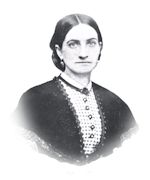
September 10.—I arrived at Dalton, Ga., to-day. Left Ringgold at 6 o’clock this morning; took a very nice breakfast a few miles below, for which we paid one dollar each. When I reached here, I found Judge Thornton and his son delighted to see me; the latter I had never seen before. Poor fellow! he had suffered terribly with his wound; was wasted almost to a skeleton. His father found him in a field hospital in Virginia—no one but a negro man nursing him. Mrs. T. is expected here in a few days, and I intend remaining until she comes. They are living with a very nice family by the name of Davis, who have kindly invited me to stay with them while I remain in this place.
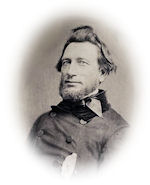
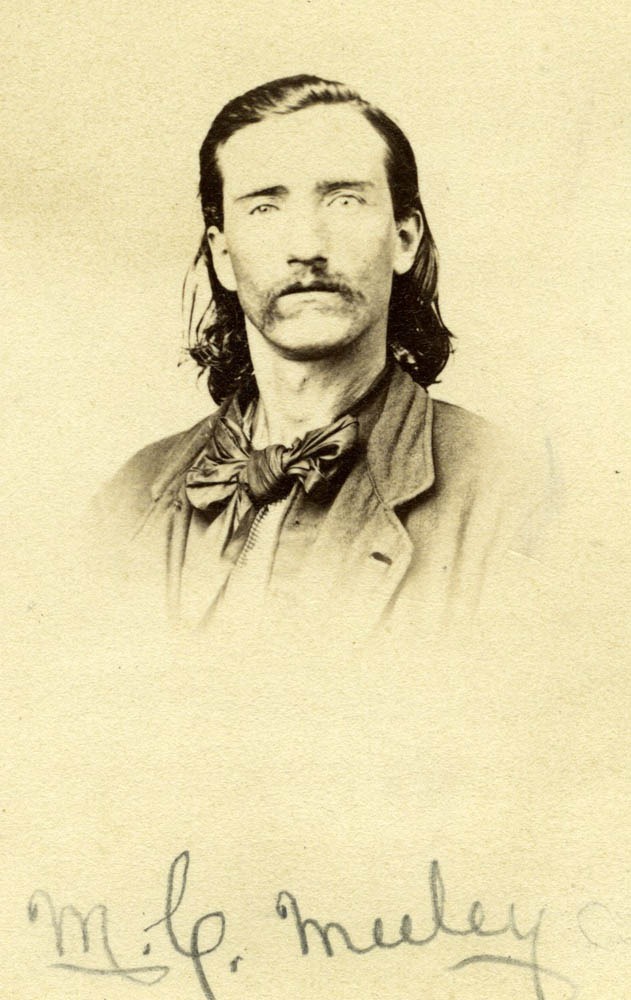 Michael Meeley enlisted on August 28, 1862, and was mustered into Company E, 13th Kansas Infantry on September 20, 1862.
The 13th Kansas Infantry was organized on September 10, 1862, at Atchison, Kansas; the regiment fought in the 1862 battles of Newtonia and Prairie Grove and the 1863 capture of Fort Smith.
Meeley received a disability discharge on October 15, 1863, at Camp Stanton, Kansas.
Carte-de-Visite by Unknown Photographer
The Trans-Mississippi Theater Photo Archive image and information.
Civil War Portrait 007
September 10.—Frederick, Md., was this day evacuated by the rebel army under General Lee. — (Doc. 202.)
—The Seventh regiment of Rhode Island volunteers, under the command of Colonel Zenas C. Bliss, left Providence, for the seat of war in Virginia.— The Sixth regiment of Massachusetts militia, under the command of Colonel Albert S. Follansbee, passed through New-York, on their way to Washington.
— Day before yesterday Colonel Grierson, with three hundred and seventy men, came up with the enemy beyond Coldwater, near Cochran’s Cross-Roads, Miss. They were a portion of Jackson’s and Pierson’s cavalry and a number of infantry, amounting to about one thousand men. They were posted and commenced the attack, but were driven two and a half miles through heavy timber. In the affair four of the rebels were killed and seventy or eighty wounded.
At night Colonel Grierson camped between the cross-road and Hernando, remaining Wednesday in the latter place, and this morning he moved in the direction of Coldwater, and came upon the enemy’s pickets at Coldwater Bridge, behind which they lay in force. They fired the bridge, but moved off, and the bridge was so far saved that, after some repairs, the Union forces crossed, the enemy retiring as they advanced, and Grierson entered Senatobia, where he burned the railroad depot and its contents.
— A public meeting was held in Susquehanna, Pa., and in accordance with the orders of the Governor of the State, a company was formed for immediate service. Over ninety men signed the roll and held themselves in readiness to march at an hour’s notice.—The draft in Pennsylvania, was postponed until the twentieth of September.
— A severe fight took place at Fayette, Va., between a force of rebels five thousand strong, under General Loring, and the Thirty-fourth and Thirty-seventh Ohio, under the command of Col. Siber, numbering about one thousand two hundred men, resulting in a defeat of the Unionists, with a loss of over one hundred killed and wounded.—(Doc. 206.)
— The excitement in Cincinnati, O., consequent on the near approach of the rebel army under General E. Kirby Smith, still continued. Martial law was enforced. The military authorities were actively employed in fortifying and preparing the city for a vigorous defence. Over one thousand squirrel-hunters from the neighboring counties came in and volunteered their services.
— A force of Union cavalry, supported by two pieces of artillery, under the command of Captain Saunders, acting Colonel of the Sixth United States cavalry, left Barnesville, Md., on a reconnoitring expedition to Sugar-Loaf Mountain. When half-way up the mountain, the Unionists encountered a force of rebel infantry supported by artillery, and a skirmish ensued in which the Unionists were defeated and compelled to retire. At night they returned to Barnesville.
Rienzi, Tuesday, Sept. 9. Another day dawned without any orders. Some of the boys pitched their tents. I went out foraging in the afternoon.
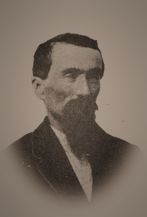
September 9 — Last night we slept in a straw stack. To-day we moved about half a mile from where we straw-stacked it last night. At about three o’clock this afternoon the cavalry reported that the Yanks were advancing, so we put our guns in position in the road and were ready to give our United States welcomers an explosive reception. If the Yanks advanced to-day they did it in some other direction, as they did not make their appearance on the road we are on.
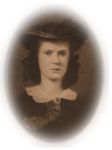
Clinton, September 9th, Tuesday.
Back again! For how long, I know not. At sunset Saturday, Eliza and Miriam returned to Mrs. McCay’s with Nannie Davidson. Mother had proved obdurate and refused to leave Clinton; so they had all gone on, and spent the day with Mrs. Haynes instead of going to Mrs. George’s. After my quiet, solitary day, I was glad to see them again, particularly as they brought confirmation of the great victory in Virginia. It is said the enemy were cut off from Washington, and that we were pursuing them. O my brothers! If God will only spare them! I envy Lydia who is so near them, and knows all, and can take care of them if they are hurt. It will be several days at least, before we can hear from them, if we hear at all; for Jimmy has never yet written a line, and George has written but once since the taking of the forts, and that was before the battle of Chickahominy. We can only wait patiently. Perhaps General Carter will bring us news.
Mrs. Haynes sent a very pressing invitation for us to spend the next day with her, so, although it was Sunday, we went. I am becoming dreadfully irreligious. I have not been to church since Mr. Gierlow went to Europe last July. It is perfectly shocking; but the Yankees have kept me running until all pious dispositions have been shaken out of me; so they are to blame. Like heathens, we called on Miss Comstock as we passed through town, and spent an hour with her. Landed at Mr. Haynes’s, we had ample time to look around before he and his wife got back from church. Here again I found what seems to be the prevailing style of the country, widespread doors and windows, with neither blinds nor shade trees to keep off the glare of the sun. The dining-room was a wide hall, where the rising sun shone in your face at breakfast, and at dinner, being directly overhead, seemed to shine in at both ends at once. A splendid arrangement for a Fire Worshiper; but I happened to be born in America, instead of Persia, so fail to appreciate it.
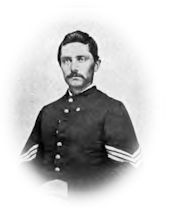
Tuesday, 9th—Nothing of importance. We are still working on the fortifications; those at work are relieved from picket duty at night. The rebels are not as bold as they were a few days ago. The talk in camp is that our brigade will leave in two or three days for Corinth.
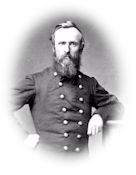
September 9. Tuesday. — Marched about eight miles in a westerly direction through a fine-looking, well-improved region. Men very jolly. All came in together, “well closed up,” at night. Major Comly sent with five companies to Seneca Bridge, three-fourths mile west of camp, to “hold it.” Kelly, Company A, a witty Dutch-Irishman, kept up a fusillade of odd jokes in English German. The men cheered the ladies, — joked with the cuffys, and carried on generally.
9th.—At midnight last night, we had but just got to rest, when we were called up to unload our wagons, taking out only such baggage as would be absolutely necessary on a forced march. The rest was sent back by teams. This lessening of transportation of leaving of packs, looks as if our leaders expected work to-day or to-morrow. I think we shall not have it so soon; but our leaders are at least on the alert. May this energetic stir be continued to a decisive result! Many think that we shall have no fight here at all, that the rebels have crossed in considerable numbers, with the view of drawing us away, but that their chief army is at Alexandria, ready to attack it so soon as we are enticed far enough away.
Six weeks ago we held almost the whole of Eastern Virginia; now, not a spot of it securely, unless it be a little piece around Alexandria. But with a continuance of the energy manifested for the last few days, we can soon retake it.
At present, the darkest shade cast upon the country is by our currency. These five cent shin-plasters I do not like, and I like less the false pretence under which they are issued. Why call them “postal currency?” What have they to do with “postal” affairs? ‘Tis time the government had quit cheating the people by disguising facts. If five cent issues are necessary, say so frankly, and make them, but let us have no more of this miserable deceit, with the more miserable looking rags.
We marched this morning through Darnestown, and there turning from the main road to the left, proceeded towards a ford in the Potomac, expecting to meet the enemy there and dispute his passage. Finding no enemy, we bivouaced for the night on Seneca Creek, a beautiful stream, at this point about two miles from the river, Crouch’s division lay in front of us. Much diarrhaea amongst the troops. In consequence of a scorbutic tendency in the whole army, the free indulgence in the green fruits found by the way side seems rather to alleviate than to increase the diarrhæa.


