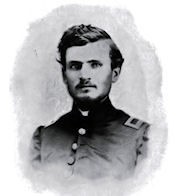
Tuesday, 9th. In the afternoon wrote to Ella Clark. Spent the day much as other days, reading, writing and loafing about hearing the news and waiting for the news. Report that Jackson had been captured. Evening papers contradicted the rumor and gave the Rebels the decided advantage. Driving our men towards Washington. Stirring news from Cincinnati. Battle at Lexington. Raw troops whipped out.
September 2012
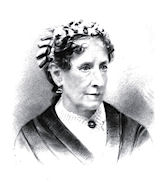
Norwich, Conn.
September 9th, 1862.
My own dear Son:
I am half sick, very sad, grieved, and troubled on your account, yet very thankful for the wonderful preservation of your life through so many dangers. I cannot but feel that a life so cared for has been saved for the accomplishment of good and wise purposes, which will be wrought out in God’s own time. Take courage, and strengthen your heart, my own precious son, in the remembrance of what He has done for you, through the whole course of your life, and especially for his goodness amid the dangers of the past year. Well may we all lament the loss of your General. I feel, and mourn as for a personal friend, and the nation too late acknowledges the want of appreciation of one of its greatest men and ablest military commanders. Gen. Kearny’s staff, I noticed, returned with his body, and so we have hoped that, sad as the journey might be, you would be permitted to accompany your General’s remains to their last home.
I have just received two letters from you, one of the 4th, the other of the 6th. May God be with you, my dear son, to comfort and guide. A dark cloud seems to have gathered around you; may it soon pass and the brightness shine again. The Herald and Times have contained little regarding Gen. Stevens, but the Tribune correspondent sounds his praises, and dwells upon his memory. There was a statement in yesterday’s Tribune, that while he was engaged in his last battle, prominent men, though political opponents, had decided to request that he might command the Army of Virginia, his splendid fighting on Friday and Saturday having at last awakened the remembrance of his superior abilities, and his distinction at West Point, as well as in Mexico, and whereever he had opportunities to show himself. The Express says he was sacrificed to political opinion.
Do write as often as possible, my son. My nerves are greatly shaken, although my health is far better in most respects than it used to be, yet I feel sensibly this strain upon my spirits. I cannot write as long a letter as I wish to-day, but I intend in future to write a little every day, to always have something ready for you.
The Lt.-Col. of the Eighteenth is not all that could be desired, and Ely, I am told, regrets that you are not with him. Political interests are paramount everywhere. Alfred Goddard called on us last night. He said he had followed your course, and everywhere heard your noble conduct spoken of. I will write again to-morrow. I am very sorry you have lost your back letters which have gone from my pen, as well as one from Lillie. All are well at home. Poor Matteson, how you must lament for him! Major Elliott, see, is wounded.
God bless you, my own dear son. In Him is our only trust. Would that we could meet if only for one short hour.
Your sisters send love and warmest sympathy. We all feel for you, and I pray earnestly to God for His help and blessings.
Lovingly and anxiously,
Mother.
Hunt’s suggestions are dictated by his kind heart, but I think you deserve and must receive a higher appointment than that of Aide.
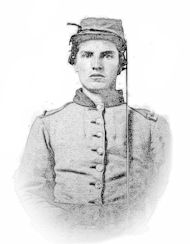
Tuesday, 9th.—Passed through Walton at 9 A. M. Still cheered on at almost every step. Camped for the night thirteen miles from Covington.
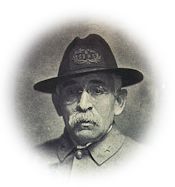
September 9—Up to to-day nothing new. Our regiment was paid off to-day, we receiving one month’s wages—eleven dollars for a private, which I have the honor to be.
SEPTEMBER 9TH.—Lord, what a scare they are having in the North! They are calling everybody to arms for the defense of Philadelphia, and they are removing specie, arms, etc., from Harrisburg and all the intervening towns. This is the chalice so long held by them to our lips.
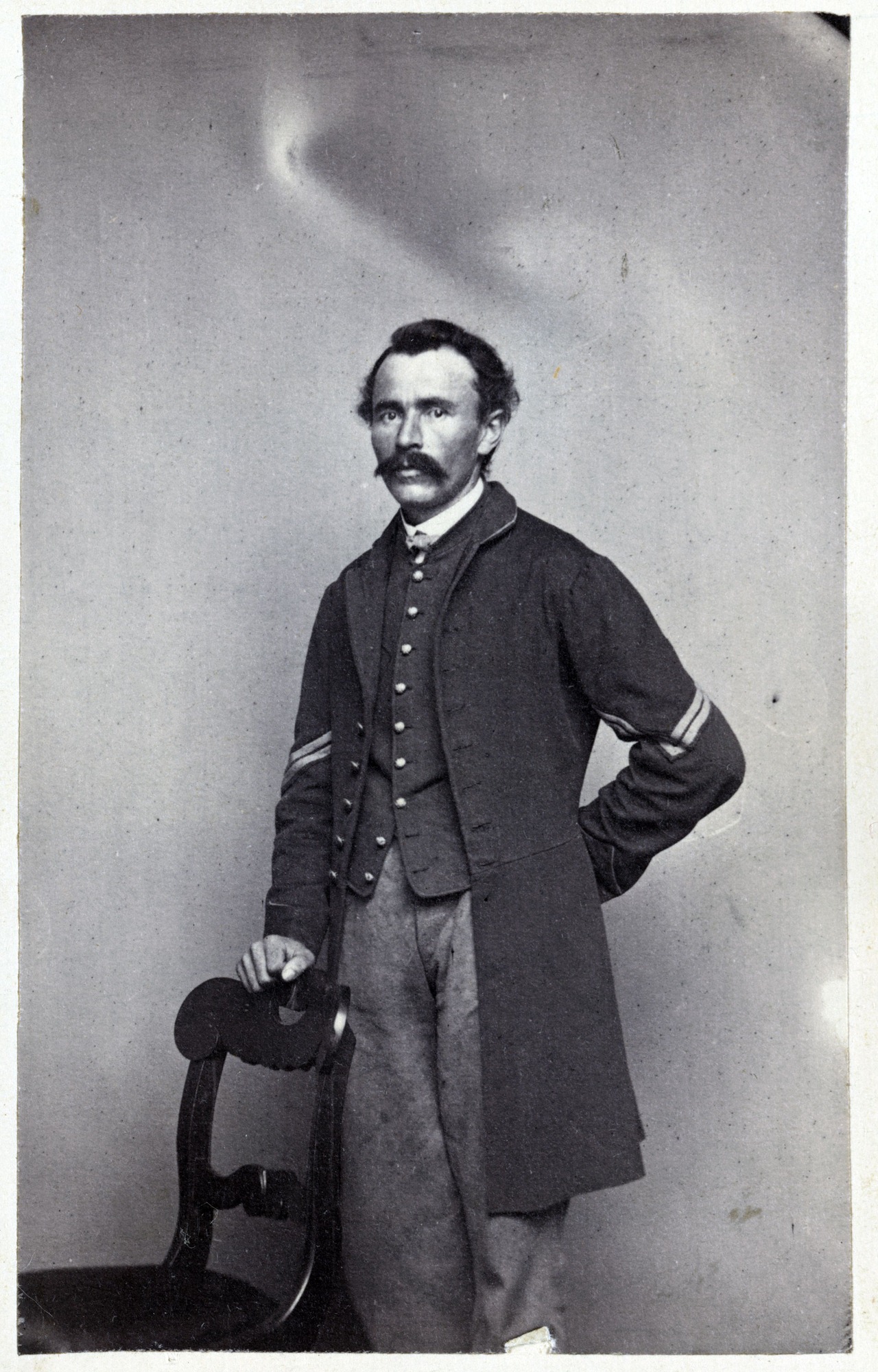
Photograph shows Corporal Theodore (or Theodor) Tesch of Co. B, 26th Wisconsin Infantry Regiment, in uniform.
Library of Congress image.
1 photographic print : albumen, on carte de visite mount ; 9.6 x 6.0 cm.
Civil War Portrait 006
September 9.—The greatest excitement existed throughout York and Adams County, Pennsylvania, as well as at Harrisburgh and throughout the Susquehanna region and the Cleveland Valley. The farmers sent their women and children, as well as their cattle, away, and armed for the defence of their homes against cavalry raids.
At Wilkesbarre all places of business were closed. All the church and court-house bells rang for the people to assemble for drill, at which time nearly all the able-bodied men in the town, amounting to some hundreds, assembled in the public square, formed into companies, marched to the river bank and drilled. Men over sixty years of age fell into the ranks. — Wilhesbarre Record.
— This afternoon, in latitude 28°, longitude 94° 10′, the United States steamer Connecticut captured the English schooner Rambler. She had run the blockade at Sabine Pass, Texas, and was bound to Havana heavily laden with cotton. Among the papers found on board was a memorandum in writing, directing the captain of the Rambler to sell the cotton at Havana, and with the proceeds of the sale to purchase powder, medicines, army shoes and other contraband articles, and without delay to return to Sabine Pass.
—Colonel Brums, sent in pursuit of the guerrillas under Quantrel, after their attack upon Olathe, Mo., overtook them five miles north of Pleasant Hill, Mo., and after a short skirmish compelled them to retreat, leaving in the hands of the Nationals all their transportation and subsistence, one thousand rounds of ammunition, one hundred horses, five wagons, a number of tents and other camp equipage, and a large quantity of dry goods, and other articles stolen from the citizens of Olathe.—Official Report.
—Major-general Banks, in compliance with an order issued on the seventh instant from the headquarters of Major-General McClellan, assumed command of the defences of the capital during the absence of the General Commanding from Washington.—Col. T. L. Kane, of the Pennsylvania Bucktail Rifles, was appointed a Brigadier-General for gallant and meritorious conduct in the field.
— This morning, the Third Indiana and the Eighth Illinois cavalry, the entire force under command of Col. Farnsworth, of the latter troop, left Poolesville, Md., and proceeded toward Barnesville. Upon approaching Monocacy Church, the cavalry discovered the rebel videttes guarding the cross-roads. Col. Farnsworth distributed his force, sending companies A and B, of the Third Indiana, on the road leading toward Nolansville, and other companies in other directions. Companies A and B, under command of Major Chapman, pursued the rebel videttes for some distance on the road to Nolansville, and succeeded in taking the regimental flag of the Twelfth Virginia cavalry, and eight prisoners. During the flight, the rebels lost three men killed. The companies then joined their squadron, and the entire force pushed forward into the town of Barnesville. Before reaching the town, however, they met with another small force of rebel cavalry, and after a few shots had been exchanged, the rebels fled, leaving seven more of their men prisoners. The rebels also sustained an additional loss of five men killed. In the whole affair, the Nationals had none killed, and only one man wounded.
To-night, the Eighth Illinois and the Third Indiana occupy the town—N. Y. Times, Sept. 12.
— Middletown, Md., was occupied by the rebels this morning, about two hundred taking formal possession and declaring martial law. In anticipation of such an event, many of the Union residents, whose names had been forwarded by their secession neighbors to Frederick, left last evening and early this morning, thus escaping the draft the rebels enforced from the enrolled lists taken from the National officer.
— Great excitement existed in Baltimore, Md., in consequence of the apprehended approach of the rebel army under General Lee. The authorities made the most ample preparations to intercept any movement in the direction of their city; and should the rebels succeed in entering it, to receive them in a manner different from that expected by them.
— Colonel Shingles with a force of rebel cavalry, and three pieces of artillery, made an attack on Williamsburgh, Va., this morning. After having captured the National pickets, they marched into town, taking the troops by surprise. An engagement ensued, which lasted about thirty minutes. The National force consisted of the Fifth Pennsylvania cavalry, Colonel Campbell, who was taken prisoner, together with five captains, four lieutenants, and a few privates. The rebel commander, Colonel Shingles, and eight of his officers and men were killed.
— The U. S. bark Braziliero, Acting Master M. V. Gillespie, commanding, captured the schooner Defiance, of Nassau, N. P.
Rienzi, Monday, Sept. 8. To-day was spent in anxious waiting. I stood guard for the first time while we were momentarily expecting orders to leave; slept in the open air.
September 8 — This morning we started with the cavalry on a scout toward Poolesville, which is south of Urbana and eighteen miles distant. When we got to within one mile of Poolesville we spied the first Yanks that we saw since our arrival in the United States. They were cavalry, and showed fight right away.
We went in battery on a hill in the edge of a woods about a mile from the town, and fired some six or eight rounds at them, when they drew up their cavalry in columns with drawn sabers ready for a charge on our pieces, but we threw a shell which anchored dangerously near them, broke their ranks and scattered them rearward. They brought up a battery then and opened a well-directed fire on us, and eventually drove us from our position. Their battery was about a mile and a half from us, and every shell after the first two fell and exploded right in the midst of us. I believe that the confounded Yankees can shoot better in the United States than they can when they come to Dixieland. They did better shooting with their artillery to-day than any I have seen since I have been in service. For a while we seemed to be in a dangerous locality, for while the battery on our front was pouring in some good warm work some two or three regiments of Yankee cavalry closed in on us in our rear. Heaven only knows where they came from or how they got so completely in our rear, and on the very road we came over, and which was the only way of escape for us if there was to be any getting-out business in the game. Our situation was critical indeed, for the Yankees in our front were advancing rapidly and getting very bold and those in our rear charging and closing in on us, but at this juncture of affairs Colonel Munford, who had charge of the fight on that part of the field, became unduly excited, and as he galloped past us he shouted: “Cut loose from your pieces!” But the calm and gallant Chew, whose judgment could not be dethroned by a little danger or excitement, quietly unheeded Colonel Munford’s hasty advice or suggestion and told us to stick to our guns. Just then a regular fusillade of pistols and carbines opened all around us, with some of our cavalry with drawn sabers rushing first one way then another, not knowing whom to fight first, the ones in our front or the flankers in our rear. Fortunately, and just in time, the grand old Seventh Regiment of cavalry charged, with drawn sabers, in regular Ashby style and repulsed the enemy in our rear, and we slipped through the meshes of the dangerous web that the Yanks were weaving around us, and brought all our pieces out safely. Even then we were not on the dead sure side of safety yet, as the Yanks that were in our front at first attempted to flank and cut us off from the Urbana road, but the Twelfth Virginia Cavalry stubbornly held them at bay until we got past the cutting off place and were once more where we felt the gratifying virtue of an open and unobstructed rear. After we wriggled out of the most hazardous and eventful situation the battery was ever in, we fell back a mile and went in position on the road, but the Yanks did not pursue us. After we remained in battery in the road until we found that the Yanks had settled down for the day,—and I know we had enough for one dose,—we fell back ten miles and bivouacked for the night at the southern base of Sugar Loaf Mountain. Our cavalry lost very few men to-day, considering the close and mixed-up encounter that we were all in. I saw some of the shell from the Yankee battery explode right in the ranks of our cavalry, but it seems they did very little harm, and our side sustained very little damage all through. If to-day’s proceedings is an average specimen of the treatment the dear Yanks intend to give us in these dear United States, I think the best thing we can do is to go back to Dixie right away, for the Yanks seem to pop up out of the ground most anywhere, and if it had not been for the Seventh Virginia’s gallant and timely charge to-day this evening some of our battery would be on the way to a delectable den called a Yankee prison, while others might be traveling on that gloomy stream that unerringly drifts its silent passengers to that boundless mystery-veiled sea that lies beyond the outposts of mortal ken.
The country we traversed to-day is very diversified, at some places beautiful, at others hilly and rough. We passed through Barnesville, a small but pleasant village situated on a prospective eminence seventeen miles south of Frederick City.
Sugar Loaf Mountain bounds the beautiful valley of the Monocacy on the southeast, and is about three miles long and lifts its head above the valley in the Sugar Loaf style. On top of the mountain at the highest crest the Yanks have a signal station which affords a splendid view of the whole Frederick City country and all the country between the mountain and the Potomac, and also the greater part of Loudoun County, Virginia. The mountain is about six miles from the Potomac.
 September 8, Monday. Less sensation and fewer rumors than we have had for several days.
The President called on me to know what we had authentic of the destruction of the Rebel steamer in Savannah River. He expressed himself very decidedly concerning the management or mismanagement of the army. Said, “We had the enemy in the hollow of our hands on Friday, if our generals, who are vexed with Pope, had done their duty; all of our present difficulties and reverses have been brought upon us by these quarrels of the generals.” These were, I think, his very words. While we were conversing, Collector Barney of New York came in. The President said, perhaps before B. came, that Halleck had turned to McClellan and advised that he should command the troops against the Maryland invasion. “I could not have done it,” said he, “for I can never feel confident that he will do anything effectual.” He went on, freely commenting and repeating some things said before B. joined us. Of Pope he spoke in complimentary terms as brave, patriotic, and as having done his duty in every respect in Virginia, to the entire satisfaction of himself and Halleck, who both knew and watched, day and night, every movement. On only one point had Halleck doubted any order P. had given; that was in directing one division, I think Heintzelman’s, to march for the Chain Bridge, by which the flanks of that division were exposed. When that order reached him by telegraph, Halleck was uneasy, for he could not countermand it in season, because the dispatch would have to go part of the way by courier. However, all went off without disaster; the division was not attacked. Pope, said the President, did well, but there was here an army prejudice against him, and it was necessary he should leave. He had gone off very angry, and not without cause, but circumstances controlled us.
Barney said he had mingled with all descriptions of persons, and particularly with men connected with the army, and perhaps could speak from actual knowledge of public sentiment better than either of us. He was positive that no one but McClellan could do anything just now with this army. He had managed to get its confidence, and he meant to keep it, and use it for his own purposes. Barney proceeded to disclose a conversation he had with Barlow some months since. Barlow, a prominent Democratic lawyer and politician of New York, had been to Washington to attend one of McClellan’s grand reviews when he lay here inactive on the Potomac. McClellan had specially invited Barlow to be present, and during this visit opened his mind, said he did not wish the Presidency, would rather have his place at the head of the army, etc., etc., intimating he had no political views or aspirations. All with him was military, and he had no particular desire to close this war immediately, but would pursue a line of policy of his own, regardless of the Administration, its wishes and objects.
The combination against Pope was, Barney says, part of the plan carried out, and the worst feature to him was the great demoralization of his soldiers. They were becoming reckless and untamable. In these remarks the President concurred, and said he was shocked to find that of 140,000 whom we were paying for in Pope’s army only 60,000 could be found. McClellan brought away 93,000 from the Peninsula, but could not to-day count on over 45,000. As regarded demoralization, the President said, there was no doubt that some of our men permitted themselves to be captured in order that they might leave on parole, get discharged, and go home. Where there is such rottenness, is there not reason to fear for the country?
Barney further remarked that some very reliable men were becoming discouraged,and instanced Cassius M. Clay, who was advocating an armistice and terms of separation or of compromise with the Rebels. The President doubted if Clay had been rightly understood, for he had had a full and free talk with him, when he said had we been successful we could have had it in our power to offer terms.
In a conversation this morning with Chase, he said it was a doubtful matter whether my declining to sign the paper against McClellan was productive of good or harm. If I had done it, he said, McClellan would have been disposed of and not now in command, but the condition of the army was such under his long manipulation that it might have been hazardous at this juncture to have dismissed him. I assured him I had seen no moment yet when I regretted my decision, and my opinion of McClellan had undergone no change. He has military acquirements and capacity, dash, but has not audacity, lacks decision, delays, hesitates, vacillates; will, I fear, persist in delays and inaction and do nothing affirmative. His conduct during late events aggravates his indecision and is wholly unjustifiable and inexcusable.
But I will not prophesy what he will do in his present command. He has a great opportunity, and I hope and pray he may improve it. The President says truly he has the “slows,” but he can gather the army together better than any other man. Let us give him credit when he deserves it.


