
Monday, 8th—It rained all last night. Bolivar has a town clock which can be heard as far out as our camp. The town watchman keeps calling out the hours till 2 or even 4 o’clock in the morning, ending with his monotonous “all’s well.” The feeling of the boys is that all is not well when hundreds of men have to be out on vedette with drawn muskets ready for a fight, and that the watchman had better dispense with the announcement until this war is over.
September 2012
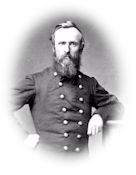
Monday, September 8. Camp near Leesboro, Maryland. — Nothing new this morning. Men from Ohio all in a talk about General Reno’s abusive language. It is said that when talking with me he put his hand on his pistol; that many standing by began to handle their arms also! I am sorry the thing goes so far.

8th.—Marched again last night. Started at dark, and moved till about midnight. Were called before daylight this morning, started early, passed through Rockville. Stopped to rest for two or three hours, left knapsacks and baggage, and pushed forward. Verily, there may be mettle in General McClellan, after all. This is so different from our wont, that we appear to be under another dynasty. The army is elated. Let us hurrah for McClellan! But we must do it cautiously; we are not quite out of the woods.
Having lightened ourselves of our baggage, we moved on, our transportation wagons keeping up with us.
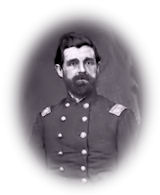
To Mrs. Lyon.
Camp 16th Wis. Vol., near Corinth, Mon. a. m., Sept. 8, 1862.—I got away from the hospital Saturday night and came to Corinth yesterday morning. Sent word to Sperry, who came after me with an ambulance, took me first to General Grant’s headquarters, two miles out of town, and then brought me here. I found everything all right. Resigned as Captain, which was accepted, and I go to headquarters again today to be mustered as Colonel of the 13th.[1] This is only for convenience and to have my pay going on. It looks squally about my getting home, I am improving too rapidly for that. I leave tomorrow morning for Columbus. I met Captain Smith at Corinth yesterday. He says he heard in Cairo that the 13th had gone up the Tennessee river to Fort Henry. This is uncertain. Sperry is hearty.
(The 13th Regiment had gone to Fort Henry. One of the officers, Levi Billings, came home with Mr. Lyon, as he was then so feeble that they would not allow him to come alone. He stayed in Racine for three weeks, then went to Madison and was mustered in as Colonel of the 13th Regiment and joined the regiment at Fort Henry.)
[1] Not being able to get a leave of absence if I mustered as Colonel, I postponed the muster and returned home as a private citizen.—W. P. L.

Monday, 8th. Wrote a short letter to Melissa. Considerable talk among officers about the colonelcy. Tod says Ratliff can not be colonel. So it is thought Major Miner will be the favored one. He says he will either run the regiment or be out of it! Considerable prejudice against him among the men on account of his course at Carthage in April and on the march from Flat Rock.
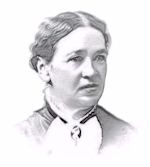
Written from the Sea islands of South Carolina.
[Diary] 8th.
Rina of the “Corner,” who was so ill as to have sent for her children from Hilton Head and bade them goodbye the night before I saw her, is now well and smiling. She loads us with presents when we go there — figs and oranges preserved in honey, honeycomb, watermelons, eggs, vegetables.
We have such fun discussing love, which I have termed the “psychological phenomenon,” or rather, listening to the discussion upon it between Mr. Soule and Captain Hooper. Mr. Soule contends that Captain Hooper knows nothing about it and will wake up some day with a start. Captain Hooper says he knew all about it when he was a small boy and will never be more in love than he was then. I say, “We shall see.”
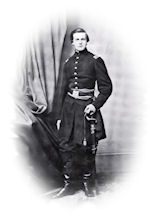 Camp near Alexandria, Va.,
Monday, September 8, 1862.
Dear Sister L.:—.
For over three weeks we have been constantly on the move, not sleeping in the same place two nights in that time.
We marched down the Peninsula, camping at Chickahominy, twenty-seven miles; Williamsburg, sixteen miles; Yorktown, fifteen miles, and Fortress Monroe, twenty-eight miles; eighty-six miles in four days. Next day embarked at Newport News, and next day landed at Aquia Creek; thence sixteen miles by railroad to Fredericksburg, then following the north fork of the Rappahannock, we went out in the direction of Culpeper and after scouting round that country a few days, took the back track and followed alongside the railroad to Manassas Junction. We left the railroad there and marched back and forth near the old Bull Run battlefield, and on Saturday week we were engaged in the second Bull Run fight on the same ground as the other, a fight that throws the first one into the shade. If I had time and felt able, I would like to describe the battle to you and our retreat to Centreville. But I don’t know as you would like to hear such terrible details. Suffice it to say it was another of McDowell’s victories—a fearful scene of bloody carnage.
We stopped at Centreville one day and then made a long round-about march to Hall’s Hill, stopped there one day, and then a march of sixteen miles brought us here.
I would not, if I could, tell you how we have suffered on this march. Eating raw beef without salt, and drinking water from mud holes, were done more than once. I have marched forty-six miles on nothing but raw beef and ditch water, and yet I held out to the end. Now I am worn out, and can neither write nor do anything else till I am some rested.
I had to smile a little at your questions about the battle smoke. I think it more probable somebody was burning the brush in his pasture that week.
Monday, 8th.—Passed through Dry Ridge; took up camp one-half mile south of Chrittenden at 2 P. M.

SEPTEMBER 8TH.—But the Marylanders have not risen yet. Some of our divisions have touched the soil of Pennsylvania. And I believe the whole Yankee host would leave Washington, escaping by the Potomac, if it were not for the traitors here, who go to Norfolk and Baltimore by flag of truce, and inform the Lincoln Government (for pay) that we have no troops here—none between this and Manassas, none all the way to Lee, while thousands in the army are prostrated with physical exhaustion.

September 8.—A very warm day. Mrs. W. and myself went out to try to get some sweet potatoes for some of the men in the Buckner Hospital. They are very scarce here at present, as the season is a dry one. We got some from a lady who would not take up any for her own use, but as soon as we told her who they were for she gave them to us, and would take no money for them. This lady had two young daughters, who were busy weaving and spinning. They had on dresses spun and woven by themselves. This ancient work is all the fashion now, as we are blockaded and can get no other kind of goods.
We are much pleased with our kind hostess, Mrs. Evans. Some few days ago one of her sons, a Methodist preacher, came to see her, and the first thing he asked us about was Miss Augusta Evans, the authoress, of Mobile, saying he admired her and her works so much that he had named one of his daughters for her. We had a good prayer-meeting while he was here.
When I left Mobile Mr. McVoy gave me some money for his young son, a member of an Alabama regiment, who he had heard was sick up this way. On arriving here I found he was at Wither’s Division Hospital, which was at Tyner’s Station, Tenn. I wrote there, and received an answer from Mr. Colson of the same regiment, telling me that he was dead.
Judge Thornton of Mississippi is now at Dalton, with his wounded son. He brought him from Virginia, and has been unable to proceed further on the way with him. I intend going down to visit him. There is a good deal of trouble about the ladies in some of the hospitals of this department. Our friends here have advised us to go home, as they say it is not considered respectable to go into one. I must confess, from all I had heard and seen, for awhile I wavered about the propriety of it; but when I remembered the suffering I had witnessed, and the relief I had given, my mind was made up to go into one if allowed to do so. Mrs. W. and Mrs. M. have come to the same conclusion on the subject as myself. God has said, “Who can harm you if you be followers of that which is good?” I thought of this, and believed it, and gained strength from it. Christians should not mind what the world says, so that they are conscious of striving to do their duty to their God.
It seems strange that the aristocratic women of Great Britain have done with honor what is a disgrace for their sisters on this side of the Atlantic to do. This is not the first time I have heard these remarks. Not respectable! And who has made it so? If the Christian, high-toned, and educated women of our land shirk their duty, why others have to do it for them. It is useless to say the surgeons will not allow us; we have our rights, and if asserted properly will get them. This is our right, and ours alone.
In a book called the “Sunny South,” written by the lamented Rev. J. H. Ingraham, are the following words: “Soldiers fight the battles of our country, and the least we can do is to cherish them in their helplessness, and bind up their wounds, and all true women will do it, who love their country.” Who among us does not echo his sentiments? Women of the South, let us remember that our fathers, husbands, brothers, and sons are giving up all that mortals can for us; that they are exposed hourly to the deadly missiles of the enemy; the fatigues of hard marching, through burning suns, frost, and sleet; pressed by hunger and thirst; subject to diseases of all kinds from exposure; and last, though by no means least, the evil influences that are common in a large army. Are we aware of all this, and unwilling to nurse these brave heroes who are sacrificing so much for us? What, in the name of common sense, are we to do? Sit calmly down, knowing that there is many a parched lip which would bless us for a drop of water, and many a wound to be bound up? These things are not to be done, because it is not considered respectable! Heaven help the future of our country, for nothing but God’s special aid can save any country where such doctrines are inculcated.
Women of the South, let us remember we have a foe as relentless as Tamerlane or Atilla, who, if we are to believe his own threats, has resolved to lay our towns in ashes, lay waste our fields, and make our fair land a blackened mass of ruins if we will not submit to his domination; and, unless every man and woman in the South do their duty, he will succeed, even though we had a president gifted with the wisdom of Solomon, and generals endowed with the genius of Frederick or Napoleon. I know there are hundreds of our women who look on this subject in the proper light, having household duties to attend to, which they can not leave; but have we not thousands who, at this moment, do not know what to do to pass the time that is hanging heavily on their hands? I mean the young: the old are not able for the work. If it will hurt a young girl to do what, in all ages, has been the special duty of woman—to relieve the suffering—it is high time the youth of our land were kept from the camp and field. If one is a disgrace, so is the other.


