Following the American Civil War Sesquicentennial with day by day writings of the time, currently 1863.

September 2012

October 5, 1862.

The review by Gov. Holbrook and inspection yesterday, was not as tedious as we expected. One man of our company fainted and two or three fell out before it was over; but most of the men agreed that it was on the whole an easier job than that of the day before. For one, my knapsack was sensibly less mountainous in size and weight, and my gun felt less like a six-pounder howitzer. I presume both will continue to decrease in ponderosity, as our muscles become habituated to the new pull on them.

The regiment was mustered by companies into the U. S. service, in the afternoon, by Maj. Austine, who declared, after he had administered the oath of allegiance, that he felt proud of us. One man of the Bradford company declined to take the oath, but thought better of it shortly and begged the privilege of taking it, which was granted. Another man, of the Rutland company, also declined to take the oath, and stood to his refusal. What makes his case more singular is that he served in the First regiment, throughout its term of service, and was a good soldier.

Yours, B.

Friday, 5th. Went down to the river and washed. Charlie and Delos came up with a letter from Fred Allen, good. Proposed a plan for celebrating C’s birthday. Report about camp that N. and M. were to be married. Rode to town. Went and saw some miscellaneous horses. Went to the hospital and saw Merrick and Lewis Emmons. Came back to camp in the rain. Sandy in the guardhouse for insolence. Got supper.


The interchange of letters between Miss Wormeley and G[eorgeanna] ended in an agreement that they should join hands again for hospital work at Portsmouth Grove, and as G. made bold to propose… Jane and Sarah Woolsey as co-laborers, all three of them were given the chance they coveted. Miss Wormeley’s plan for organizing will give you an idea of … [their] duties …..
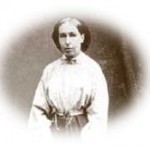

Miss Wormeley to Georgeanna Woolsey

NEWPORT, Sept, 5th, ’62.

My dear Georgy: I found the new surgeon inclined to one woman for each ward (twenty-eight wards or barracks, of sixty men in each). I hunted him out of that idea however. Everything in the domestic management of the hospital being left to me, I shall gently avail myself of the courtesy. Now then for your advice. My ideas are these. Please give your decided opinion on them. To give five wards, sixty beds to each ward, to the superintendence of five friends—you, your sister, cousin, H. Whetten, and a lady here whom I esteem and consider efficient. Under these I should put one, two, or three women nurses, as occasion may require. These five ladies would be responsible for everything connected with their wards, in general.

You know what general supervision means,—cleanliness, beds, linen, due washing thereof, etc., etc., in all of which the women under you should do the actual work whilst you see that they do it. . . . I want to have the men intelligently looked after, as only a lady can. I should therefore wish that the ladies should go round with the surgeons invariably—to make short notes of each patient’s treatment, medicine, and diet. Medicines I should want her to make sure were properly and timely given. The special diet lists ordered by the surgeon I should wish to be handed in to me as soon as practicable. I shall put a special diet kitchen at each end of the Barrack St. with a female cook in each, whom I shall attend to myself. . . .

This is in general a sketch of my ideas. What do you say? Will you come? . . . I want to point out to you that no ladies have ever been allowed to come into a U. S. General Hospital in this way—much less warmly requested, and thanked, and confided in, as we are,—for of course it has nothing personal to myself in it; it is General Hammond’s first cordial reception and experiment of ladies in hospital, and is in consequence, as he told me, of the grateful sense he had of what we did at White House. . . .

Now as to our own living there. A house is building for us, to be finished by the 12th of this month. It has bedrooms for all the female nurses, a dining-room for ditto, an office for me. We shall have to carpet our own rooms, and adorn them as we see fit; the Government supplies the common necessities of a bed, etc., for the nurses in general. . . .

I should want to have you with me at the start. Can you arrange to come? . . .

Write me at once, please. What a vile place you are in; the mails take a week to go.
Friday, 5th.—Passed through Paris at 6:30 o’clock a. m., on through Rutlege’s Mills, arriving at Cynthiana at 5 P. M. Greeted with an incessant waving of handkerchiefs all day; if there are any ugly girls in that country they all stayed at home that day, for these were all pretty.

SEPTEMBER 5TH —Our army knows no rest. But I fear this incessant marching and fighting may prove too much for many of the tender boys.

5th.—Our son J. arrived last night with quite a party, his health greatly suffering from over-work in Richmond during these exciting times. One of the party told me an anecdote of General J. E. B. Stuart, which pleased me greatly. Mrs. S. was in the cars, and near her sat a youth, in all the pride of his first Confederate uniform, who had attended General S. during his late raid as one of his guides through his native county of Hanover. At one of the water stations he was interesting the passengers by an animated account of their hair-breadth escapes by flood and field, and concluded by saying, “In all the tight places we got into, I never heard the General swear an oath, and I never saw him drink a drop.” Mrs. S. was an amused auditor of the excited narrative, and after the cars were in motion she leaned forward, introduced herself to the boy, and asked him if he knew the reason why General S. never swears nor drinks; adding, “It is because he is a Christian and loves God, and nothing will induce him to do what he thinks wrong, and I want you and all his soldiers to follow his example.”

September 5th. Thursday morning, mounted guard in presence of a large crowd, including many ladies in carriages. Throughout the day hosts of people flocked about the camps, all very friendly, including one charming group of school girls, who, to us, were as the first appearance of the sun to the Northern explorer, after an arctic winter. Rumors of the enemy crossing the upper Potomac coming in hourly; the whole army is concentrating here and the country is covered with camps.
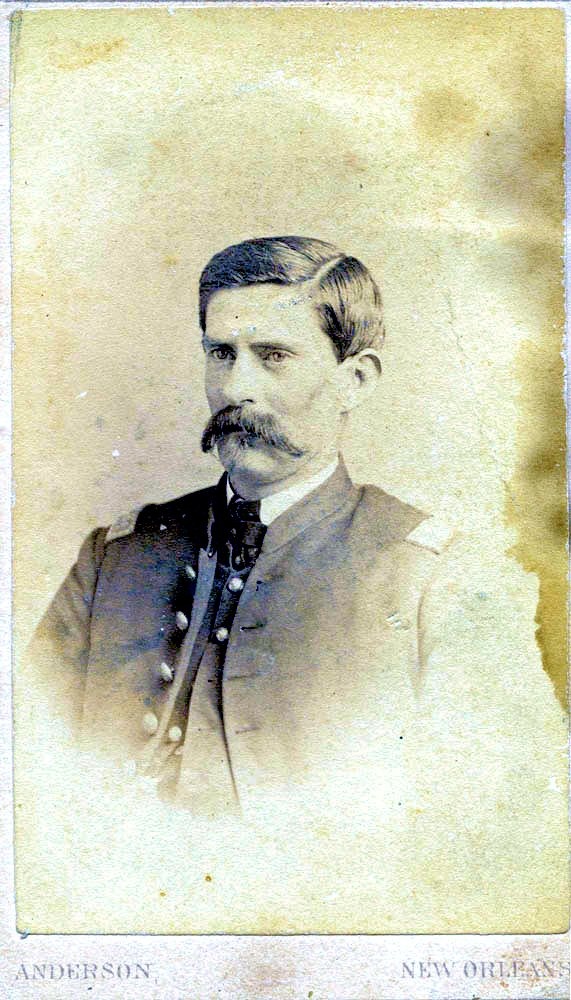
Knowlton-Capt.-Henry-H.-11681

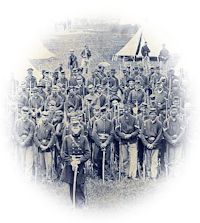
Henry Knowlton was commissioned a second lieutenant on September 5, 1862, and mustered into Company K, 33rd Missouri Infantry on September 11, 1862. On May 4, 1863, he was promoted to first lieutenant; promoted to captain on January 30, 1865, he was assigned to command Company D.

The 33rd Missouri Infantry was engaged in the Battle of Helena and participated in the Red River campaign, including the Battle of Pleasant Hill. The regiment also fought at the battles of Tupelo, Nashville, and Fort Blakely.

Knowlton mustered out with the regiment on August 10, 1865.

Carte-de-Visite by Anderson & Turner, New Orleans, La.

The Trans-Mississippi Theater Photo Archive image and information.

Civil War Portrait 002

September 5.—The One Hundred and Sixteenth regiment of New York volunteers under the command of Colonel Chapin, left Buffalo for the seat of war.—The rebel schooner Rising Sun, was captured by the boats of the United States steamer Wyandotte, in Brittan’s Bay, near the mouth of the Potomac River, Va.—Poolesville, Md., was taken possession of, and a detachment of Massachusetts cavalry stationed there was captured, by the rebel forces under Gen. Stuart. He crossed the Potomac River at Conrad’s Ferry without opposition, and was received with exultant demonstrations of favor, nearly all the population turning out to welcome him.—Philadelphia Press.

—The One Hundred and Twenty-eighth regiment of New York volunteers, under the command of Colonel David S. Cowles, left Hudson for the seat of war.—The ship Ocmulgee, of Edgartown, Mass., was burned at sea by the rebel privateer “290,” commanded by Capt. Semmes.

—Braxton Bragg, the rebel General at Sparta, Alabama, issued the following congratulatory order to his army:—

“Comrades: Our campaign opens auspiciously. The enemy is in full retreat, with consternation and demoralization devastating his ranks. To secure the fruits of this condition, we must press on vigorously and unceasingly.

“Alabamians! your State is redeemed. Tennesseeans! your capital and State are almost restored without firing a gun. You return conquerors. Kentuckians! the first great blow has been struck for your freedom. Soldiers from other States share the happiness of our more fortunate brothers, and will press on with them for the redemption of their homes and women.”

—Governor Morton, of Indiana, issued a proclamation calling upon the inhabitants of the counties bordering upon the Ohio River to meet at their respective places of holding elections, and form themselves into companies for military duty, and report to the Colonel of the Indiana Legion in their respective districts.

—General J. S. Morgan, commanding Union forces at Key West, Fla., issued an order directing that persons of African descent, including those held to service or labor under State laws, coming within the lines of his command, should be employed in the quartermaster’s department. The order also declared that all persons so employed should receive permanent protection against any compulsory return to a condition of servitude.

—Governor Tod, of Ohio, issued a proclamation informing the inhabitants of the State that no more volunteers were required for the protection of the city of Cincinnati.

September 4th. 1862.

We have been three days in camp, and have fully recovered from the fatigues of our long journey. Drill is the order of the day, as it is the necessity of the hour. Officers and men have yet to learn the rudiments of military maneuvering. There is not a company officer who can put his men through company drill without making one—or more—ludicrous blunders. Yesterday our First Lieutenant was drilling a squad of men. He was giving all his attention to “time,” and did not notice a fence had planted itself directly across our path. Suddenly he shouted: “Who—who—who! Come this way, you fellows in front—don’t you see you are running into that fence?”

On Monday morning one of the men had been cleaning his gun, and, wishing to know if it would burn a cap, laid it down for the purpose of getting one. When he returned, instead of picking up his own gun, he took a loaded one that belonged to a guard. As a result of his stupidity, the ball passed through two tents, entered a young man’s heel and passed through his foot lengthwise, rendering him a cripple for life. Rumors were in circulation all day Tuesday of Rebel movements. At dusk twenty rounds of ammunition were distributed. We were then sent to our quarters to await orders. A spirit of unrest pervaded the camp. Men gathered in groups and whispered their conviction of a night attack.

At nine o’clock a picket fired an alarm. The bugle sounded “To arms.” Orderlies ran up and down the line of tents shouting. “Fall in! Fall in with your arms; the Rebels are upon us!”

For a moment there was some confusion, but in less than five minutes we were in line, eager to meet the foe. But no enemy appeared. It was a ruse gotten up by the officers as an emergency drill, and, as such, it was a decided success. There were some ludicrous incidents, but, as a rule, the men buckled on their arms with promptness and appeared as cool as on dress parade.

Yesterday morning, as we were forming for company drill, a courier rode into camp with dispatches from headquarters. Five companies from our regiment were ordered to repair at once to Fort Gaines, eight miles distant, on the Virginia side of the Potomac. We started off briskly, but before we had gone a mile the order was countermanded, and we returned to camp.

The news this morning is not encouraging. General Pope has been defeated and driven back upon the fortifications around Washington, and the Rebels are trying to force their way across the Potomac. We are under marching orders. Rumor says we are to join Burnside’s forces at Frederic City.