
September 6.—Yesterday I went with a party, fishing; as usual at such parties, we caught no fish. We fished at the Chickamauga Creek, or river. It is a stream that takes its rise in Walker County, flows north-easterly, and enters the Tennessee River at Chattanooga. The scenery around it is wild and picturesque. There is an Indian legend connected with it, from which the river takes its name. The tale is that many years ago two Indian tribes met here and had a desperate battle, with great slaughter on both sides; hence, the name “Chickamauga, or River of Death.”
September 2012
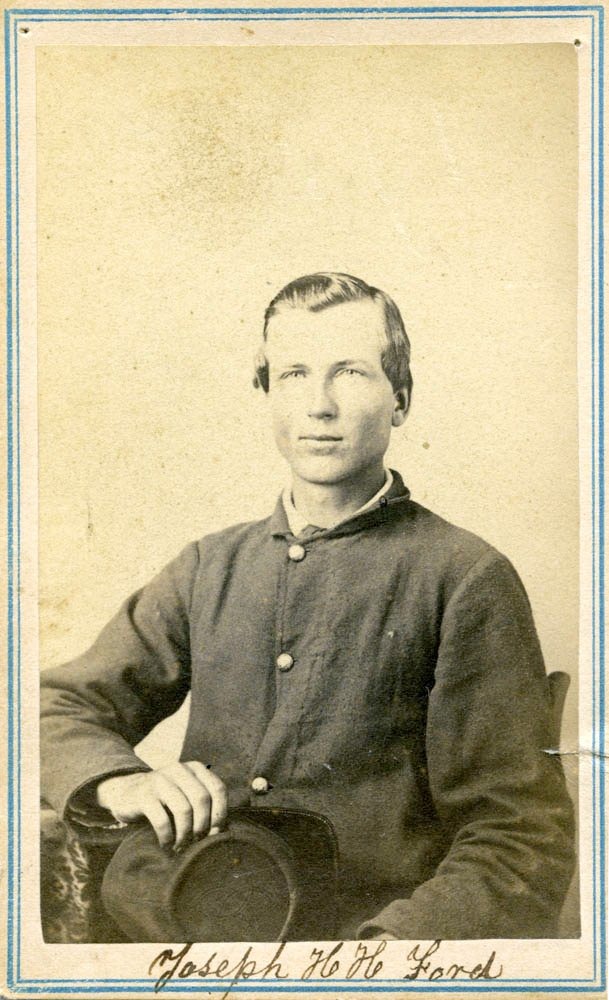
Joseph Ford enlisted as a private in Company G, 13th Kansas Infantry, on September 6, 1862. The 13th Kansas was organized on September 10, 1862, at Atchison, Kansas, and fought at the 1862 battles of Newtonia and Prairie Grove; the unit also preformed provost and garrison duties in Kansas, Missouri, Arkansas, and the Cherokee Nation.
Ford was promoted to corporal on July 15, 1864, and was mustered out with his regiment on June 26, 1865, at Fort Leavenworth, Kansas.
Carte-de-Visite by White’s Photographic Rooms, Little Rock, Ark.
The Trans-Mississippi Theater Photo Archive image and information.
Civil War Portrait 003
September 6.—Olathe, the county-seat of Johnson County, Kansas, was sacked by Quantrel. The marauding band entered the town about midnight, took all the men, including the recent volunteers, prisoners, and marched them to the public square. Two men were killed, and one, a young man, mortally wounded while asleep. Two brothers, who had enlisted, living about two miles from the town, were taken out of their house into a corn-field and shot down in cold blood. The stores and private houses were plundered. The press of the Olathe Mirror was broken up. The post-office was entered and rifled of its contents, and county papers, etc., destroyed. Some government arms and stores were also taken. No resistance was made, because the citizens and volunteers were completely taken by surprise and overpowered. Quantrel had about three hundred well-armed and well-mounted men with him. Twenty-nine of the volunteers were taken out near the border and released on parole.—Leavenworth Conservative.
— A fight took place near Cacapon Bridge, about seventeen miles from Winchester, Va., between a body of Union troops under the command of Colonel McReynolds, and a portion of the rebel forces under Colonel Imboden, resulting in a rout of the rebels and the capture by the Unionists of all their camp equipage, ammunition, guns, horses, mules, etc
— The One Hundred and Twenty-third and the One Hundred and Twenty-fourth regiments N.Y.S.V., under the command of Colonels A. L. McDougall and A. Van Horn Ellis, passed through New-York for the seat of war.
— A party of rebel cavalry, numbering four hundred, attacked the outposts of the command of Gen. Julius White, in the vicinity of Martinsburgh, Va., and after a short engagement, were defeated, with a loss of about fifty prisoners, horses, and arms. The National loss was two killed and ten wounded, among the number Capt. Grosvenor and Lieut Logan, of the Twelfth Illinois cavalry, the members of which distinguished themselves by their bravery and daring.— General White’s Despatch.
— The funeral of Major-General Kearny, who was killed at the battle of Chantilly, on the first of September, took place to-day. The remains had been conveyed to his home, at Bellegrove, near Newark, N. J., from which place they were carried to New-York, escorted by a numerous procession of friends and admirers, preceded by a band of music and military, both infantry and cavalry. On arriving at New-York the cortege was met by the Fifth N.Y.S.M. regiment, and escorted to Trinity Church, where the burial service took place. The body was interred in the family vault, near the south-west corner of Trinity church-yard.
— The city of Frederick, Maryland, was entered and occupied by the rebel army under General Lee. The inhabitants manifested no enthusiasm on their arrival.—(Doc. 202.)
— Fort Abercrombie was attacked by a party of three hundred Indians, who were driven off after killing one of the National troops and wounding three others. —St. Paul Pioneer, Sept. 9.
— Washington, N. C, was attacked by a large body of rebels, who were repulsed with a loss of thirty killed and thirty-six taken prisoners, after a severe fight of nearly two hours. During the engagement, the National gunboat Picket, exploded her magazine, killing and wounding eighteen men.—(Doc. 203.)
— About forty men of the Fourth Virginia regiment, under command of Major Hall, were attacked and surrounded near Chapmansvillc, Va., by three hundred rebel guerrillas under Colonel Stratton. After a sharp fight, in which Major Hall was wounded and Colonel Stratton killed, the Nationals succeeded in cutting their way out.
— Pikeville, Va., was this day captured by a strong force of rebel cavalry, and plundered of a large amount of private property. The home guard endeavored to resist the rebels, but they were too few in number to do so with effect.
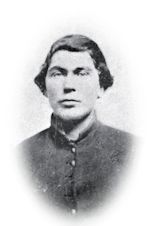
Rienzi, Friday, Sept. 5. Went out as No. 6. Was a little unwell. Infantry preparing to move. Bad news from the Potomac.
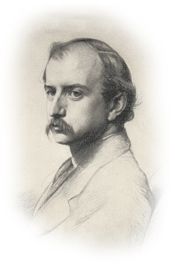 London, September 5, 1862
Your appointment reached us some time ago and I was rejoiced at it, because I think such a place as this gives more room for expansion than that of a regimental officer. I doubt whether the atmosphere of Lieutenants is healthy, or of Captains or Majors. I think you have grown rusty at Hilton Head and I want to hear more vigorous talk. As to your speculations about the end of the war and a peace, I won’t say that I would n’t consent to argue about it some day, but you know perfectly well that until we’ve driven the South into their cotton fields we have no chance even to offer those terms. Perhaps on the broad national question I look at the matter differently from you. Apart from other causes, I am here in Europe and of course am influenced by European opinion. Firmly convinced as I am that there can be no peace on our continent so long as the Southern people exist, I don’t much care whether they are destroyed by emancipation, or in other words a vigorous system of guerilla war carried on by negroes on our side, or by the slower and more doubtful measures of choaking them with their own cotton. Perhaps before long we shall have to use both weapons as vigorously as we are now using the last. But one thing is clear to my mind, which is that we must not let them as an independent state get the monopoly of cotton again, unless we want to find a powerful and bitterly hostile nation on our border, supported by all the moral and social influence of Great Britain in peace; certain in war to drag us into all the European complications; sure to be in perpetual anarchy within, but always ready to disturb anything and everything without; to compel us to support a standing army no less large than if we conquer them and hold them so, and with infinite means of wounding and scattering dissension among us. We must ruin them before we let them go or it will all have to be done over again. And we must exterminate them in the end, be it long or be it short, for it is a battle between us and slavery.
I see that your regiment is ordered to Virginia which shows a gleam of reason in the War Department. What it was ever sent to Port Royal for, the Lord he knows. At any rate, however, it has spared you some hard fighting, and with the prospect you have now before you, I think you need n’t be sorry for that. For my own part I confess that I value human life at a pretty low price, and God knows I set no higher value on my own than on others. I always was a good deal of a sceptic and speculator in theories and think precious small potatoes of man in general and myself in particular. But I confess to feeling very badly when the news comes of our disasters and losses. Poor Stephen Perkins. I have a kind of an idea that Stephen thought much as I do about life. He always seemed to me to take rather a contemptuous view of the world in general, and I rather like to imagine him, after the shock and the pain was over, congratulating himself that at last he was through with all the misères of an existence that had bored him and that offered him little that he cared for; and now he could turn his mind to the exploring of a new life, with new duties and a new career, after having done all that man can do to discharge his debt to his God and his fellow-men in the old. There are men enough in Europe who hold these ideas with more or less variation, but Stephen and perhaps Arthur Dexter are the only ones among us whom I should call bitten with them — with Stephen, his eyes excused them. With Arthur, his digestion.
Our life here is quiet but very busy. No more is heard of intervention. Six hundred thousand men have put an end to that, and the English think besides that the South need no help. Of late the troubles in Italy have drawn people’s minds away from us and as their harvest is very poor, our grain is too necessary to joke about….
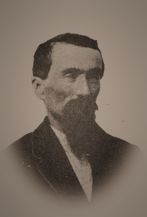 September 5 — Last night at one o’clock we started for Leesburg. The road was crowded with wagons and consequently we made slow progress. We were detained three hours at Goose Creek, a small stream two miles from Leesburg, where the ford was deep and miry, and the water came near running over our guns. We arrived at Leesburg in the middle of the afternoon and fed our horses, then moved about a mile from town to a large spring, remained there till sunset, when we returned to town and camped. This evening we passed a great many infantry marching toward the Potomac. There are thousands of soldiers camped around Leesburg this evening, and all seem to be in joyous gayety, caused, I suppose, by the eager desires and bright anticipations of crossing the Potomac and entering Maryland. As I am writing I hear soldiers shouting, huzzahing all around us. Just now a brass band has struck up, which helps to swell the cheer of the merry throng.
Leesburg, the county seat of Loudoun, is situated three miles from the Potomac, in a beautiful country. From the town to the river the land is almost as level as a lake. On a little hillock south of town is a small fort, or rather earthwork, that commands all the country around town and between the town and the river. It was constructed by the militia last fall after the memorable fight at Ball’s Bluff.
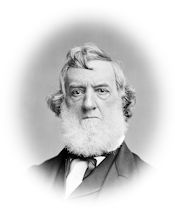
September 5, Friday. We have a report this morning that the Rebels have crossed the Potomac at Edwards Ferry, but the War Department says the report wants confirmation and that we have no stragglers from there, as we should have if the rumors were true.
Wilkes claims that he ought to have the position of Acting Admiral. There is reason in his claim, though some are opposed to it. He is not in favor with his professional brethren, has given great trouble and annoyance to the Department heretofore and will be likely to give us more trouble, but I believe it best to give him under the circumstances the position with the squadron.
The question of publishing the report of General Pope was before us. Some little discussion took place. I did not consider it strictly a report, for it was not accompanied by the reports of the other officers, or any statistics of killed, wounded, losses, or captures, but a statement from an officer in command, who felt himself aggrieved and who expressed himself in a manner to give offense. Much was said, and all concurred or acquiesced in non-publication for the present, especially as there is to be an inquiry into the subject-matter reported upon.
There is a good deal of demoralization in the army; officers and soldiers are infected.
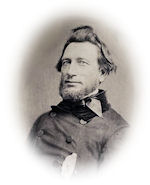
5th.—10 o’clock P. M. Have just received an order to cook three days’ rations, and be prepared to move at a moment’s notice. I do not know where we go, but presume into Maryland, to resist the advance of Lee and Jackson, who we hear are crossing at Harper’s Ferry and pushing towards Frederick, and perhaps towards Harrisburg, Pennsylvania. If they have crossed with their hundred thousand men, and we cannot now, with our large force, hem them in and capture them, we deserve to be beaten. Will General McClellan let us take them, if we can?

Friday, 5th—We are still on guard at the big cut, with cartridge boxes on and muskets by our sides. It was reported that the rebels were coming to attack us last night and there was no sleep for us. They did not come, but I hope that they will not deceive us any more.
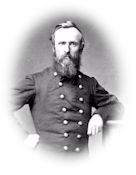
Friday, September 5, 1862, 9 A. M. — Distant firing heard towards Leesburg and up the Potomac. A warm fine day.
P. M. Received orders to be ready to march immediately; to cook three days’ rations, etc. Understood to be to join Burnside.


