Following the American Civil War Sesquicentennial with day by day writings of the time, currently 1863.

September 2012

September 1, Monday. The wounded have been coming in to-day in large numbers. From what I can learn, General Pope’s estimate of the killed and wounded greatly exceeds the actual number. He should, however, be best informed, but he feels distressed and depressed and is greatly given to exaggeration.

Chase tells me that McClellan sends word that there are twenty thousand stragglers on the road between Alexandria and Centreville, which C. says is infamously false and sent out for infamous purposes. He called on me today with a more carefully prepared, and less exceptionable, address to the President, stating the signers did not deem it safe that McClellan should be intrusted with an army, etc., and that, if required, the signers would give, their reasons for the protest against continuing him in command. This paper was in the handwriting of Attorney-General Bates. The former was in Stanton’s. This was signed by Stanton, Chase, Smith, and Bates. A space was left between the two last for Blair and myself; Seward is not in town, and, if I am not mistaken, is purposely absent to be relieved from participation in this movement, which originates with Stanton, who is mad—perhaps with reason — and determined to destroy McClellan. Seward and Stanton act in concert, but Seward has opposed or declined being a party to the removal of McClellan, until since Halleck was brought here, when Stanton became more fierce and determined. Seward then gave way and went away. Chase, who has become hostile to McClellan, is credulous, and sometimes the victim of intrigue; was taken into Stanton’s confidence, made to believe that the opportunity of Seward’s absence should be improved to shake off McClellan, whom they both disliked, by a combined Cabinet movement to control the President, who, until recently, has clung to that officer. It was not difficult, under the prevailing feeling of indignation against McClellan, to enlist Smith. I am a little surprised that they got Mr. Bates, though he has for some time openly urged the removal of McClellan. Chase took upon himself to get my name, and then, if possible, Blair was to be brought in. In all this, Chase flatters himself that he is attaching Stanton to his interest; not but that he is himself sincere in his opposition to McClellan, who was once his favorite, but whom he considers a deserter from his faction and whom he now detests.

I told Chase I thought this paper an improvement on the document of Saturday; was less exceptionable; but I did not like, and could not unite in, the movement; that in a conference with the President I should have no hesitation in saying or agreeing mainly in what was there expressed; for I am satisfied the earnest men of the country would not be willing McClellan should hereafter have command of our forces in the field, though I could not say what is the feeling of the soldiers. Reflection had more fully satisfied me that this method of conspiring to influence or control the President was repugnant to my feelings and was not right; it was unusual, would be disrespectful, and would justly be deemed offensive; that the President had called us around him as friends and advisers, with whom he might counsel and consult on all matters affecting the public welfare, not to enter into combinations to control him. Nothing of this kind had hitherto taken place in our intercourse. That we had not been sufficiently intimate, impressive, or formal perhaps, and perhaps not sufficiently explicit and decisive in expressing our views on some subjects.

Chase disclaimed any movement against the President and thought the manner was respectful and correct. Said it was designed to tell the President that the Administration must be broken up, or McC. dismissed. The course he said was unusual, but the case was unusual. We had, it was true, been too informal in our meeting. I had, he said, been too reserved in the expression of my views, which he did me the compliment to say were sound, etc. Conversations, he said, amounted to but little with the President on subjects of this importance. Argument was useless. It was like throwing water on a duck’s back. A more decisive expression must be made and that in writing.

It was evident there was a fixed determination to remove, and if possible to disgrace, McClellan. Chase frankly stated he desired it, that he deliberately believed McClellan ought to be shot, and should, were he President, be brought to summary punishment. I told him he was aware my faith in McClellan’s energy and reliability was shaken nine months ago; that as early as last December I had, as he would recollect, expressed my disappointment in the man and stated to him specially, as the friend and indorser of McClellan, my misgivings, in order that he might remove my doubts or confirm them. McClellan’s hesitating course last fall, his indifference and neglect of my many applications to cooperate with the Navy, his failure in many instances to fulfill his promises, when the Rebels were erecting batteries on the west bank of the Potomac, that they might close the navigation of the river, had shaken my confidence in his efficiency and reliability, for he was not deficient in sagacity or intelligence. But at that time McClellan was a general favorite, and neither he (Chase) nor any one heeded my doubts and apprehensions.

A few weeks after the navigation of the river was first interrupted by the Rebel batteries last November, I made known to the President and Cabinet how I had been put off by General McClellan with broken promises and frivolous and unsatisfactory answers, until I ceased conversing with him on the subject. To me it seemed he had no plan or policy of his own, or any realizing sense of the true condition of affairs, — the Rebels in sight of us, almost within cannon-range, Washington beleaguered, only a single railroad track to Baltimore, the Potomac about to be closed. He was occupied with reviews and dress-parades, perhaps with drills and discipline, but was regardless of the necessities of the case, — the political aspect of the question, the effect of the closing of the only avenue from the National Capital to the ocean, and the embarrassment which would follow to the Government itself were the river blockaded. Though deprecating his course and calling his attention to it, I did not think, as Chase now says he does, and as I hear others say they do, that he was imbecile, a coward, a traitor; but it was notorious that he hesitated, doubted, had not self-reliance, any definite and determined plan, or audacity to act. He was wanting, in my opinion, in several of the essential requisites of a general in chief command; in short, he was not a fighting general. These are my present convictions. Some statements of Stanton and some recent acts indicate failings, delinquencies of a more serious character. The country is greatly incensed against him, but he has the confidence of the army, I think.

Chase was disappointed, and I think a little chagrined, because I would not unite in the written demand to the President. He said he had not yet asked Blair and did not propose to till the others had been consulted. This does not look well. It appears as if there was a combination by two to get their associates committed, seriatim, in detail, by a skillful ex parte movement without general consultation.

McClellan was first invited to Washington under the auspices of Chase, more than of any one else, though all approved, for Scott was old, infirm, and changeable. Seward soon had greater intimacy with McClellan than Chase. Blair, informed in regard to the qualities of army officers, acquiesced in McClellan’s selection; thought him intelligent and capable, but dilatory. In the winter, when Chase began to get alienated from McC. in consequence of his hesitancy and reticence, or both, if not because of greater intimacy with Seward, Blair seemed to confide more in the General, yet I do not think McC. was a favorite, or that he grew in favor.
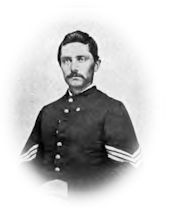
Monday, Sept. 1st.—The defeat which we met with on Saturday, seems to have been a very decisive as well as a very destructive one. Our loss is heavy, though I am not without hopes that the official report will restore many of our lost men, and even place us in possession of the battle field. These official statements are powerful weapons, when well wielded.

We are under a flag of truce all day, removing the dead and wounded from the battle field. I have listened to more than a hundred funeral sermons to-day, each preached in a single second. A dozen muskets at a single volley, tell most impressively and laconically the last sad story, and the spirit of the departed soldier looks down with sad interest on the country which his body can no longer defend.

The enemy can be seen on the move, some eight miles away, and no doubt we shall soon be called to arms.

At 4 P. M. I went down to aid in the hospitals, worked for a short time, and was just prepared, with sleeves rolled up and knife in hand, to excise the shoulder of a poor fellow whose joint had been shattered, when a call to arms arrested further proceedings, and I returned to my regiment. Now, as I write, all is packed and ready, and we are ready to fight or run. The Lord knows which we shall be ordered to do, but presume we shall make another “strategic movement,” and “change our base of operations,” by falling back in the night on Washington. I was so severely reprimanded for saying that we were whipped at the battle of Mechanicsville and Gaines’ Mill, that I shall not venture to write that we are whipped now, but only think we are.

A tremendously heavy shower and hard wind set in about 5 o’clock, and continued till nearly dark, the men sitting in line and taking it as they best could. * * * At about 8 o’clock we took up our line of march towards Washington. The roads were terrible, the night very dark, yet it was a subject of frequent remark that, notwithstanding these embarrassments, we are led much faster from the enemy than towards him. After travelling about five miles, we found ourselves on the ground where a battle had been fought in the afternoon (Chantilly) between Gen. Stevens and the rebels who had got in our rear and were trying to cut off our retreat. The enemy was repulsed, but Gen. Stevens was killed, and his son wounded.

We marched through the rain during the night, and at 2 o’clock A. M. (when I dropped down and slept between my wet blankets for about three hours,) we had reached to within one and a half miles of Fairfax Court House. I now get no letters from home. This being deprived of regular mail matter from their homes, is one of the most cruel of all the impositions inflicted by government officials on the soldiers. If these office-holders could but know the deep interest with which the most illiterate soldier watches for the mails to hear something, anything from the dear home which he despairs of seeing again, it would move his heart, if he has one, not to throw out the soldiers mail to make room for the civilians.

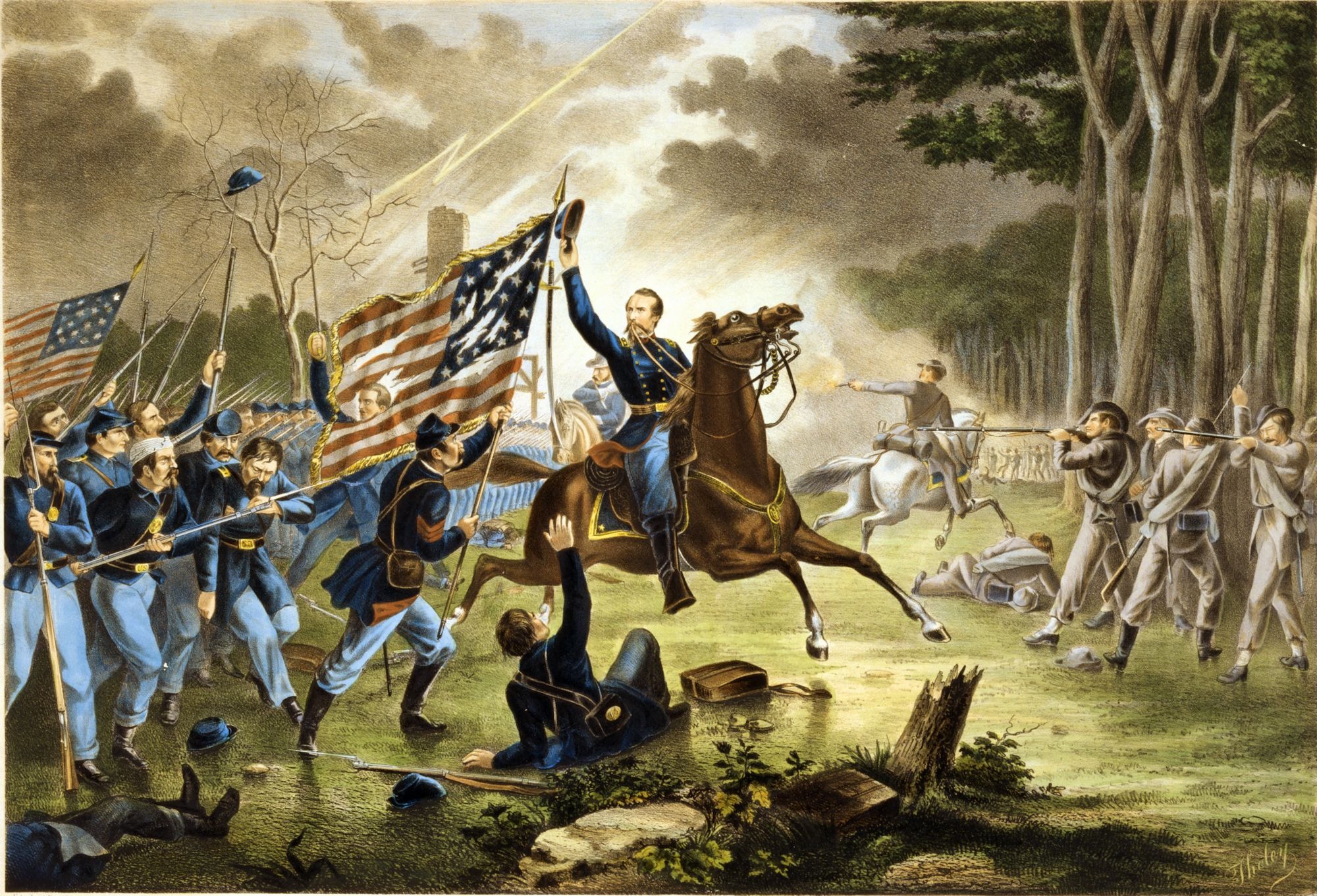
12 o’clock.—More bad news. The dead body of General Philip Kearney has just been sent in by the enemy. He was killed yesterday, in the fight at Chantilly. This is a great loss. “He was the noblest Roman of them all.” If McClellan only possessed his dash, this war would not now be on our hands. Not an hour before his death, I saw him dashing along his lines, then quiet at Centreville, whilst his soldiers rent the air with shouts of gladness at the sight of him! How proud and happy he seemed at the huzzas of his “fighting division.” He little realized how short-lived the pleasure. He started for this place, (Fairfax,) fell in with the enemy, who had got in our rear, engaged and repulsed him, and lost his own life, and never fell a braver man or better fighter.

Our brigade is here, as on the Chickahominy, the rear guard of the army, to protect the rest from a pursuing foe. It seems strange that we should so long be exposed in this perilous position. After this defeat, I fear General Pope’s army will be demoralized. ‘Tis very sad to listen to the tales of bravery and destruction of his devoted troops at Bull Run, on Saturday. Again and again, whilst being borne down and pressed back by superior numbers, on being told that McClellan’s army was in sight and hurrying to their support, would they rally, cheer, and dash themselves against overpowering numbers, and struggle with almost superhuman effort, to hold the field till we could come up; and all this while we, the “Great Army of the Potomac,” were looking on, dallying with time, many, no doubt, praying for the very disaster which happened. Am I prejudiced that I think thus? Had I not written it in this journal, a week before it occurred, I might have hoped so.

10 P. M.—Again in the camp which we left to go to the rescue of General Pope. “Tis hard to write of what seems to me the infamous closing up of this short campaign; but it must be done. At 4 o’clock P. M., we left our camp, a mile below Fairfax, and before 10 o’clock, had accomplished a march which had occupied over a day and a half in our hurried march to save Pope’s army from destruction, our country from disgrace, our fellow-soldiers from slaughter! A day and a half towards the enemy, five hours to get back! There, it is written; it must tell its own story. I have no reflections to journalize. We are in camp, and the leading officers of our army are preparing for a good night’s rest. I do not think many of them will be disturbed by thinking of the groans of the wounded and dying whom they saw butchered, and reached forth no hand to save. God grant them sweet repose and clear consciences.

Monday, 1st—We were expecting to be attacked today and so were in line of battle most of the time. Our pickets to the south of town are still skirmishing.[1] The weather is very hot.


[1] It was the belief in camp that there was only a small force of the enemy in the locality of Bolivar, but that they were quite active to make our commanders think that they were here in large force to take the place, and so make us keep a large force there while their real objective was Corinth. We had then but a small force at Corinth while the Confederates had their main army in the vicinity of Iuka, Mississippi, with the view of capturing Corinth.—A. G. D.

Upton’s Hill, Near Washington,

September 1, 1862.

Dearest: — Very severe battles were fought day before yesterday and the day before that a few miles west of here. The roar could be heard in our camp the greater part of each day. We are six or eight miles west of Washington over the Potomac in Virginia between Forts Ramsay and Buffalo — strong works which we, I conjecture, are to hold in case of disaster in front. The result of the battles, although not decisive, I think was favorable. The enemy’s advance was checked, and as our strength grows with every hour, the delay gained is our gain.

You have no doubt heard of the battles, and perhaps feel anxious about us. One thing be assured of, after such affairs no news of us is good news. The reason of this is, if we are well we shall not be allowed to leave, nor send communications; if injured or worse, officers are taken instantly to Washington or Alexandria and tidings sent. I write this to relieve, if possible, or as much as possible, your anxiety on hearing of battles. At present I see no prospect of our being engaged, but I look for battles almost daily until the enemy is driven back or gives up his present purpose of carrying the war into our territory. I feel hopeful about the result.

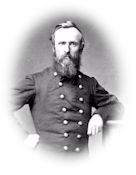
Your letter of the 13th August, directed to me Raleigh, etc., I got last night. We shall now get one another’s letters in three or four days. I was made happy by your sensible and excellent talk about your feelings. A sense of duty or a deep religious feeling is all that can reconcile one to the condition we are placed in. That you are happy notwithstanding this trial, adds to my appreciation and love and to my happiness. Dearest, you are a treasure to me. I think of you more than you suppose and shall do so more here than in western Virginia. Here I have far less care and responsibility. I am now responsible for very little. The danger may be somewhat greater, though that I think doubtful.

By the by, we hear that Raleigh and our camps in west Virginia were occupied by the enemy soon after we left. No difference. There is one comfort here. If we suffer, it is in the place where the decisive acts are going on. In west Virginia, success or failure was a mere circumstance hardly affecting the general cause. .

Well, love to all. Dearest be cheerful and content. It will all be well.

Affectionately,

R.

P. S. — I was near forgetting to say that I think I shall not be permitted to join the Seventy-ninth. That matter I suppose is settled. The prospect of Colonel Scammon being brigadier is good.

September 1. Evening. — About five o’clock this P. M. heavy firing began in the old place — said to be near Centreville or at Bull Run. A fierce rain-storm with thunder set in soon after, and for the last ten hours there has been a roaring rivalry between the artillery of earth and heaven. It is now dark, but an occasional gun can still be heard. The air trembles when the great guns roar. The place of the firing indicates that our forces still hold the same ground or nearly the same as before. It is queer. We really know but little more of the fights of two or three days ago than you do; in the way of accurate knowledge, perhaps less, for the telegraph may give you official bulletins. We have seen some, a great many, of our wounded; some five or six hundred of the enemy taken prisoners, and a few of our men paroled. Some think we got the best of it, some otherwise. As yet I call it a tie.

I am very glad to be here. The scenes around us are interesting, the events happening are most important. You can hardly imagine the relief I feel on getting away from the petty warfare of western Virginia. Four forts or field works are in sight, and many camps. The spire of Fairfax Seminary (now a hospital), the flags on distant hills whose works are not distinguishable, the white dome of the capitol, visible from the higher elevations, many fine residences in sight — all make this seem a realization of “the pride and pomp of glorious war.” The roar of heavy artillery, the moving of army waggons, carriages, and ambulances with the wounded, marching troops, and couriers hastening to and fro, fill up the scene. Don’t think I am led to forget the sad side of it, or the good cause at the foundation. I am thinking now of the contrast between what is here and what I have looked on for fifteen months past.

Dearest, what are you doing tonight? Thinking of me as you put to sleep the pretty little favorite? Yes, that is it. And my thought in the midst of all this is of you and the dear ones.

I just got an order that I must be “especially vigilant tonight to guard against surprise, or confusion in case of alarm.” 1 don’t know what it indicates, but that I have done so often in the mountains that it is no great trouble. So I go to warn the captains. — Good night, darling.

Ever yours most lovingly,

R.

September 2, A. M. — A stormy night but no surprise. A bright cold morning, good for the poor fellows who are wounded.

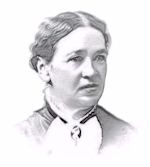
Mrs. Hayes.

Monday, 1st. Reveille in the morning at 3 A. M. Breakfasted and started in the advance. Crossed Drywood and grazed. Got into camp in time for dinner. Sandy cooking, and several officers boarding with the Major. Found a letter from Ella Clark, very welcome. I have a high regard for her. Boys fully convinced that we would soon get mustered out of service. Band went to Leavenworth and home this morning. Boys think can get away in ten or fifteen days. In the evening wrote home. Boys all talking about home visits.

Written from the Sea islands of South Carolina.

[Diary] September 1, Monday.

Mr. Soule and Captain Hooper ate no supper tonight. They are troubled. General Saxton is going home for a while and Captain Moore will probably act for him. There is not an anti-slavery man on General Saxton’s staff except Captain Hooper. General Hunter has decided to evacuate within ten days, but he asks to be relieved of his command. That might leave us in Brennan’s power! This is a trying day for us. We are in low spirits and it storms without. The rebels are getting bold. They landed at Brickyard on Friday. This is the third attempt lately.

Monday, September 1st.—Marched through the battlefield; Confederates all buried; saw several Federal soldiers not yet buried; camped one mile south of Richmond, after marching twenty-one miles.

September 1—Wortheim and myself went to Halfway Station, to get a box that was sent to us from home, but it did not come.

SEPTEMBER 1ST.—Official dispatches from Lee, announcing a “signal victory,” by the blessing of God, “over the combined forces of the enemy.” That is glory enough for a week. When Lee says “signal victory,” we know exactly what it means, and we breathe freely. Our generals never modify their reports of victories. They see and know the extent of what has been done before they speak of it, and they never mislead by exaggerated accounts of successes.

General Kearney's gallant charge, at the Battle of Chantilly, Va., 1st of September 1862

A lithograph from an original sketch,  Augustus Tholey, a French-born lithographer, published 1867.  Library of Congress image.

Philip Kearny, Jr. (June 2, 1815 – September 1, 1862) was a United States Army officer, notable for his leadership in the Mexican-American War and American Civil War. He was killed in action in the 1862 Battle of Chantilly. (Wikipedia)