June 22—Nothing new.
June 2012
June 22d. Sunday morning. Splendid weather; were routed out twice during the night, but nothing more than the ordinary firing occurred. Had a fine bath in the half barrel; dressed in full uniform and took breakfast at nine o’clock with the colonel and the lieutenant-colonel; at ten o’clock held regimental inspection, and the remainder of the day remained quietly in camp. In the evening, McKim, Broom, and I rode over to the camp of the Lincoln cavalry and renewed our acquaintance with Quartermaster Bailey, from whom I bought the gray. The cavalry officers tell us they have had glorious sport, scouting, raiding, and exploring the country on our right flank. They passed to the rear of the enemy the other day and created quite an alarm. They think the rebels are up to something and will soon make a move. It seems certain they will not otherwise hear from us, so that the rumor may be true. If we can’t fight now, we never can, as it would be impossible to have troops in better condition.

Eliza Howland to Joe, Howland, her husband.
Wilson Small, June —.
This morning I have your Sunday note with the charming little poem. Who wrote it? Be sure and tell me. It is a poem, and though entirely undeserved, I value it very much indeed.
[Poem by a Lieutenant of the 16th N. Y., dedicated to Eliza Woolsey Howland]
To Mrs. Joseph Howland.
From old Saint Paul till now,
Of honorable women not a few
Have quit their golden ease, in love to do
The saintly works that Christ-like hearts pursue.
Such an one art thou, God’s fair apostle,
Bearing His love in war’s horrific train;
Thy blessed feet follow its ghastly pain
And misery and death, without disdain.
To one borne from the sullen battle’s roar,
Dearer the greeting of thy gentle eyes,
When he aweary, torn and bleeding lies,
Than all the glory that the victors prize.
When peace shall come, and homes shall smile again,
Ten thousand soldier hearts, in Northern climes,
Shall tell their little children, with their rhymes,
Of the sweet saint who blessed the old war times.
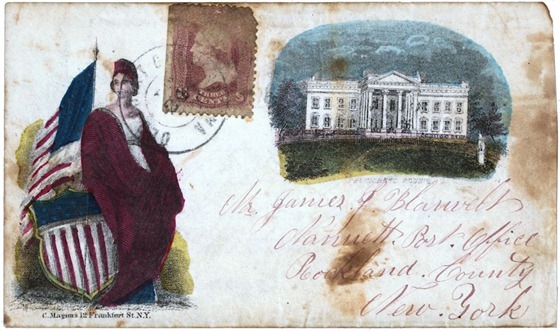
Civil War envelope showing Columbia with shield and American flag and White House
Addressed to Mr. James G. Blauvelt, Nanuett Post Office, Rockland County, New York; postmarked; bears 3 cent stamp.
Collection: Liljenquist Family Collection of Civil War Photographs (Library of Congress)
Date Created/Published: N.Y. : C. Magnus, 12 Frankfort St. ; 1862 June 22.
This envelope and additional information may be found here at the Library of Congress
June 22.—Yesterday thirty Sisters of Charity arrived at Fortress Monroe, and to-day left for White-House Point, Va., for the purpose of ministering to the sick and wounded soldiers of the army of the Potomac.
—A detachment of the Sixth Illinois cavalry made a descent on a squadron of rebel cavalry guarding a train near Coldwater station, on the Mississippi and Tennessee Railroad, and captured twenty-five prisoners and about twenty thousand pounds of bacon which was on the train. They then destroyed the bridges on the road, rendering it impassable.
A party of the Eighth Vermont regiment, stationed at Algiers, near New-Orleans, La., took an engine and a car and went out a short distance on the Opelousas Railroad on a reconnoissance. They had proceeded but a few miles when they were fired upon by a party of guerrillas, and had three men killed and eight wounded.

JUNE 21ST.—Gen. Beauregard is doubly doomed. A few weeks ago, when the blackness of midnight brooded over our cause, there were some intimations, I know not whether they were well founded, that certain high functionaries were making arrangements for a flight to France; and Gen. Beauregard getting intimation of an order to move certain sums in bullion in the custody of an Assistant Treasurer in his military department, forbid its departure until he could be certain that it was not destined to leave the Confederacy. I have not learned its ultimate destination; but the victory of the Seven Pines intervening, Gem Beauregard has been relieved of his command, “on sick leave.” But I know his army is to be commanded permanently by Gen. Bragg. There are charges against Beauregard. It is said the Yankee army might have been annihilated at Shiloh, if Beauregard had fought a little longer.
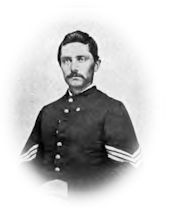
Saturday, 21st—We were relieved this morning by the Thirteenth Iowa. Some of the fruit in this locality is beginning to ripen and we will have some variety in our rations.
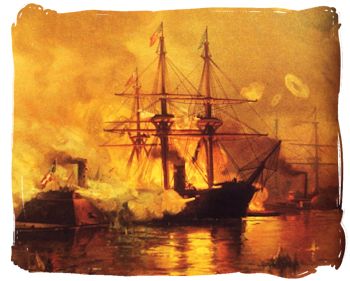
On the 8th of June, the Flag Officer having received the proper authority, once more turned the Hartford towards Vicksburg, followed by the Richmond—the Brooklyn being detained, but soon followed. We anchored near sunset, alongside the U. S. steam transport Tennessee, which had got aground. During the night the Brooklyn arrived, in company with several river steamers with troops. On the following morning two steamers fastened to the Tennessee, to tow her off, while we passed on, and arrived without accident at Baton Rouge on the 10th, where we found everything going off quietly. We lay here nearly ten days, during which time the mortar schooners of Capt. Porter’s fleet had passed by us, and having left one, we on the 19th took it in tow and started for Vicksburg. We proceeded with moderate speed and success until the 21st, in the evening, when we unexpectedly ran hard aground. Our attendant steamers immediately came up to our assistance, and after laboring the entire night, succeeded in getting afloat the following morning at eleven o’clock. Continuing on we passed some high bluffs, on which we looked for rebel batteries and accordingly kept prepared for them, but we were not molested. We observe that the river is rapidly falling, having thus far receded some six feet.
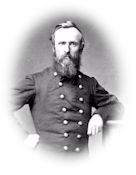
Camp Jones, Flat Top, June 21, 1862.—. . . Rather agreeable social evenings with the officers at my quarters, the band enlivening us with its good music.
Dr. McCurdy having been appointed inspector of hospitals for this division, we had a Dr. Hudson, of Medina, a new state surgeon, assigned to us as assistant surgeon in Dr. McCurdy’s place. Dr. Hudson turns out to be a thin-skinned, nervous, whimsical, whining Yankee. He has just heard of the death of a favorite daughter. His grief loses all respectability, coupled as it is with his weaknesses and follies. We agreed today with Dr. Holmes (the medical head man) to swap our Dr. Hudson “unsight, unseen” for any spare doctor he could turn out. We find we caught a Dr. Barrett, lately of Wooster, a young man of good repute. We take him, pleased well with the bargain.
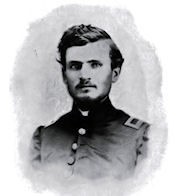
21st. Saturday. Wrote home. Major Purington and Adjutant acted ridiculously in the evening. Out almost all night on a spree.


