
JUNE 13TH.—Gen. Lee is satisfied with the present posture of affairs—and McClellan has no idea of attacking us now. He don’t say what he means to do himself.
June 2012
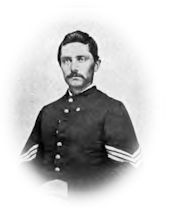
Friday, 13th—It came the Eleventh Iowa’s turn to go on picket today. The teams still have to go to Pittsburg Landing, twenty-two miles from Corinth, for provisions and ammunition for the army.
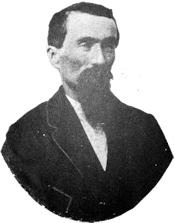
June 13 — This morning we left Vernon Forge, crossed the South River, and marched toward the Valley pike. We crossed Middle River and arrived at Naked Creek on the Valley pike by noon, then marched down the pike to within five miles of Harrisonburg, and camped.
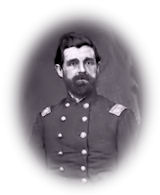
To Mrs. Lyon.
Camp five miles south of Corinth, Friday, June 13, 1862.—I have been doing picket duty at Booneville. We shall probably remain here some time. Indeed, I think we are in summer quarters, unless some exigency of the war should call us away. We are encamped in scattering timber, on a dry and, I think, healthy location. We have hot days, but cool and comfortable nights, and no mosquitos. The water is tolerably good.
General Halleck turned all of the lying newspaper reporters out of his camp after the battle of Farmington. Hence their hostility to him. The army is well satisfied with him and has unbounded confidence in him. He was not fooled by quaker guns, for there were none of these weapons at Corinth except a rusty revolver of mine which won’t shoot! I have already explained to you that the position was what we wanted, and it does seem to us here that it was better to win it without much bloodshed. Talk about soldiers getting blood-thirsty! Why, the desire which seems prevalent at the North that thousands of us should have been uselessly butchered before the formidable entrenchments at Corinth beats us blind in cool blood-thirstiness! My dear, put not your trust in the newspapers!
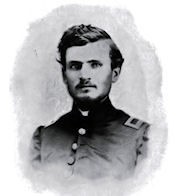
13th. Issued rations in the morning. Moved camp over the river west. Pitched our tent in a splendid grove in a secesh corn field. Found some mulberries.
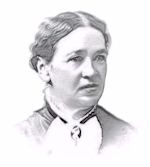
Written from the Sea islands of South Carolina.
St. Helena Island, June 13, 1862.
You do not know how comfortable and even elegant our apartments are, now that we have all the furniture the cotton agent had in his half of the house. There are no other such accommodations in this region, and we shall be foolish to go away for anything but health. If there should be any likelihood of sickness, we can remove easily to the watering-place of the islands, St. Helenaville, about six miles from here, and then we can ride over twice a week or so to see our people. But I do not see why this place cannot be a good enough location to stay in all summer. As for the late alarm about “Secesh” coming, everybody is ashamed of it, and all try to prove that they were not frightened at such an unlikelihood. It is an impossibility now, as gunboats are stationed on all sides. I am so glad we did not run. It was a great shame we had all the bother of packing our trunks and unpacking them again. . . .
You may imagine that I was not well pleased to see my entire letter printed. That last — “but I must get a little sleep” — seems so boasting, and in other places I would have modified it. But I do not care much. If my present leisure continues, I shall perhaps write for the Tribune an occasional letter; but Mr. McKim is taking notes, and will tell everything, I fancy. Lucy is a very nice girl and she is busy collecting facts, etc. Mr. French, too, is writing a book, and so there will be an overstock of information, I think. . . .
Dr. Hering’s looking-glasses have come, but not his violins, and the candy and sugar are enjoyed hugely….
I wish you were as free from every fret as I am, and as happy. I never was so entirely so as now, and no wonder. We found the people here naked, and beginning to loathe their everlasting hominy, — afraid and discontented about being made to work as slaves, and without assurance of freedom or pay, of clothes or food, — and now they are jolly and happy and decently fed and dressed, and so full of affection and gratitude to the people who are relieving them that it is rather too flattering to be enjoyed. It will not last, I dare say, but it is genuine now and they are working like Trojans. They keep up the tasks of those who have gone to the forts and do not complain of any amount of little extra jobs. It is such a satisfaction to an abolitionist to see that they are proving conclusively that they can and will and even like to work enough at least to support themselves and give something extra to Government.
All my affairs go swimmingly (I have the Boston clothing too now, only there is none to sell), so do not think of me as being a martyr of any kind.
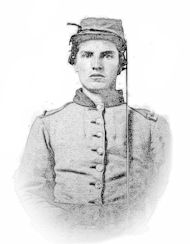
Friday, 13th.—Arrived at Knoxville, 12 M. Left for Morristown at 2 P. M.; arrived 5 P. M.
(Note: picture is of an unidentified Confederate soldier.)
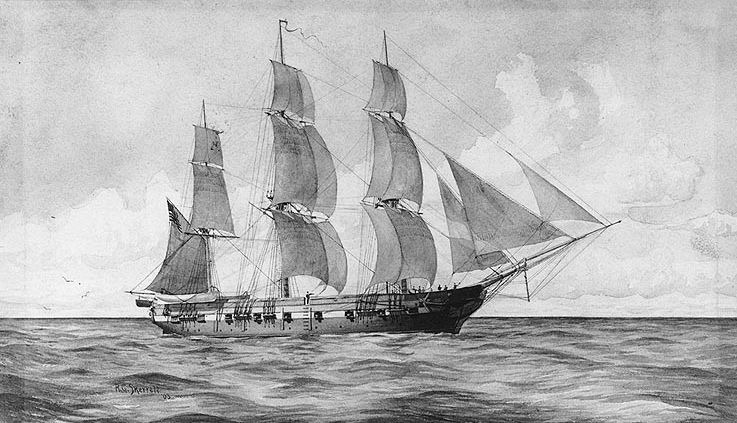 U. S. Ship Dale, St. Helena sound, South-Carolina, June 13, 1862.
Sir: This morning, at four o’clock, it was reported to me that there was a large fire on Hutchinson Island. Shortly after a preconcerted signal that the enemy were in the vicinity had been made from the house of our pilot, I immediately started in the gig, accompanied by the tender Wild Cat, Boatswain Downs, Sen. Acting Midshipman Terry; first cutter, Acting Master Billings; second cutter, Acting Master Hawkins, and cutter, Coxswain Shatluff, up Horn or Big River Creek, in the direction of the fire.
Soon after leaving the ship a canoe containing three negroes was met, who stated that the rebels, three hundred strong, were at Mrs. Mardis’s plantation, killing all the negroes. As we advanced up the creek we were constantly met by canoes with two or three negroes in them, panic-stricken, and making their way to the ship, while white flags were to be seen flying from every inhabited point, around which were clustered groups of frightened fugitives.
When about two and a half miles from Mrs. Mardis’s, I was obliged to anchor the Wild Cat, from the want of sufficient water in the channel, with orders to cover our retreat if necessary. On arriving at Mrs. Mardis’s the scene was most painful. Her dwelling and a chapel in ruins, and the air heavy with smoke, while at the landing were assembled one hundred souls, mostly women and children, in the utmost distress.
Throwing out a picket-guard, and taking every proper measure against a surprise, I satisfied myself that the enemy were not in our immediate neighborhood, the negroes assuring me that the had left the island and returned to Fort Chap man. I then gathered the following particulars: The rebels, during the night, landed on the Island from Fort Chapman, with a force of unknown numbers, and guided by a negro, who for a long time had been on the Island in the employ of the army, surrounded the house and chapel in which a large proportion of the negroes were housed, posting a strong guard to oppose our landing.
At early dawn they fired a volley through the house, and as the alarmed people sprang nearly naked from their beds and rushed forth frantic with fear, they were shot, arrested, or knocked down. The first inquiry of the rebels was for the d — d Yankees, and at what time they were in the habit of visiting the islands, mingled with exclamations of “Be quick, boys, the people from the ship will be up,” “Let’s burn the houses,” “Not yet; they will see the fire from the ship and come up.”
Having collected most of the chickens and despoiled many of the poor people of their very wretched clothing, and told them that as they belonged to the State, or others nearly adjoining, they would not molest them, they fired the building and fled.
As the people were clamorous to be removed, I filled the boats with them and pulled down to the tender, on board of which they were placed.
On our return for the remainder they were observed, as we approached the landing, to be in the utmost confusion, dashing wildly into the marshes, and screaming: “The secesh are coming back.” On investigation, however, it proved that the enemy, in full sight, about two miles off, crossing an open space of ground, were in hasty retreat instead of advancing. On our first visit they must have been concealed in a patch of woods not more than half a mile from our pickets.
Having succeeded in removing or in providing with boats all who wished to remain to collect their little property, I returned to the ship, bringing with me about seventy, among them one man literally riddled with balls and buckshot, (since dead;) another shot through the lungs, and struck over the forehead with a clubbed musket, which laid the bone perfectly bare; one woman shot in the leg, shoulder, and thigh; one far gone in pregnancy, suffering from a dislocation of the hip-joint and injury to the womb, caused by leaping from a second-story window; and another suffering from the displacement of the cap of the knee and injury of the leg from the same cause.
It appears that the negro who had guided the party had returned to them after the evacuation of the place, told them all the troops had been withdrawn, and that the islands were entirely unprotected except by this ship. I am therefore at a loss to account for their extreme barbarity to negroes, most of whom were living on the plantation where they had been born, peacefully tilling the ground for their support which their masters, by deserting, had denied them, and who were not even remotely connected with the hated Government army.
I trust you will approve my sending the contrabands to Hilton Head. Had I not been unable to provide for such a large number, and so much embarrassed by the frequent demands made upon me for provisions by new arrivals, I should have waited for your advice in the matter.
Last Tuesday we had an arrival of thirty from the main land, and scarcely a day passed without one or more of them, always in a half-starved condition, whose appeals for food I have not yet been able to resist, though they trespass rather largely on the ship’s stores.
All those newly arrived give the same account of the want and scarcity of provisions among the white population, and of their own dangers and sufferings in effecting their escape. Though exercising no control over the negroes on the neighboring islands, I have, ever since the withdrawal of the troops, urged them to remove to Edisto or St. Helena, and warned them that some night they would be visited by the rebels.
But the majority insisted on remaining, because there was their home, while all seemed to have most perfect faith in the protection of the ship, though perhaps, as was the case last night, ten or twelve miles distant from her.
Very respectfully, your obedient servant,
W. T. Truxton, Lieut. Commanding. Flag-Officer S. F. Du Pont, Commanding Southern Atlantic Blockading Squadron, Port Royal, S. C.
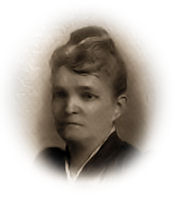
June 13.—Since the water ran off, we have, of course, been attacked by swamp fever. H. succumbed first, then Annie, Max next, and then I. Luckily, the new Dr. Y. had brought quinine with him, and we took heroic doses. Such fever never burned in my veins before or sapped strength so rapidly, though probably the want of good food was a factor. The two or three other professional men have left. Dr. Y. alone remains. The roads now being dry enough, H. and Max started on horseback, in different directions, to make an exhaustive search for supplies. H. got back this evening with no supplies.

______
Note: To protect Mrs. Miller’s job as a teacher in New Orleans, the diary was published anonymously, edited by G. W. Cable, names were changed and initials were often used instead of full names — and even the initials differed from the real person’s initials.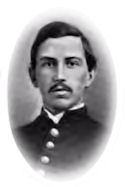 June 13th. There was much excitement just before daylight this morning, the rebels opening a tremendous cannonade on Sumner’s headquarters, creating a general stampede in that direction. All the troops fell in and remained in line, till the firing ceased; our big guns in the new redoubts and forts replied and made a terrific row. It was all wasted ammunition, I suppose; no losses on our side, at any rate. Weather very hot, so we sent to the woods for pine boughs, and had them placed in front of our tents; to keep the sun off. Seth made some fine seats of inverted cracker boxes, and we can now sit outside under the shade of the pines, and get the air. How many men are killed every day on the picket line, from the fire of the sharpshooters? It does no good, and has not the most remote effect upon the ultimate result, is barbarous, and ought to be stopped. Got a furlough for Quartermaster Sergeant Smith to-day, and made out field returns. In the evening we lay under our fine shade trees, and sampled some Rhine wine brought up by the sutler; found it good; got hold of a Richmond paper to-day, containing an account of the fight of the thirty-first and first, from the rebel point of view. They admit there was great confusion on the night of the first, and that they fully expected us to follow them up. It was a serious mistake we did not do so; they must have been demoralized by the great change in affairs on the first; on the thirty-first they had considerable success, capturing Casey’s camp and stores, two or three batteries, and drove back all the reserves brought up to oppose them, until night stopped the fighting. The following morning everything was reversed; they lost all they had gained the previous day, leaving their camp equipage and dead and wounded in our hands, and lost heavily all along the line; nothing prevented a great disaster to the Confederacy on the first but the timidity of McClellan; officers and men were ready and anxious to advance, and would, if allowed to have done so, followed the enemy directly into their works. Colonel Bailey, the chief of artillery of Key’s corps, was killed on the first. I knew him when he first joined the army, after graduating from West Point. He was a splendid specimen of the genus homo, and married to one of the most beautiful women I ever saw, one of Major Patten’s daughters, of Fort Ontario, Oswego. He was a fine officer, and his death is a great loss to the service.


