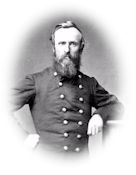
Flat Top Mountain, June 8, 1862. Sunday. — A bitterly cold morning — too cold to snow! Gradually warmed up. P. M. rode with Avery four or five miles. Our horses rested and fed up were in high spirits. We are all heartily tired of staying here. When shall we go? — Dear Lucy, I think of her very often these dull days. It looks as if the war would soon be ended, and then we shall be together again.
June 2012
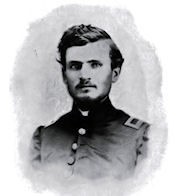
8th. Sunday. Started on our return at 8 o’clock, with drove of cattle and horses. Major and Purps went ahead, and a few miles from the road, to a deserted camp and got a secesh wagon, old style, hitched in four horses and had a gay time. Lead horses whirled after a time and broke the tongue, fixed it and with two horses drove through the camp. Horses balked several times, once in the river. Hadley and I undressed and helped across. Command stopped at Hudson’s. Jayhawked the people badly. (“Purps”— nickname for noncommissioned staff.)
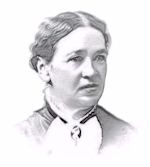
Written from the Sea islands of South Carolina.
[Diary] Sunday, June 8, 1862.
Before church we all, superintendents and the few ladies, stood under the oaks and talked of our dangers, and then Mr. Horton led us in to service. After service we talked long again, till the coming rain made our party from the Oaks hasten home, Park and others going to the Episcopal church to try the organ. Mr. Pierce had gone to Hilton Head, as a steamer was expected. I had reached home before the rain and was lying down, when Rina rushed into my room with a haste and noise so strange to her, calling out, “Miss Murray has come!” I got up suddenly, but felt so faint that I had to lie down again. Jerry and his boat’s crew had arrived with her trunk, but she did not come for an hour. The men had told Mr. Pierce that they would row up sooner than he could ride up to tell the news, but he did not believe them, and galloped all the way from Land’s End to be the first to make the announcement to me. He came in about a quarter of an hour after they did, and as I was then upstairs, heard from Nelly the arrival of the men. When I came down he greeted me with “So you fainted at the news?” “No,” I said, “not at the news, but I have not been well for a week and was startled by Rina, and getting up so suddenly made me faint.” He was determined to see a scene if possible, but when Ellen came and I stood on the porch as she came up the steps from the carriage, we shook hands very quietly and walked into the parlor in the ordinary manner of acquaintances. It was not till we were upstairs that we cut any capers of joy. She had been detained by the rain, the whole party stopping in the Episcopal church where they played on the organ and sang, Mr. McKim and Lucy[1] being highly delighted at the ride, the romantic church, and the meeting with some of the superintendents.
In the evening we went to a praise meeting, and Mr. McKim spoke to the people. We heard a very fine address from old Marcus. Afterwards we sat up late — Mr. Pierce and Mr. McKim having a long talk over the affairs of our little colony and we listening. Ellen and I are to sleep on the floor, Lucy McKim and Nelly Winsor in the beds in the same room. Ellen and I talked all night nearly.

“Wilson Small,” June 8.
Dear Friend, — This is the first quiet Sunday since we have been here. How long it will stay quiet, no one can tell for an hour together. The past week is wholly indescribable. Our own boats filled up calmly and comfortably on Sunday and Monday with the wounded of Saturday. Then the Government boats began to fill; and such fearful scenes as we have passed through since then until noon of yesterday, I would not tell you if I could. From five to eight hundred wounded men have been sent down daily: no authorized officials to receive them; no arrangements made of any kind. The boats which have been lying here idle for weeks, waiting for “surgical cases,” wholly unprepared, and their surgeons off to the battlefield. No stores, no-beds, no hospital stewards, no food, no stimulants. Then it is that the medical authorities fling themselves on the Sanitary Commission, and the Commission gives everything with a generous hand. It has done all that has been done on three fourths of the Government boats, and that at the last moment, without notice, and when its supplies were heavily taxed in fitting out its own boats,— which, happily, were all, except the “Spaulding,” here, and ready to ship the first wounded that came down. Never did men work as ours have worked. It would be hard to say who did best where all did so well. No description can give you a full idea of the pressure upon them, of the necessities they strove to meet; and all to be done out of their regular system, hurried and confused by the hurry and excitement of the one medical officer who appeared to have any authority upon the ground.
As for us women, all we could do was to give drink, stimulants, and food to the poor fellows, and what other little ease we could. We take great comfort in a tent-kitchen provided for us by Captain Sawtelle, from whom we receive much thoughtful, kind attention. From it we have fed four thousand men this week; on Thursday we served twelve hundred meals. We also receive kindness from other officers. Far from meeting with any of the usual army opposition, our help is claimed and warmly acknowledged.
To-day things look brighter. The “Elm City” and “Knickerbocker” are back and in perfect order. A new medical officer has been placed in charge of the transportation from this point. He began his duties yesterday after the departure of the “Louisiana.” She was fifty per cent better than any of the other Government boats, and yet this officer said to me to-day, when I took him through the wards of the “Knickerbocker” (she filled up at midnight): “Oh, what happiness to look at this boat after that accursed thing of yesterday!” I find I can bear anything with calmness and, in one sense, indifference so long as I am beside it and engaged with it. To feel acutely at such times is merely selfish. But no tongue can tell what I suffered yesterday afternoon when I was obliged to stay on board here for a little rest, and listen to the groans of men undergoing operations on the gangway of the “Louisiana,” to which we were moored. No trial of nerves ever equalled that. But why speak of such things? I beg you to offer the Prayer for the Sick, and that for the Afflicted, every Sunday in the Chapel. Can you not change and add something to them, to fill out and express all that we feel? It would be a great satisfaction to me to think that this were done.
I trust the worst is over. How little you all realize the magnitude of our necessities at your distance from them! Think of a handful of us here to keep order for the wounded of this great army,—I might almost say to keep life in them. I cannot adequately tell you of the work these Commission men have done. The lives saved are theirs. “Day” and “night” are words of no meaning to Mr. Olmsted and Mr. Knapp. I think they must break down under the pressure of care and physical effort. The young men of the Commission are most praiseworthy. Nothing is too hard, or too humble, or too constant for them to do, and do gladly, as if they rejoiced to do it. Dr. Robert Ware has more upon him than any one but Mr. Olmsted and Mr. Knapp; he is all that is sensible, energetic, and successful.
I have seen many men die, but never one to whom such a word as one might wish to say could be spoken. Our work is not like regular hospital work. It is succoring men just off the battle-field, and making them easy, clean, and comfortable before we turn them over into other hands. Those who die are too low when they come to us to know much; and when you think that four thousand men have passed through our hands this week, you will understand that we can do little beyond the mere snatching from physical death.
Good-by! I hope you may be happy this summer, — it would be something to be able to think of happiness as existing somewhere.
I send you a little poem addressed to Mrs. Howland, by a private soldier who had been in her care on one of our boats. If you knew her you would see that there is a poet’s insight in what he says of her: —
From old Saint Paul till now,
Of honorable women not a few
Have left their golden ease, in love to do
The saintly work which Christlike hearts pursue.
And such an one art thou, — God’s fair apostle,
Rearing his Love in war’s horrific train;
Thy blessed feet follow its ghastly pain
And misery and death, without disdain.
To one borne from the sullen battle’s roar,
Dearer the greeting of thy gentle eyes
When he aweary, torn, and bleeding lies,
Than all the glory that the victors prize.
When peace shall come, and homes shall smile again,
A thousand soldier-hearts in Northern climes
Shall tell their little children in their rhymes
Of the sweet saint who blessed the old war-times.

8th—I am threatened this morning with dismissal from the service, and my letter of yesterday is held up as a piece of intolerable insolence, and as one good ground for my being dishonorably relieved. Well, I am a Surgeon of a large hospital, in which are about five hundred brave but unfortunate men, who, under their almost superhuman efforts to sustain and defend a government have broken down and sickened. They are from home, from family, from friends; they are suffering for want of the commonest attention; the dead and the dying are lying together for want of proper and sufficient aid to dispose of them otherwise. The living are dying for the want of the necessaries of life, which, in great abundance, are in sight, part owned by the government, part by the rebels; that owned by the latter carefully guarded by men withrawn from our lines, lest some of these suffering sick should, in desperation, crawl from their beds, get in reach of, and take enough to snatch their languishing bodies from suffering, and, perhaps, from death. But worst of all, I have taken the liberty of stating these things plainly, and, as a penalty for my insolence in holding up a mirror to the eyes of a superior officer, I am to be relieved! By me, “this is a consummation devoutly to be wished.” Will they dare to try it? We shall see. (I have a mirror which will reflect other sights not less hideous than this. Perhaps they would like to look at it?)
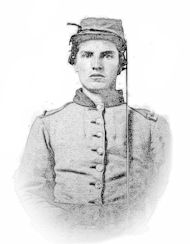
Saturday, 8th.—Struck tents this morning, and by sun-up everything was on the move. Marched to Copper Hill, where we took the railroad train, and were soon on our way to Knoxville, arriving there at sunset; but in a very few minutes we were aboard the train, and on our way to Chattanooga.
(Note: picture is of an unidentified Confederate soldier.)
June 8—I am very tired from our first night’s march.
 June 8th. Moved forward this morning, close up to the new works, and detailed two-thirds of the regiment to work upon them. They are making gabions, sand bags, abatis, etc., for the redoubts, which are something altogether out of the ordinary run of field works; our bivouac is within easy range of the rebel pickets and sharpshooters. Bullets are incessantly flying over us, or amongst us; once in a while, a shell or round shot comes buzzing along, but generally, passes us far out of sight, doing no harm. Last night we were in line of battle half the night, and are getting worn out, as well as disgusted, with so much hard work; we cannot understand why we should entrench ourselves so powerfully, when we came here for the purpose of attacking. Our commander-in-chief is very timid, certainly, and the prospects for a further advance upon Richmond seem extremely slender.

Eliza Howland to her husband, Colonel Joseph Howland.
Floating Hospital, White House,
Sunday, June.
We are having a delightful quiet Sunday—such a contrast to the last few days. A hundred and fifty men, to be sure, came down last night, but unless we have two or three hundred we think nothing of it nowadays. We are going for a walk, and Dr. Jenkins of the Commission is to have service for us under the trees. We have almost lost sight of Sunday lately in the press of work.
There are large bunches of laurel and magnolia in our parlor-cabin and dining room, and the air is full of their fragrance. .
Miss Dix spent last night with us, but is off now.
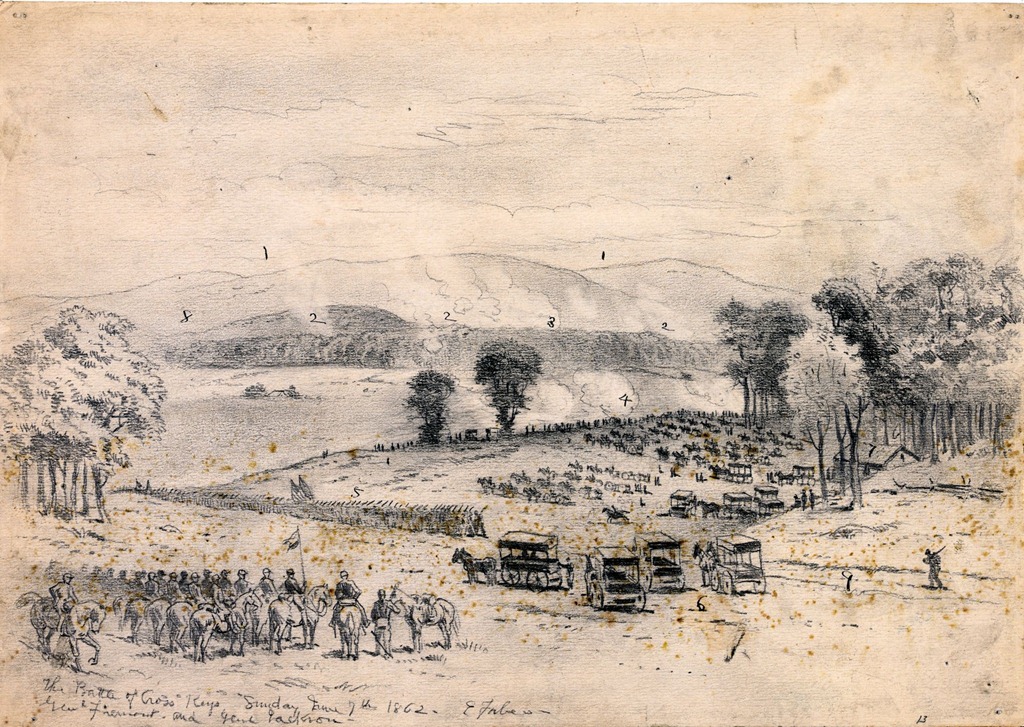
The battle of Cross Keys–Sunday June 7th 1862–Genl. Fremont and Genl. Jackson
Forbes recorded the date on the drawing as Sunday June 7, 1862. It was Sunday, but the date was June 8.
Artist: Edwin Forbes.
Part of Morgan collection of Civil War drawings. Library of Congress Prints and Photographs Division Washington, D.C. 20540 USA
Record page for this image: http://www.loc.gov/pictures/item/2004661885/


