Following the American Civil War Sesquicentennial with day by day writings of the time, currently 1863.

September 2012

September 6, Saturday. We have information that the Rebels have crossed the Potomac in considerable force, with a view of invading Maryland and pushing on into Pennsylvania. The War Department is bewildered, knows but little, does nothing, proposes nothing.

Our army is passing north. This evening some twenty or thirty thousand passed my house within three hours. There was design in having them come up from Pennsylvania Avenue to H Street, and pass by McClellan’s house, which is at the corner of H and 15th. They cheered the General lustily, instead of passing by the White House and honoring the President.

Have unpleasant information concerning privateers, which are getting abroad by connivance of the British authorities. Am trying to get Wilkes off as speedily as possible. Wrote out his orders and instructions this evening to cruise with a squadron in the Bahamas and West Indies for certain vessels of no recognized nationality that were preparing to prey on our commerce. Will get them copied and in his hands on Monday. As an additional hint, told him to-day I wished he could get off on Monday.

McClellan and his partisans have ascendency in the army, but he has lost ground in the confidence of the country, chiefly from delays, or what the President aptly terms the “slows.”
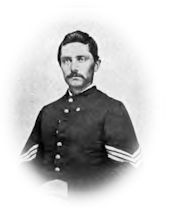
6th.—We cooked our rations yesterday, as ordered, but are being still to-day. I this afternoon rode down to Alexandria, (2 1-2 miles,) remained a short time, and when I returned at 4 o’clock P. M., found the army in line, ready to march. About dark, we started, no one seeming to know whither we were going, but at 10 o’clock at night, found ourselves on the south end of Long Bridge, opposite Washington. Having crossed the river, we marched with the pomp and boldness of a victorious army up to the house of the Commander-in-Chief, (General McClellan) and inflicted many long, loud cheers; and what an infliction it must have been! Just one year before, he had in a speech to the soldiers, promised them that if “you will stand by me, I’ll stand by you, and there shall be no more Bull Run defeats.” And here we are, on a skedaddle of a most shameful “Bull Run defeat,” celebrating the anniversary of the bomastic, yet puerile speech. We are eight miles farther from Richmond than when the promise was made, and worse still, Generals Lee and Jackson have pushed us aside at the Bull Run defeat, gone past us into Maryland, and threaten Baltimore and Harrisburg. Yet, amidst all my mortification, I have been unable to restrain a laugh at the ridiculousness of our position, as we pass through Washington. For weeks, we have, by night, been stealing away from the enemy in such trepidation that the breaking of a trampled stick would startle us, lest the noise might discover our position to the pursuers. Whilst crossing Long Bridge to-night, General Hancock ordered all the music to the front, and as we marched through the streets to the tune of “Hail to the Chief who in Triumph Advances,” I could not for the life of me, restrain a laugh at the thought of some poor old dung-hill cock, whipped till feathers were all plucked and ruffled, running away from his victorious antagonist, then perched on his own ground, and peeping from behind a bush to see that no little chanticleer was in hearing, would raise himself up and perpetrate his biggest “cock-a-doodle-doo.”

.

“Hail to the Chief who in triumph advances.”

.

Having crowed this big crow on the threshhold of General McClellan’s house, we passed on through Washington and Georgetown, and as no army was endangered by our delay, we have marched all night, stopping at daylight near Tennally Town, Maryland.

Saturday, 6th—We were relieved this morning by Companies B and G and arrived in camp at 11 o’clock. All are glad to get back to tent for a good rest, after having been on duty for forty-eight hours.

September 6. Saturday. — Left Upton’s Hill at 7:30 A. M. Marched through Georgetown and Washington to the outskirts of Washington towards Leesboro Road, a very dusty, hot, oppressive day; Twenty-third in the rear. Men kept well closed up through Washington but stopped at a grove, near where we stopped to camp, in large numbers. Lieutenant Christie reported that only three hundred of the Twenty-third marched into camp. This was substantially true, but conveyed an erroneous impression that we fell out and straggled badly. All corrected however soon.

Saturday the 6th. Hugh White cooked for us. Sandy got out of the guardhouse. Hugh cooked first rate. Read and rested. In the evening received a letter from Melissa and a Herald from Uncle Albert announcing the marriage of Sister Minnie and giving an account of the Oberlin Commencement. He commended Will Hudson’s “The Heroic Age,” eloquent, earnest, and good. Read a little after “taps.” Two Independents.

Headquarters 1st Division,

9th Army Corps, Meridian Hill, Washington, D. C.

Sept. 6th, 1862.

My dear Mother:

Now that our General is dead, a Colonel commands the old Division temporarily, and I continue to superintend the office, running the old machine along until different arrangements can be made, when I suppose I shall be set adrift with no pleasant prospects before me. I would resign, were I permitted to do so, and would gladly return to my medical studies this winter, tired as I am of the utter mismanagement which characterizes the conduct of our public affairs. Disheartened by the termination of a disastrous campaign — disasters which every one could and did easily foresee from the course pursued—we find, as a consolation, that our good honest old President has told a new story apropos of the occasion, and the land is ringing with the wisdom of the rail-splitting Solomon. Those who were anxious and burning to serve their country can only view with sullen disgust the vast resources of the land directed not to make our arms victorious, but to give political security to those in power. Men show themselves in a thousand ways incompetent, yet still they receive the support of the Government. Politicians, like Carl Schurz, receive high places in the army without a qualification to recommend them. Stern trusty old soldiers like Stevens are treated with cold neglect. The battle comes—there is no head on the field —the men are handed over to be butchered—to die on inglorious fields. Lying reports are written. Political Generals receive praises where they deserve execration. Old Abe makes a joke. The army finds that nothing has been learned. New preparations are made, with all the old errors retained. New battles are prepared for, to end in new disasters. Alas, my poor country! The army is sadly demoralized. Men feel that there is no honor to be gained by the sword. No military service is recognized unless coupled with political interest. The army is exhausted with suffering—its enthusiasm is dead. Should the enemy attack us here, however, we should be victorious. The men would never yield up their Capital. There is something more, though, than the draft needed to enable us to march a victorious host to the Gulf of Mexico. Well, I have been writing freely enough to entitle me to accommodations in Fort Lafayette, but I can hardly express the grief and indignation I feel at the past. God grant us better things in future.

I had said my own prospects are somewhat gloomy. When the changes are made in this command, and new hands shall take charge of it, I will have to return to the 79th Regiment — a fate at which I shudder. The Regiment has been in five large battles, and in ten or twelve smaller engagements. While adding on each occasion new luster to its own reputation, it has never taken part in a successful action. The proud body that started from the city over a thousand strong, are now a body of cripples. The handful (230) that remains are foreigners whose patriotism misfortunes have quenched. The morale is destroyed — discipline relaxed beyond hope of restoration. The General and all the true friends of the Regiment were of the opinion that it should be mustered out of the service. After performing hard duties in the field for fifteen months I find there is nothing left me but to sink into disgrace with a Regiment that is demoralized past hope of restoration. This for a reward. I am writing this from the old scene of the mutiny of last year. A strange year it has been. God has marvellously preserved my life through every danger. May he be merciful to my mother in the year to come. My old friend Matteson is dead. He was a Major in Yates’ Regiment of Sharpshooters which distinguished itself at Corinth. He died at Rosecrans’ Headquarters, of typhoid fever.

We are going to move from here to-morrow, but your safest direction will be Capt. W. T. Lusk, A. A. A. G., 1st Div. 9th Army Corps, Washington (or elsewhere). All the letters sent me since I left Fredericksburg have miscarried, and I am very anxious for news.

Affec’y-,

Will.

Written from the Sea islands of South Carolina.

[Diary] 6th.

Generals Hunter and Saxton have both gone North. General Brennan is in command, — our worst enemy, — and Captain Moore, our secret enemy, is in command of Beaufort. General Hunter has gone to more active work at his own request, and General Saxton to complain of General Brennan (with whom there is no peaceable cooperation), for his health, and to see about the money of the cotton fund.

Saturday, 6th.—Out on picket last night on Licking River. Yesterday evening a train ran almost into the midst of our camp, but before we could recover from our surprise, they reversed the steam and made their escape. Left Cynthiana at 5 p.m amid the smiles and cheers of a “legion” of as fair ladies as ever cheered the heart of man; marching in the direction of Covington.

SEPTEMBER 6TH.—We have authentic accounts of our army crossing the Potomac without opposition.

September 6th, Friday. At noon we struck tents and marched through a lovely country to Rockville, where the whole corps went into bivouac. This place is about twenty five miles northwest of Washington, and nearly ten from the Potomac.

The army has been divided into wings, Sumner has the Second and Twelfth corps, Franklin the Fifth, and Sixth, and Burnside the First and Ninth.

What a superb opportunity is once more offered McClellan to achieve enduring fame. He has an immense army, well equipped and disciplined and eager for the fray; brains, and genius only are wanting to accomplish the greatest results.

The possibilities of a disaster to our arms at this juncture are so momentous that every man feels the necessity of doing his utmost, regardless of all personal considerations. Baltimore, Washington, and perhaps Philadelphia would be the prizes to fall into the hands of the rebels if successful, and that is surely enough to stimulate us to the highest deeds of valor.