
Following the American Civil War Sesquicentennial with day by day writings of the time, currently 1863.

Thursday, December 9, 2010

Sunday, Dec.—, 1860.—In this season for peace I had hoped for a lull in the excitement, yet this day has been full of bitterness. “Come, G.,” said Mrs. F. at breakfast, “leave your church for to-day and come with us to hear Dr. —— on the situation. He will convince you.” “It is good to be convinced,” I said; “I will go.” The church was crowded to suffocation with the élite of New Orleans. The preacher’s text was, “Shall we have fellowship with the stool of iniquity which frameth mischief as a law?” … The sermon was over at last and then followed a prayer …Forever blessed be the fathers of the Episcopal Church for giving us a fixed liturgy! When we met at dinner Mrs. F. exclaimed, “Now, G., you heard him prove from the Bible that slavery is right and that therefore secession is. Were you not convinced?” I said, “I was so busy thinking how completely it proved too that Brigham Young is right about polygamy that it quite weakened the force of the argument for me.” This raised a laugh, and covered my retreat.

______

Note: To protect Mrs. Miller’s job as a teacher in New Orleans, the diary was published anonymously, edited by G. W. Cable, names were changed and initials were often used instead of full names — and even the initials differed from the real person’s initials.
1860. December 19.—The message of the President was sent in to Congress on the 4th instant. I got it yesterday. The President has been weighed down by the vast load he carries; his sagacity, firmness, and patriotism have given way under the appalling condition of the country and the violence in his Cabinet. He argues too much, becomes inconsistent, and does vastly more harm than good. His propositions of compromise, as stated, he must know to be impracticable. The Northern States never will repeal their Personal Liberty statutes while the Fugitive Slave Law remains in its present shape. They profess not to be opposed to the Constitution, but to this statutory form of carrying it into execution. It undoubtedly has provisions capable of amendment. These provisions may not make it unconstitutional, but may shock the feelings of many and render it odious. In order to save the Union, the Committee in the House, composed of one from each State, should report on this point, first, an amendment of the law, and, second, the repeal of the acts founded on it. There should be no concession asked except upon compensatory ground; no victory should be awarded to either section. The idea of restoring the old Missouri line, itself a palpable violation of the Constitution, is a weak suggestion. . . .

.
.
.
FORT MOULTRIE, S. C., December 9, 1860

(Received A. G. O., December 12.)

Col. S. COOPER Adjutant-General:

[SIR :] I have the honor to acknowledge the receipt of your letter of the 6th instant, and to state that I have directed the A. A. Q. M. to hire men to perform police and fatigue duty at this post, and to send on a special estimate for funds to pay them.

I hear that the attention of the South Carolinians appears to be turned more toward Fort Sumter than it was, and it is deemed probable that their first act will be to take possession of that work.

The idea of attempting to take this place by a coup de main appears not to be so favorably regarded as it was, and they will perhaps determine to besiege us. To enable them to do this they must procure heavy guns, which they can get (if not from Fort Sumter and Castle Pinckney) from Pulaski or some other southern fort. Anything that can be done which will cause delay in their attack will give time for deliberation and negotiation, and may, by God’s blessing, save the shedding of blood. I would therefore respectfully suggest whether it might not be advisable and prudent to cause the ammunition, except what may be needed for the defense of this fort and the armament of Fort Sumter and Castle Pinckney, to be destroyed or rendered unserviceable before they are permitted to fall into their hands. The same may be advisable at those forts from whence supplies might be brought to Charleston. Fort Sumter is a tempting prize, the value of which is well known to the Charlestonians, and once in their possession, with its ammunition and armament and walls uninjured and garrisoned properly, it would set our Navy at defiance, compel me to abandon this work, and give them the perfect command of this harbor.

Captain Foster having received the pintle stones for his bastionette guns, will now finish the one he has been at work on. Our supply of provisions has not arrived. I hope that it will soon be in. If we do not hear of it in a few days, I shall have to direct the A. A. commissary to make some purchases in Charleston.

I am, colonel, very respectfully, your obedient servant,

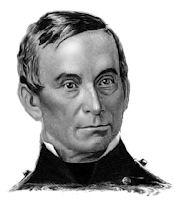
ROBERT ANDERSON,

Major, First Artillery, Commanding.