Following the American Civil War Sesquicentennial with day by day writings of the time, currently 1863.

Monday, December 27, 2010

—A meeting of the citizens of Pittsburgh, Pa., was held, to give expression to the public indignation created by the removal of ordnance to the Southern forts. General William Robinson presided. Resolutions were adopted, declaring loyalty to the Union, deprecating any interference with the shipment of arms under government orders, however inopportune or impolitic the order might appear; deploring the existing state of things in connection with the administration of important deportments of the public service, so as to have shaken confidence in the people of the free Slates; that, while Pennsylvania is on guard at the Federal capital, it is her special duty to look to the fidelity of her sons, and in that view call on the President as a citizen of this Commonwealth, to see that the public receive no detriment at his hands. It behooves the President to purge his cabinet of every man known to give aid and comfort to, or in any way countenancing the revolt of any State against the authority of the constitution and the laws of the Union.—Evening Post, Dec. 28.

—“Captain N. L. Coste, U. S. R. Service, in command of the cutter William Aiken, betrayed his vessel into the hands of the State authorities of South Carolina.

“The crew, on being notified of the position of Captain Coste, under the State ordinance concerning the customs, promptly volunteered to remain under his command as an officer of South Carolina under that ordinance.”

(See Statement of Lieutenant Underwood, N. Y. Times, Jan. 9, 1861.)

—A meeting was held this evening at Richmond, Va., to give expression of opinion on the present crisis. Several speeches were made, favoring prompt secession measures, and others advocating a resort to negotiation.—Herald, Dec. 29.

—The Governor of South Carolina is tendered the services of troops from Georgia, Alabama, and different portions of Carolina.

FORT SUMTER, S.C., December 27, 1860.
(Received A. G. O., December 31.)

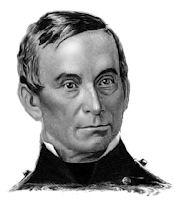
COLONEL: I had the honor to reply this afternoon to the telegram of the honorable Secretary of War in reference to the abandonment of Fort Moultrie. In addition to the reasons given in my telegram and in my letter of last night, I will add as my opinion that many things convinced me that the authorities of the State designed to proceed to a hostile act. Under this impression I could not hesitate that it was my solemn duty to move my command from a fort which we could not probably have held longer than forty-eight or sixty hours, to this one, where my power of resistance is increased to a very great degree. The governor of this State sent down one of his aides to-day and demanded, “courteously, but peremptorily,” that I should return my command to Fort Moultrie. I replied that I could not and would not do so. He stated that when the governor came into office he found that there was an understanding between his predecessor and the President that no re-enforcements were to be sent to any of these forts, and particularly to this one, and that I had violated this agreement by having re-enforced this fort. I remarked that I had not re-enforced this command, but that I had merely transferred my garrison from one fort to another, and that, as the commander of this harbor, I had a right to move my men into any fort I deemed proper. I told him that the removal was made on my own responsibility, and that I did it because we were in a position that we could not defend, and also under the firm belief that it was the best means of preventing bloodshed. This afternoon an armed steamer, one of two which have been watching these two forts, between which they have been passing to and fro or anchored for the last ten nights, took possession by escalade of Castle Pinckney. Lieutenant Meade made no resistance. He is with us to-night. They also took possession to-night of Fort Moultrie, from which I withdrew the remainder of my men this afternoon, leaving the fort in charge of the overseer of the men employed by the Engineer Department. We have left about one month’s and a half of provisions in that fort; also some wood and coal and a small quantity of ammunition. We are engaged here to-day in mounting guns and in closing up some of the openings for the embrasures–temporarily closed by light boards, but which would offer but slight resistance to persons seeking entrance. If the workmen return to their work, which I doubt, we shall be enabled in three or four days to have a sufficient number of our guns mounted, and be ready for anything that may occur.

I am, colonel, very respectfully, your obedient servant,

ROBERT ANDERSON,
Major, First Artillery, Commanding.

Col. S. COOPER,

Adjutant-General.

FORT SUMTER, S.C., December 27, 1860.

Col. R. E. DE RUSSY,
Commanding Corps of Engineers, U. S. Army, Washington, D.C.:

COLONEL: I have the honor to report that yesterday evening Major Anderson removed his command from Fort Moultrie to Fort Sumter, leaving a guard with me, with orders to spike the guns, cut down the flagstaff, and burn the carriages of those guns that point towards Fort Sumter. This was done. To-day I went to town to negotiate a draft on New York to pay off the men employed on Fort Moultrie. I saw  that an attack was to be made somewhere to-night and also that it would not be safe for me to go to town again for some time.

Returning, I brought my family to Fort Sumter, as all guard was withdrawn. At about 4 o’clock a steamer landed an armed force at Castle Pinckney, and effecting an entrance by scaling the walls with ladders, took forcible possession of the work. Lieutenant Meade was suffered to withdraw to this fort.

Soon after dark two steamers landed an armed force at Fort Moultrie, and took forcible possession of that work. While in town the Palmetto flag was hoisted on the custom-house and saluted. Two companies were ordered to surround the arsenal. The movement of Major Anderson was made upon a firm conviction that an attack would be made, and that Fort Sumter would be seized first. In haste.

Very respectfully, your obedient servant,

J. G. FOSTER,

Captain of Engineers.

[Indorsement. ]

DECEMBER 31, 1860.

Read the within to Lieutenant-General Scott this morning.

H. G. W.

December 27th.—Mrs. Gidiere came in quietly from her marketing to-day, and in her neat, incisive manner exploded this bombshell: “Major Anderson¹ has moved into Fort Sumter, while Governor Pickens slept serenely.” The row is fast and furious now. State after State is taking its forts and fortresses. They say if we had been left out in the cold alone, we might have sulked a while, but back we would have had to go, and would merely have fretted and fumed and quarreled among ourselves. We needed a little wholesome neglect. Anderson has blocked that game, but now our sister States have joined us, and we are strong. I give the condensed essence of the table-talk: “Anderson has united the cotton States. Now for Virginia!” “Anderson has opened the ball.” Those who want a row are in high glee. Those who dread it are glum and thoughtful enough.

A letter from Susan Rutledge: “Captain Humphrey folded the United States Army flag just before dinnertime. Ours was run up in its place. You know the Arsenal is in sight. What is the next move? I pray God to guide us. We stand in need of wise counsel; something more  than courage. The talk is: ‘Fort Sumter must be taken; and it is one of the strongest forts.’ How in the name of sense are they to manage? I shudder to think of rash moves.”

¹ Robert Anderson, Major of the First Artillery, United States Army, who, on November 20,1860, was placed in command of the troops in Charleston harbor. On the night of December 26th, fearing an attack, he had moved his command to Fort Sumter. Anderson was a graduate of West Point and a veteran of the Black Hawk, Florida, and Mexican Wars.