(Private.)
Washington, 22d December, 1860.
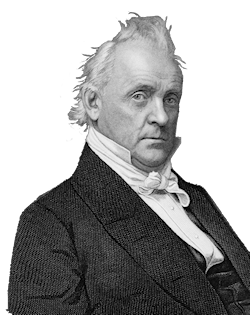
President James Buchanan
My Dear Sir,—I have received your favor of the 20th inst, and rejoice to learn the change of public sentiment in your city. Still secession is far in advance of reaction, and several of the cotton States will be out of the Union before anything can be done to check their career. I think they are all wrong in their precipitation, but such I believe to be the fact.
It is now no time for resolutions of kindness from the North to the South. There must be some tangible point presented, and this has been done by Mr. Crittenden in his Missouri Compromise resolutions. Without pretending to speak from authority, I believe these would be accepted though not preferred by the South. I have no reason to believe that this is at present acceptable to the Northern senators and representatives, though the tendency is in that direction. They may arrive at this point when it will be too late.
I cannot imagine that any adequate cause exists for the extent and violence of the existing panic in New York. Suppose, most unfortunately, that the cotton States should withdraw from the Union, New York would still be the great city of this continent. We shall still have within the borders of the remaining States all the elements of wealth and prosperity. New York would doubtless be somewhat retarded in her rapid march; but, possessing the necessary capital, energy, and enterprise, she will always command a very large portion of the carrying trade of the very States which may secede. Trade cannot easily be drawn from its accustomed channels. I would sacrifice my own life at any moment to save the Union, if such were the will of God; but this great and enterprising brave nation is not to be destroyed by losing the cotton States, even if this loss were irreparable, which I do not believe unless from some unhappy accident.
I have just received an abstract from the late census.
In the apportionment of representatives the State of New York will have as many in the House (30) as Georgia, Florida, Alabama, Mississippi, Louisiana, Texas, and South Carolina united. The latter State contains 296,422 free people and 408,905 slaves, and will be entitled in the next Congress to 4 representatives out of 233.
Why will not the great merchants of New York examine the subject closely and ascertain what will be the extent of their injuries and accommodate themselves to the changed state of things ?
If they will do this, they will probably discover they are more frightened than hurt. I hope the Treasury Note Loan may be taken at a reasonable rate of interest. No security can be better, in any event, whether the Cotton States secede or not. Panic in New York may, however, prevent, because panic has even gone to the extent of recommending that the great city of New York shall withdraw herself from the support of at least twenty-five millions of people and become a free city.
I had half an hour, and have scribbled this off in haste for your private use.
Your friend,
Very respectfully,
James Buchanan.
Royal Phelps, Esq.