Following the American Civil War Sesquicentennial with day by day writings of the time, currently 1863.

Monday, December 13, 2010

Washington, December 13th. At the request of Hon. Reuben Davis of Mississippi, member of the Committee of States, the Southern members of Congress assembled at his rooms to-night and adjourned at eleven o’clock, at which the following declaration was made and signed by those present. It had already been presented to the Committee of Thirty-three:

transparent

Washington, December 13th, 1860.

To our Constituents: The argument is exhausted. All hope of relief in the Union, through the agency of committees, Congressional legislation, or constitutional amendments, is extinguished, and we trust the South will not be deceived by appearances or the pretence of new guarantees. The Republicans are resolute in the purpose to grant nothing that will or ought to satisfy the South. We are satisfied the honor, safety, and independence of the Southern people are to be found only in a Southern Confederacy —a result to be obtained only by separate State secession—and that the sole and primary aim of each slaveholding State ought to be its speedy and absolute separation from an unnatural and hostile Union.

transparent

Signed by J. L. Pugh, David Clopton, Sydenham Moore, J. L. M. Curry, and J. A. Stallworth of Alabama; Alfred Iverson, J. W. H. Underwood, L. J. Gartrell, and Jas. Jackson, (Senator Toombs is not here, but would sign). John J. Jones, and Martin J. Crawford of Georgia; Geo. S. Hawkins of Florida. It is understood Mr. Yulee will sign it. T. C. Hindman of Arkansas. Both Senators will also sign it. A. G. Brown, Wm. Barksdale. O. R. Singleton, and Reuben Davis of Mississippi; Burton Craige and Thos. Ruffin of North Carolina; J. P. Benjamin and John M. Landrum of Louisiana. Mr. Slidell will also sign it. Senators Wigfall and Hemphill of Texas, will sign it.


transparent

Mr. Davis made the following statement to the caucus:

Being a member of the Committee of Thirty-three, I state that the above witnessed despatch was communicated to the committee this evening, and a resolution passed proposing no specific relief, eight Northern States dissenting, avowedly intended to counteract the effect of the above despatch, and, as I believe, to mislead the people of the South. From information derived from Republican members of the committee and other Northern Representatives, I fully concur in the above despatch.

transparent

Reuben Davis. The manifesto will be immediately communicated to the several constituencies of the gentlemen named by telegraph.

transparent

______

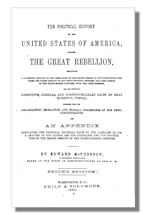
The Political History of the United States of America, During the Great Rebellion, from November 6, 1860, to July 4, 1864; page 37; Edward MacPherson; 1865
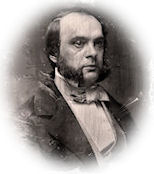
To Governor WM. SPRAGUE,

Providence, R.I.

New York, December 13, 1860

My Dear Sir,—I am much obliged for your favor of 1oth inst., but regret that you take the view that the repeal of the personal-liberty bill, by your State, at this moment could be looked upon as a concession made under the pressure and influence of fear and threats.

The secession movement of the South has lost all the character of bluster and threat, which our Northern friends supposed too long was its principal element. The most conservative men have joined in it, right or wrong; they feel that their institutions and property are not any longer safe within the Union, and that self-preservation commands action before the Federal power passes into hands which they take for granted are hostile to their section. They do not threaten, but they want to be allowed to go out peaceably. The great majority are for immediate action, but the Union men are striving to postpone secession if possible until the 4th of March.

In this they can only succeed if aided by the North. The action which I suggested to you would go very far toward paving the way to a satisfactory solution of our present difficulties. You, yourself, think that the personal-liberty bills are unconstitutional. If they are wrong, why then wait one moment to do what is right?

Neither a State nor an individual can ever suffer in public opinion by doing what is right, and the more spontaneous the acknowledgment of an error is, the higher will it be appreciated. Here is what Herschel V. Johnson, one of the most patriotic and able men of the South, writes to me on this subject only a few days ago. After giving a most dispassionate description of the present state of affairs, and the dangers which surround us, he says:—

“What is to be done ? The Union is in danger, how can it be saved? In my judgment there is but one way, and I fear that may be too late. Those non-slaveholding States, whose legislatures have enacted them, must repeal their personal-liberty bills, and all acts of every kind which obstruct and prevent the faithful execution of the fugitive-slave law.

I do not say they should do this under the influence of fear, nor even because the South may demand it, but because it is right; it will be but a voluntary return to a correct sense of Constitutional obligation, and a renewal of that spirit of brotherhood from which the Union sprang, and without which it cannot be perpetuated. Such action, voluntarily taken, will be far more salutary upon the popular mind of the South, than if taken at the end of a bitter contest,” etc.

I can assure you, my dear sir, that all the leaders of the Republican party in our State and city, with a few exceptions of the ultra radicals, are in favor of concessions, and that the popular mind of the North is ripe for them. A prompt action by you will be universally hailed with joy and gratitude, while a tardy compliance with the popular will can but have comparatively small merit. Public men, placed as prominently as you are, must lead and not follow, if thev want to make their mark.