Following the American Civil War Sesquicentennial with day by day writings of the time, currently 1863.

Sunday, December 19, 2010

To Governor WM. SPRAGUE,

Providence, R.I.

New York, December 19, 1860

My Dear Sir,—I have been confined to my bed for the last few days, and therefore was unable to acknowledge the receipt of your favor of 16th inst. before this.

I hail with the most heartfelt satisfaction the expression of your intention to call at once your legislature together for the purpose of having the personal-liberty bill of your State repealed, and I hope sincerely that mature reflection will have confirmed you in that wise and patriotic resolve.

You must see all around you evidences of a healthy reaction in the Northern sentiment, and a return to that spirit of equity and justice which alone can keep the two sections together.

In Boston, and throughout Massachusetts, the leading men of both parties are loud in their clamors for a repeal of the personal-liberty bill of that State. Last evening I was present at an informal meeting of about thirty gentlemen, comprising our leading men, Republicans, Union men, and Democrats, composed of such names as Astor, Aspinwall, Moses H. Grinnell, Hamilton Fish, R. M. Blatchford, etc. They were unanimous in their voice for reconciliation, and that the first steps have to be taken by the North.

A very strong memorial, to be signed by all the leading men of both parties who are for the maintenance of the Union, is now preparing, and will be forthwith sent to Washington.

I think I speak advisedly in saying that Governor Morgan will take very decided grounds in favor of concessions in his annual message, on the 2d of January.

The ball is moving, and our public men must take their choice of three alternatives, viz.: to lead, to follow, or to be left behind with a small and despised faction of fanatics, who never will be able to stand up against the torrent of public indignation which is sure to overtake them.

I need not point out to you the course which lies before you. Your high intelligence and patriotism are your safe guides, and I trust implicitly to them, that they will, with God’s blessing, make you a prominent instrument in the salvation of our country.

—A meeting of members of the Georgia Legislature, favoring cooperation, was held at Milledgeville. A convention of Southern States desiring cooperation was urged, and an address to the people of South Carolina, Alabama, Mississippi, and Florida, was issued.— Tribune, Dec. 20.

—A bill has been introduced into the Legislature of North Carolina, providing that

“No ordinance of said Convention, dissolving the connection of the State of North Carolina with the Federal Government, or connecting it with any other, shall have any force or validity until it shall have been submitted to, and ratified by, a majority of the qualified voters of the State for members of the General Assembly, to whom it shall be submitted for their approval or rejection.”—Evening Post, Dec. 20.

—The Commissioner from Mississippi to Maryland addressed the citizens of Baltimore this evening. In the course of his remarks upon the intentions of the seceding States, he said: “Secession is not intended to break up the present Government, but to perpetuate it. We do not propose to go out by way of breaking up or destroying the Union as our fathers gave it to us, but we go out for the purpose of getting further guaranties and security for our rights; not by a Convention of all the Southern States, nor by Congressional tricks, which have failed in times past and will fail again. But our plan is for the Southern States to withdraw from the Union, for the present, to allow amendments to the Constitution to be made, guaranteeing our just rights; and if the Northern States will not make those amendments, by which these rights shall be secured to us, then we must secure them the best way we can. This question of slavery must be settled now or never. The country has been agitated seriously by it for the past twenty or thirty years. It has been a festering sore upon the body politic; and many remedies having failed, we must try amputation, to bring it to a healthy state. We must have amendments to the Constitution, and if we cannot get them we must set up for ourselves.”

—The secession leaders at Charleston declare no more soldiers shall be sent to the forts in that harbor. A captain of a schooner landed some supplies there a few days since, and was terribly abused for it. He was told it would not be safe for any vessel to attempt it in future.

—The Governor of Maryland declined to receive the Commissioner from Mississippi to that State, setting forth his reasons in an elaborate Union letter.—(See Document No. 1.)

To JOHN FORSYTH,

Mobile, Ala.

New York, December 19, 1860

My Dear Sir,—Your favor of 8th inst. reached me a few days ago, but I was prevented by indisposition from replying to it before. It was very gratifying that you should have deemed my last letter to you of sufficient import to give it a place in your journal, but I regret deeply that so far from advocating the policy of co-operation, and deliberate, united action by the Southern States, for which I appealed to your support, I find your paper as warmly and uncompromisingly for immediate and unconditional secession as ever Yancey has been.

When we Douglas men of the North stood by our colors against the combined onslaughts of the Black Republicans and the administration, we were upheld in our struggle by the consciousness that we were fighting the battle of the Union and the Constitution against fanaticism North and sectionalism South. We fought to the last, and hopefully to the end, because we trusted that our friends at the South would never forsake that glorious cause, even in defeat, which our noble banner-bearer had so fearlessly defended during the canvass in every Northern and Southern State.

Douglas declared repeatedly in that memorable campaign, that the election of Mr. Lincoln was not, in his judgment, a justifiable ground for secession. How do those stand now before the country, who, after having been the most prominent instruments of his nomination, and having adhered to him after this declaration, and now, because he is defeated, forsake the Union-loving principles which were the main hold he had upon the American people? I know that the disunionists at the South taunt those who counsel the more wise, efficient, and patriotic course of seeking redress within the Union, by calling them “submissionists;” but I, for one, would most certainly rather submit to the constitutional election of an opponent than to the terrorism evoked by a faction whose treasonable designs my best efforts had been exerted to defeat.

Both Mr. Bell and Mr. Douglas have, since the election, spoken warmly and manfully for the Union. Their adherents at the North, in the middle States, are proud and rejoiced at the stand these statesmen have taken; but how can our friends in the cotton States reconcile their actions of to-day with their professions only a few months back? I have read with great attention the leader from your paper, which you sent me, but I am sorry to say that I cannot in any way coincide with your views. I do not, and never will, believe that Lincoln’s election is an evidence of the overwhelming anti-slavery feeling at the North.

The principal battle was fought in our State; had we succeeded here, Mr. Lincoln could not have been elected. Now, it is well known that until within one short fortnight of the election, we were hopelessly divided, with the whole power of the administration against us. Disorganized, and wholly without means for even the most essential expenses of a campaign, we were forced into a fusion on the very eve of battle. With no earthly possibility of electing either of our three candidates, with a hasty and incomplete organization, and with the baneful influence of the October elections in Pennsylvania, Maine, and Indiana, brought about by the treachery of the administration, against us, with a great want of the necessary pecuniary means (the whole sum raised for the fusion ticket did not amount to $50,000 all told), with all these difficulties against us what did we do? Why, we polled 317,000 votes in our State for the fusion ticket, 30,000 more votes than were ever given before by the united Democratic party, when we gave the State to Pierce by 23,000 majority.

In a vote of 700,000, a change of 26,000 votes, say less than four per cent., would have given us the State. More than four per cent., by far, were made up of men who voted for Lincoln because they were disgusted with the administration, while thousands and thousands were led into the mistake of voting with the Republicans, though not holding one single principle in common with them, because they knew that Lincoln was the only candidate who could be elected by the people, and considered that the greatest evil which could befall the country would be an election by the House.

Hundreds of men holding sound principles on the Constitutional rights of the South, were, to my certain knowledge, led into that mistake. They had been told by a distinguished Senator from one of the cotton States, as late as last May, in a speech delivered in the halls ot Congress, and sent in hundreds of thousands all over the country, that Mr. Lincoln had proved himself, in his controversy with Douglas, in 1858, a very conservative and unobjectionable man to the South, as compared with the latter. Why should they not vote for him now, and so prevent the terrible excitement and prostration of all material interests, which a contested election in Congress, dragged on until next March, would inevitably bring upon the country ? I have had to fight these arguments over and over again before the election, and meet daily now with men who confess the error they have been led into, and almost with tears in their eyes, wish they could undo what they helped to do.

No, my dear sir, the evidence is too clear; we owe the election of Lincoln only to the misrule of the present administration, and to the unfortunate dissensions in our own party. If, as you say, the public mind had become vitiated by the incendiary teachings of the Abolition press, there can be, on the other hand, no denying that a healthy reaction is overtaking us with giant steps. Look at the late scenes in Boston, hitherto the sanctum sanctorum of Abolitionism; look at their municipal elections.

If I only could have you here for a few days, I am sure you would be convinced, and agree with me, that the surest redress for the South is within the Union. The ball is in motion, and nothing can stop it except the inconsiderate and hasty action of the South herself. If it has taken the Abolition press and pulpit forty years to poison a portion of the public mind at the North, do we ask you too much by entreating you to give us only three months, in order to remedy this evil?

Mr. Toombs himself proposes now that Georgia should not secede from the Union until the 3d of March, and I certainly think that nobody can be charged with lukewarmness in the South by following his advice.

If Georgia and Alabama will leave South Carolina to pursue her own mad career alone, and declare in convention that they will secede on the 3d of March, unless their rights in the Territories are guaranteed to them, under the Constitution, and the personal-liberty bills of some of the Northern States are repealed, I have a strong hope that we may save the Union, and place Southern rights on a sound and lasting footing. I know that powerful agencies among the Republican leaders in our State, and elsewhere, are now at work, which look to that end. Weed is out boldly and fearlessly for such a policv, and I have every reason to believe that he will ere long be powerfully supported.

Now, one more point which I cannot leave unnoticed in the article which you send me, and then I will not trouble you any longer.

You charge the desire for concessions, on the part of the North, to mercenary motives. I think this is unkind to your friends, and certainly unfair as regards my own State and city.

We are actuated by principles of right and justice, but above all rises the warm and undying attachment to the Union, which with me, and all those who unite in my efforts for the good cause, is unsullied by one mean or sordid motive. If it were otherwise, and if we did only look to our own material interests, and those of our city, we should not deplore the dissolution of the Union. New York, in such a catastrophe, would cut loose from the puritanical East, and her protective tariff, and without linking her fortunes with our kind but somewhat exacting Southern friends, she would open her magnificent port to the commerce of the world. What Venice was once on the sluggish lagoons of the small Adriatic, New York would ere long become to the two hemispheres, proudly resting on the bosom of the broad Atlantic, and I am afraid sadly interfering with the brilliant but fallacious hopes of the Palmetto and Crescent cities.

I prefer, however, to leave to my children, instead of the gilded prospects of New York merchant princes, the more enviable title of American citizens, and as long as God spares my life I shall not falter in my efforts to preserve to them that heritage.
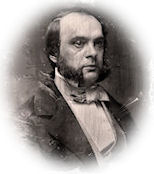
Albany, N.Y.

New York, December 19, 1860

Allow me, though a comparative stranger, to express to you the heartfelt satisfaction with which I have read your very able and patriotic article of last Monday.

The statesmanlike view which you take of our present difficulties, and the wise and conciliatory course which you, with so much truth, counsel as the only remedy which can save this great Republic from untold calamities, must command, not only the warm support of your friends, but also the unqualified respect and admiration of your opponents.

As one of the latter, it gives me much pleasure to convey to you my sincere assurances of these feelings.

I have fought to the last against the great party, of which you have proved so formidable a leader, but I shall never regret our defeat if your wise counsels prevail, and with God’s blessing peace and concord are restored, under Mr. Lincoln’s administration, to our distracted country.

FORT MOULTRIE, S. C., December 19, 1860.

Col. R. E. DE RUSSY,
Commanding Corps of Engineers, U. S. Army, Washington, D.C.:

“I propose to connect a powerful Daniels battery with the magazine at Fort Sumter, by means of wires stretched across under water from Fort Sumter to Fort Moultrie, and to blow up Fort Sumter if it is taken by an armed force, and after Lieutenant Snyder and my men have time to escape from it.”

COLONEL: I have the honor to inform you that I had an interview to-day with General Schnierle (general of division in this vicinity) and several other prominent citizens of Charleston, in relation to the little excitement attending the issue of forty muskets to me at the arsenal on the 17th instant.

The main facts connected with this were communicated in my letter of yesterday.

The interview to-day was satisfactory to me, as I saw that the action of General Schnierle had arisen from his great desire to allay the temporary excitement among some of the citizens. Although I declined to return the muskets until I was directed by the Government so to do, yet I proposed at once to refer the matter to Washington, and accordingly telegraphed to Captain Maynadier, Ordnance Corps, to inquire whether the muskets should be returned to the arsenal or not. Up to this time I have received no answer. The reasons for my doing so are these: General Schnierle asserted that Colonel Huger had assured the governor of this State that no arms should be removed from the arsenal, and Captain Humphreys, military storekeeper, felt himself placed in a peculiar position from having acted contrary to the colonel’s assurance, while on the other hand neither Captain Humphreys or myself had been informed by Colonel Huger that he had made such assurance; neither had we any positive written testimony of the fact. To solve the question, the Ordnance Bureau must be appealed to for a decision, and I did this immediately, in order to allay, as soon as possible, any irritations that might have arisen. I was actuated in all I did by a sincere desire to remove all cause of irritation, so that if the extremists are disposed for violent measures they must force the issue themselves.

I am abating nothing of the activity of preparation in Fort Moultrie and Fort Sumter, and in fact am increasing it.

If the Department becomes aware of any change of policy in regard to this preparation in these forts, or in either of them, I beg that instructions may be given me at once, so that I may vary my operations accordingly, for my present expenses are very heavy. In Fort Sumter the mounting of the guns, laying a flagging of first and second tiers of casemates, forming embrasures of second tier, and finishing the barracks is progressing regularly, and as fast as separately-organized parties can work. The force will be to-morrow 150 men.

On Fort Moultrie 137 men are at work. The wet ditch is nearly completed. The foot-bridge connecting the second stories of the barracks and the guard-house, which is arranged for a citadel, is constructed. Doors are being cut through the partition walls of the barracks of the second floor, and trap-doors in the floors, and ladders made. A machicoulis gallery over the southeast angle is being made of palmetto logs for infantry. All the guns on the east front (facing the sand hills) are being placed in embrasure, by raising high and solid merlons, formed of cement barrels filled with sand, sods, and green hides.

Three high cavalier-like positions are also formed on this front for sharpshooters. The picket fence bordering the ditch is carried more than half around the fort, and is well protected from a destructive fire of cannon by a small glacis in front of it. The flanking howitzers are being mounted in the finished caponiere, and will be tried by firing to-morrow. Nearly all the projecting brick cordon is cut off smooth.

All of this work I have done and am doing myself, because it is necessary to be done, and the garrison is too weak to undertake any work beside the regular drills.

There is another thing which I propose to do, and of which I write to you in season, so that if you disapprove it you can have time to forbid it. I propose to connect a powerful Daniels battery with the magazine at Fort Sumter, by means of wires stretched across under water from Fort Sumter to Fort Moultrie, and to blow up Fort Sumter if it is taken by an armed force, and after Lieutenant Snyder and my men have time to escape from it.

I propose, also, to use the same battery to fire small mines around Fort Moultrie, and to explode a large mine placed in the sand hills. All of these last preparations may seem to be unnecessary, and I hope they may prove to be so in the end, but there are very strong probabilities that they may be required, and, at any rate, I regard a complete state of preparations as the surest safeguard against attack.

Very respectfully, your obedient servant,

J. G. FOSTER,

Captain, Engineers.

_______

DECEMBER 19, 1860.

Maj. ROBERT ANDERSON, &c., Charleston, S. C.:

I have just telegraphed Captain Foster to return any arms that he my have removed from Charleston Arsenal.

J. B. FLOYD.