.
WASHINGTON CITY, December 31, 1860.
Hons. ROBERT W. BARNWELL, JAMES H. ADAMS, JAMES L. ORR:
GENTLEMEN: I have had the honor to receive your communication of the 28th instant, together with a copy of your “full powers from the Convention of the People of South Carolina” authorizing you to treat with the Government of the United States on various important subjects therein mentioned, and also copy of the ordinance, bearing date on the 20th instant, declaring that “the union now subsisting between South Carolina and other States under the name of “the United States of America is thereby dissolved.”
In answer to this communication I have to say that my position as President of the United States was clearly defined in the message to Congress on the 3d instant. In that I stated that “apart from the execution of the laws, so far as this may be practicable, the Executive has no authority to decide what shall be the relations between the Federal Government and South Carolina. He has been invested with no such discretion. He possesses no power to change the relations heretofore existing between them, much less to acknowledge the independence of that State. This would be to invest a mere executive officer with the power of recognizing the dissolution of the confederacy among our thirty-three sovereign States. It bears no resemblance to the recognition of a foreign de facto government, involving no such responsibility. Any attempt to do this would, on his part, be a naked act of usurpation. It is therefore my duty to submit to Congress the whole question in all its bearings.”
Such is still my opinion, and I could therefore meet you only as private gentlemen of the highest character, and I was quite willing to communicate to Congress any proposition you might have to make to that body upon the subject. Of this you were well aware.
It was my earnest desire that such a disposition might be made of the whole subject by Congress, who alone possess the power, as to prevent the inauguration of a civil war between the parties in regard to the possession of the Federal forts in the harbor of Charleston; and I therefore deeply regret that, in your opinion, “the events of the last twenty-four hours render this impossible.” In conclusion you urge upon me “the immediate withdrawal of the troops from the harbor of Charleston,” stating that, “under present circumstances, they are a standing menace which renders negotiation impossible, and, as our recent experience shows, threatens speedily to bring to a bloody issue questions which ought to be settled with temperance and judgment.”
The reason for this change in your position is that, since your arrival in Washington, “an officer of the United States, acting, as we (you) are assured, not only without but against your (my) orders, has dismantled one fort and occupied another, thus altering to a most important extent the condition of affairs under which we (you) came.”
You also allege that you came here “the representatives of an authority which could at any time within the past sixty days have taken possession of the forts in Charleston Harbor, but which, upon pledges given in a manner that we (you) cannot doubt, determined to trust to your (my) honor rather than to its own power.”
This brings me to a consideration of the nature of those alleged pledges, and in what manner they have been observed. In my message of the 3d of December instant I stated, in regard to the property of the United States in South Carolina, that it “has been purchased for a fair equivalent, by the consent of the legislature of the State, for the erection of forts, magazines, arsenals’ &c., and over these the authority ‘to exercise exclusive legislation’ has been expressly granted by the Constitution to Congress. It is not believed that any attempt will be made to expel the United States from this property by force; but if in this I should prove to be mistaken, the officer in command of the forts has received orders to act strictly on the defensive. In such a contingency the responsibility for consequences would rightfully rest upon the heads of the assailants.”
This being the condition of the parties on Saturday, December 8, four of the Representatives from South Carolina called upon me and requested an interview. We had an earnest conversation on the subject of these forts and the best means of preventing a collision between the parties, for the purpose of sparing the effusion of blood. I suggested, for prudential reasons, that it would be best to put in writing what they said to me verbally. They did so accordingly, and on Monday morning, the 10th instant, three of them presented to me a paper signed by all the Representatives of South Carolina, with a single exception, of which the following is a copy:

WASHINGTON, December 9, 1860.
His Excellency JAMES BUCHANAN,
President of the United States:
In compliance with our statement to you yesterday, we now express to you our strong convictions that neither the constituted authorities, nor any body of the people of the State of South Carolina, will either attack or molest the United States forts in the harbor of Charleston previously to the action of the convention, and we hope and believe not until an offer has been made, through an accredited representative, to negotiate for an amicable arrangement of all matters between the State and Federal Government, provided that no re-enforcements shall be sent into those forts, and their relative military status shall remain as at present.
JOHN McQUEEN.
WM. PORCHER MILES.
M. L. BONHAM.
W. W. BOYCE.
LAWRENCE M. KEITT.

And here I must, in justice to myself, remark that at the time the paper was presented to me I objected to the word “provided,” as it might be construed into an agreement on my part which I never would make. They said nothing was further from their intention; they did not so understand it, and I should not so consider it. It is evident they could enter into no reciprocal agreement with me on the subject. They did not profess to have authority to do this, and were acting in their individual character. I considered it as nothing more in effect than the promise of highly honorable gentlemen to exert their influence for the purpose expressed. The event has proven that they have faithfully kept this promise, although I have never since received a line from any one of them, or from the convention, on the subject. It is well known that it was my determination, and this I freely expressed, not to re-enforce the forts in the harbor, and thus produce a collision, until they had been actually attacked, or until I had certain evidence that they were about to be attacked. This paper I received most cordially, and considered it as a happy omen that peace might be still preserved, and that time might thus be gained for reflection. This is the whole foundation for the alleged pledge.
But I acted in the same manner as I would have done had I entered into a positive and formal agreement with parties capable of contracting, although such an agreement would have been on my part, from the nature of my official duties, impossible. The world knows that I have never sent any re-enforcements to the forts in Charleston Harbor, and I have certainly never authorized any change to be made “in their relative military status.”
Bearing upon this subject, I refer you to an order issued by the Secretary of War, on the 11th instant, to Major Anderson, but not brought to my notice until the 21st instant. It is as follows:
Memorandum of verbal instructions to Major Anderson, First Artillery, commanding at Fort Moultrie, South Carolina.
You are aware of the great anxiety of the Secretary of War that a collision of the troops with the people of this State shall he avoided, and of his studied determination to pursue a course with reference to the military force and forts in this harbor which shall guard against such a collision. He has therefore carefully abstained from increasing the force at this point, or taking any measures which might add to the present excited state of the public mind, or which would throw any doubt on the confidence he feels that South Carolina will not attempt by violence to obtain possession of the public works or interfere with their occupancy. But as the counsel and acts of rash and impulsive persons may possibly disappoint these expectations of the Government, he deems it proper that you shall be prepared with instructions to meet so unhappy a contingency. He has therefore directed me verbally to give you such instructions.
You are carefully to avoid every act which would needlessly tend to provoke aggression; and for that reason you are not, without evident and imminent necessity, to take up any position which could be construed into the assumption of a hostile attitude. But you are to hold possession of the forts in this harbor, and if attacked you are to defend yourself to the last extremity. The smallness of your force will not permit you, perhaps., to occupy more than one of the three forts, but an attack on or attempt to take possession of either one of them will be regarded as an act of hostility, and you may then put your command into either of them which you may deem most: proper to increase its power of resistance. You are also authorized to take similar defensive steps whenever you have tangible evidence of a design to proceed to a hostile act.
D.C. BUELL,
Assistant Adjutant-General.
FORT MOULTRIE, S.C., December 11, 1860.
This is in conformity to my instructions to Major Buell.
JOHN B. FLOYD,
Secretary of War.
These were the last instructions transmitted to Major Anderson before his removal to Fort Sumter, with a single exception, in regard to a particular which does not in any degree affect the present question. Under these circumstances it is clear that Major Anderson acted upon his own responsibility, and without authority, unless, indeed, he had “tangible evidence of a design to proceed to a hostile act” on the part of the authorities of South Carolina, which has not yet been alleged. Still, he is a brave and honorable officer, and justice requires that he should not be condemned without a fair hearing.
Be this as it may, when I learned that Major Anderson had left Fort Moultrie and proceeded to Fort Sumter, my first promptings were to command him to return to his former position, and there await the contingencies presented in his instructions. This could only have been done with any degree of safety to the command by the concurrence of the South Carolina authorities. But before any steps could possibly have been taken in this direction we received information, dated on the 28th instant, that the “palmetto flag floated out to the breeze at Castle Pinckney, and a large military force went over last night (the 27th) to Fort Moultrie.” Thus the authorities of South Carolina, without waiting or asking for any explanation, and doubtless believing, as you have expressed it, that the officer had acted not only without but against my orders, on the very next day after the night when the movement was made, seized by a military force two of the three Federal forts in the harbor of Charleston, and have covered them under their own flag instead of that of the United States. At this gloomy period of our history startling events succeed each other rapidly. On the very day, the 27th instant, that possession of these two forts was taken the palmetto flag was raised over the Federal custom-house and post-office in Charleston; and on the same day every officer of the customs, collector, naval officer, surveyor, and appraisers, resigned their offices. And this, although it was well known from the language of my message that, as an executive officer, I felt myself bound to collect the revenue at the port of Charleston under the existing laws.
In the harbor of Charleston we now find three forts confronting each other, over all of which the Federal flag floated only four days ago; but now over two of them this flag has been supplanted, and the palmetto flag has been substituted in its stead. It is under all these circumstances that I am urged immediately to withdraw the troops from the harbor of Charleston, and am informed that without this, negotiation is impossible. This I cannot do; this I will not do. Such an idea was never thought of by me in any possible contingency. No allusion had ever been made to it in any communication between myself and any human being. But the inference is that I am bound to withdraw the troops from the only fort remaining in the possession of the United States in the harbor of Charleston, because the officer there in command of all the forts thought proper, without instructions, to change his position from one of them to another. I cannot admit the justice of any such inference. And at this point of writing I have received information by telegraph from Captain Humphreys, in command of the arsenal at Charleston, that it “has to-day (Sunday, the 30th) been taken by force of arms” Comment is needless. It is estimated that the property of the United States in this arsenal was worth half a million of dollars.
After this information I have only to add that, whilst it is my duty to defend Fort Sumter as a portion of public property of the United States against hostile attacks, from whatever quarter they may come, by such means as I may possess for this purpose, I do not perceive how such a defense can be construed into a menace against the city of Charleston.
With great personal regard, I remain, yours, very respectfully,
JAMES BUCHANAN.

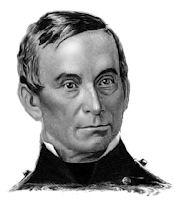 COLONEL: I have the honor to report that the South Carolinians show great activity in the harbor to-day. Several steamers have been running to and fro, and this afternoon about 80 soldiers, with wheelbarrows, barrels, &c., and some draught horses, were landed on Morris Island. They are evidently constructing a battery or batteries there. The lights in the harbor were put out last night, and ours is the only light-house of this harbor which exhibits light to-night. I am at a loss what this means, unless it be that some armed vessel is expected here. The more I reflect upon the matter the stronger are my convictions that I was right in coming here. Whilst we were at Fort Moultrie our safety depended on their forbearance. A false telegram might, any night, have been seized upon as an excuse for taking this place, and then we would have been in their power, And even if there had been an understanding between the two Governments that I was not to be interfered with until the termination of the mission to Washington, the fact of the governor’s having ordered armed steamers to keep watch over me would have absolved our Government firm the obligation to remain quiescent. It is certain, too, that the moment a telegram was received announcing the failure of the mission, attack would have been made and my command sacrificed, for there can be no surrender with these men, if attacked, without a serious fight. Thank God, we are now where the Government may send us additional troops at its leisure. To be sure, the uncivil and uncourteous action of the governor in preventing us from purchasing anything in the city will annoy and inconvenience us somewhat; still, we are safe. I find that in consequence of a failure (accidental) to comply with my instructions, there is only a small supply of soap and candles, and also of coal. Still, we can cheerfully put up with the inconvenience of doing without them, for the satisfaction we feel in the knowledge that we can command this harbor as long as our Government wishes to keep it.