Following the American Civil War Sesquicentennial with day by day writings of the time, currently 1863.

Friday, December 24, 2010

December. — I went with the girls to the lake to skate this afternoon. Mr Johnson, the colored barber, is the best skater in town. He can skate forwards and backwards and cut all sorts of curlicues, although he is such a heavy man. He is going to Liberia and there his skates won’t do him any good. I wish he would give them to me and also his skill to use them. Someone asked me to sit down after I got home and I said I preferred to stand, as I had been sitting down all the afternoon! Gus Coleman took a load of us sleighriding this evening. Of course he had Clara Willson sit on the front seat with him and help him drive.

Thursday.—We had a special meeting of our society this evening at Mary Wheeler’s and invited the gentlemen and had charades and general good time. Mr Gillette and Horace Finley made a great deal of fun for us. We initiated Mr Gillette into the Dorcas Society, which consists in seating the candidate in a chair and propounding some very solemn questions and then in token of desire to join the society, you ask him to open his mouth very wide for a piece of cake which you swallow, yourself, instead! Very disappointing to the new member!

We went to a concert at the Seminary this evening. Miss Mollie Bull sang “Coming Through the Rye ” and Miss Lizzie Bull sang “Annie Laurie” and “Auld Lang Syne.” Jennie Lind, herself, could not have done better.

December 15.—Alice Jewett, Emma Wheeler and Anna are in Mrs. Worthington’s Sunday School class and as they have recently united with the church, she thought they should begin practical Christian work by distributing tracts among the neglected classes. So this afternoon they ran away from school to begin the good work. It was so bright and pleasant, they thought a walk to the lake would be enjoyable and they could find a welcome in some humble home. The girls wanted Anna to be the leader, but she would only promise that if something pious came into her mind, she would say it. They knocked at a door and were met by a smiling mother of twelve children and asked to come in. They sat down feeling somewhat embarrassed, but spying a photograph album on the table, they became much interested, while the children explained the pictures. Finally Anna felt that it was time to do something, so when no one was looking, she slipped under one of the books on the table, three tracts entitled “Consolation for the Bereaved,” “Systematic Benevolence” and “The Social Evils of dancing, card playing and theater-going.” Then they said goodbye to their new friends and started on. They decided not to do any more pastoral work until another day, but enjoyed the outing very much.

Christmas.—We all went to Aunt Mary Carr’s to dinner excepting Grandmother, and in the evening we went to see some tableaux at Dr Cook’s and Dr Chapin’s at the asylum. We were very much pleased with the entertainment. Between the acts Mr del Pratt, one of the patients, said every time, “What next!” which made every one laugh.

Grandfather was requested to add his picture to the gallery of portraits of eminent men for the Court Room, so he has had it painted. An artist by the name of Green, who lives in town, has finished it after numerous sittings and brought it up for our approval. We like it but we do not think it is as good looking as he is. No one could really satisfy us probably, so we may as well try to be suited.

I asked Grandmother if Mr Clarke could take Sunday night supper with us and she said she was afraid he did not know the catechism. I asked him Friday night and he said he would learn it on Saturday so that he could answer every third question any way. So he did and got along very well. I think he deserved a pretty good supper.
1860. December 25. — Christmas. Fahrenheit stood this morning eighteen degrees below freezing point. A rare degree of cold in England, exceeding any we have felt during our residence in London.

Mr. Cobb resigned the Treasury on the 10th instant. He will greatly strengthen the secession movement in Georgia. A dissolution of the Union seems imminent, and, should it occur, will attest and perhaps permanently establish the supremacy of abolitionism; for it will be seen that by the withdrawal of South Carolina, Georgia, Alabama, Mississippi, and Louisiana, let alone the other slave-holding States, Lincoln and the Republican party will at once be placed in an overwhelming Congressional majority, and have a clear field to push their principles to extreme practice. Markoe and Hutchinson, writing on the same day, agree in drawing a most melancholy picture of the condition of the country, politically and financially.

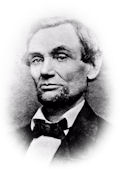
To Lyman Trumbull

SPRINGFIELD, ILLS. Dec. 24, 1860

Hon. Lyman Trumbull—

My dear Sir. I expect to be able to offer Mr. Blair a place in the cabinet; but I can not, as yet, be committed on the matter, to any extent whatever.

Despatches have come here two days in succession, that the Forts in South Carolina will be surrendered by the order, or consent at least, of the President.

I can scarcely believe this; but if it prove true, I will, if our friends at Washington concur, announce publicly at once that they are to be retaken after the inauguration. This will give the Union Men a rallying cry, and preparation will proceed somewhat on their side, as well as on the other.

Yours as ever

A. LINCOLN.

—Governor Pickens, agreeably to the ordinance of secession, issued a proclamation, proclaiming South Carolina a separate, sovereign, free, and independent State, with the right to levy war, conclude peace, negotiate treaties, leagues, or covenants, and do all acts whatever that rightly appertain to a free and independent State.—Herald, Jan. 1, 1861.

—A mass meeting was held at New Orleans to ratify the nominations of the Southern Rights candidates for the Convention. It was the largest congregation of every party ever assembled in that city. Cornelius Fellows was President, and speeches were made by Charles M. Conrad, Charles Gayare, and others, advocating immediate secession, amid unbounded enthusiasm. The Southern Marseillaise was sung as the banner of the Southern Confederacy was raised, amid reiterated and prolonged cheers for South Carolina and Louisiana.—National Intelligencer, Dec. 25.

—The election for delegates to the State Convention to meet January 7th, took place to-day. The separate State secession ticket was elected in Mobile by a thousand majority.

The election passed off quietly through the State. In many places there was no opposition; the secession ticket, in the whole State, has 50,000 majority.—Times, Dec. 25.

—Governor Moore issued a proclamation, convening the Legislature of Alabama January 14th, to provide by State laws for any emergency that may arise from the action of the secession Convention called for January 7th.

—The Speaker laid before the House of Representatives a letter signed by Messrs. McQueen, Bonham, Boyce, and Ashmore, members from South Carolina, to the effect that the act of secession passed by their State had dissolved their connection with that body, and that they should accordingly withdraw. The letter was laid on the table, and the Speaker directed the names of the South Carolina members to be retained on the roll, thus not recognizing the conduct of their State as severing their connection with the House.—(Doc. 6.)

—The Richmond Enquirer of to-day announces that President Lincoln will be forced to relinquish Washington, and suggests the propriety of the prompt interposition of Maryland and Virginia to prevent Mr. Lincoln’s inauguration at Washington, by taking possession of the capital without delay.

—Excitement at Pittsburgh, Pa., in consequence of a report that the artillery at the Alleghany arsenal was to be transferred to new forts in the southwest. A call is in circulation, addressed to the Mayor, to convene a meeting of the citizens to take action in the matter. The call is signed by prominent men of all parties. The feeling against allowing a gun to be removed south is almost unanimous.—Evening Post, Dec. 28.