Following the American Civil War Sesquicentennial with day by day writings of the time, currently 1863.

Sunday, December 26, 2010

To The Hon. S. A. DOUGLAS,

Washington, D.C.

New York, December 26, 1860

My Dear Sir,—I have not written to you during all the troubles which have overtaken us since the unfortunate result of the election.

You, whose patriotic heart beats warmly for our beloved Union, must feel deeply the terrible situation into which we have been thrown by fanatical sectionalism.

I did not like to add to your anguish by any expressions of the dark forebodings with which I look to the future. I cannot, however, refrain from expressing to you my warm and heartfelt admiration for the able and patriotic position which you have taken on Mr. Crittenden’s propositions.

In giving to them your support, and in voting for the restoration of the Missouri compromise line to be carried out to the Pacific, you have given an example of heroic and patriotic self-denial which entitles you to the gratitude of the whole American people.

I have heard your conduct commended in the warmest terms by those who opposed your nomination and election during the late campaign.

Your friends are proud to see the man of their choice rise above every other consideration but that of devotion to the Union, and regret only that your noble example has not yet been followed by any of the leaders in whose hands are now the destinies of the Republic. If your propositions, which I have read with great interest, or those of Mr. Crittenden, could but receive the unanimous-support of the Senatorial committee of thirteen, the Union might be saved, otherwise I cannot see one ray of hope.

The Republican leaders seem utterly blind to the dangers which they have begirt us all with, and though a few of the more conservative ones hold out fair promises, I do not believe that the party intends making any concessions.
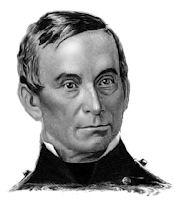
—Fort Moultrie was evacuated tonight. Previous to the evacuation, the guns were spiked and the carriages destroyed by fire. The troops have all been conveyed to Fort Sumter. Major Anderson states that he evacuated the fort in order to allay the discussion about that post, and at the same time strengthen his own position.—(Doc. 7.) The evacuation of the fort commenced a little after sundown. The men were ordered to hold themselves in readiness, with knapsacks packed, at a moment’s notice; but up to the moment of their leaving had no idea of abandoning the post. They were reviewed on parade, and were then ordered to two schooners lying in the vicinity, where they embarked, taking with them all the necessaries, stores, &c., requisite in their evacuation.

Several trips were made during the night, and a great part of the provisions and camp furniture were transported under cover of night. The brightness of the moon, however, afforded but slight concealment to their movements, and in one of the trips, Lieutenant Davis in command, a schooner full of soldiers and baggage passed directly under the bow of the guard-boat Nina. The officer who made the statement expressed himself to be ignorant whether the watch on board the Nina discovered the movement or not; at all events, he said, they did not signify any cognizance of the fact.—(Doc. 8.)—Charleston Mercury, Dec. 28.

—Messrs. Barnwell, Orr, and Adams, the Commissioners appointed by South Carolina to treat with the Federal Government, arrived in Washington to-day. This evening they have held a consultation with a few friends, among whom was Senator Wigfall, of Texas.—Boston Post, Dec. 27.

—In the Convention at Charleston, Mr. Rhett offered the following ordinance;

First.—That the Conventions of the seceding slaveholding States of the United States unite with South Carolina, and hold a Convention at Montgomery, Ala., for the purpose of forming a Southern Confederacy.

Second.—That the said seceding States appoint, by their respective Conventions or Legislatures, as many delegates as they have representatives in the present Congress of the United States, to the said Convention to be held at Montgomery; and that on the adoption of the Constitution of the Southern Confederacy, the vote shall be by States.

Third.—That whenever the terms of the Constitution shall be agreed upon by the said Convention, the same shall be submitted at as early a day as practicable to the Convention and Legislature of each State, respectively, so as to enable them to ratify or reject the said Constitution.

Fourth.—That in the opinion of South Carolina, the Constitution of the United States will form a suitable basis for the Confederacy of the Southern States withdrawing.

Fifth.—That the South Carolina Convention appoint by ballot eight delegates to represent South Carolina in the Convention for the formation of a Southern Confederacy.

Lastly.—That one Commissioner in each State be elected to call the attention of the people to this ordinance.

FORT SUMTER S. C.,
December
26, 1860—8 p.m.
(Received A. G. O., December 29.)

COLONEL: I have the honor to report that I have just completed, by the blessing of God, the removal to this fort of all of my garrison, except the surgeon, four non-commissioned officers, and seven men. We have one year’s supply of hospital stores and about four months’ supply of provisions for my command. I left orders to have all the guns at Fort Moultrie spiked, and the carriages of the 32-pounders, which are old, destroyed. I have sent orders to Captain Foster, who remains at Fort Moultrie, to destroy all the ammunition which he cannot send over. The step which I have taken was, in my opinion, necessary to prevent the effusion of blood.

Respectfully, your obedient servant,

ROBERT ANDERSON,
Major, First Artillery, Commanding.

Col. S. COOPER,
Adjutant-General.

[Telegram. ]

WAR DEPARTMENT,
Adjutant-General’s Office, December 27, 1860.

Major ANDERSON, Fort Moultrie:

Intelligence has reached here this morning that you have abandoned Fort Moultrie, spiked your guns, burned the carriages, and gone to Fort Sumter. It is not believed, because there is no order for any such movement. Explain the meaning of this report.

J. B. FLOYD,
Secretary of War.

[ Telegram. ]


CHARLESTON, December 27, 1860.

Hon. J. B. FLOYD, Secretary of War:

The telegram is correct. I abandoned Fort Moultrie because I was certain that if attacked my men must have been sacrificed, and the command of the harbor lost. I spiked the guns and destroyed the carriages to keep the guns from being used against us.

If attacked, the garrison would never have surrendered without a fight.

ROBERT ANDERSON,
Major, First Artillery.

To the Hon. J. J. CRITTENDEN

United States Senate, Washington, D.C.

New York, December 26, 1860

My Dear Sir,—Please accept my respectful thanks for the copy of your compromise propositions, which you were kind enough to send me under your frank.

I have yet to meet the first conservative Union-loving man, in or out of politics, who does not approve of them, and consider them as a most efficacious, if not the only remedy, which can save this great country from ruin and destruction.

Your patriotic course is warmly commended by the good men of all parties, and though your noble efforts may prove of no avail against the sectional fanaticism conjured up by designing politicians, the lasting gratitude of every American citizen, who has the greatness of his country at heart, is due to your statesmanlike stand in defense of the Union and the Constitution.

I am afraid that no human power can stay the evil, since the Republican leaders, by their vote in the committee of thirteen, have proved that they are determined to remain deaf to the dictates of justice and patriotism.

Will the American people permit their country to be dragged to ruin by a handful of puritanical fanatics and selfish politicians.

It cannot, it must not be! We can only look for help now to the conservative spirit of the border and middle States, and I trust that prominent and leading men, like yourself, may find early means to make a direct appeal to that spirit by a convention of those States.

I have read with much interest the pamphlet, entitled The Border States, which is attributed to the Hon. J. P. Kennedy, of Maryland. Its suggestions are practical and statesmanlike, and I hope they may find an echo in your State, and in Virginia.
