Following the American Civil War Sesquicentennial with day by day writings of the time, currently 1863.

Saturday, January 1, 2011

Washington D.C.

TUESDAY, JANUARY 1, 1861.

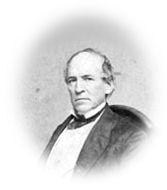
The old year passed away in gloom and sadness and the new one opens today without affording one hopeful ray of light in regard to the future. There seems to be a determination on the part of nearly the whole south to break up the Government. The Comrs from S.C. are still here and little is known in the City about what is taking place betwen them and the President & Cabinet. The “receptions” today as well as the “Calls” were few and rather solemn affairs. Pleasant day, just freezing.

______

The three diary manuscript volumes, Washington during the Civil War: The Diary of Horatio Nelson Taft, 1861-1865, are available online at The Library of  Congress.

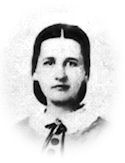
January 1st, 1861.—A New Year has come to us now. This is dear Grandmother’s birthday and, though she went to Heaven years ago, her children still meet on her anniversary and talk of her and of the days of their childhood. I like it and I never will forget when Father’s and Mother’s birthdays come. As we sat around the long table today the conversation turned on the convention, so soon to meet in Tallahassee. Father said he considered this the most momentous year in the history of the South. He is for Secession and he does not think that war will necessarily follow. Brother Junius is a strong Union man and he thinks we will certainly have war; he says we will have war in any event. If the South secedes the North will fight to keep us, and if we do not secede all our property rights will be taken from us and we will be obliged to fight to hold our own. He says he is in for the fight but he wants to fight in the Union not out of it. Father thinks it is more honorable to take an open and decided stand and let all the world know what we are doing. Everyone at table who expressed an opinion was firmly set against the Republican party. Mother says she wants the negroes freed but she wants the United States Government to make laws which will free them gradually. All agree on one point, if the negroes are freed our lands will be worthless. I wonder how it would feel to be poor and work like the people Hannah Moore writes about?

The evidences of a purpose on the part of the secessionists to seize upon the public property and usurp the Government at its capital, have become so clear that energetic measures are taking to defeat their plans, and repress the treason. Now that the Administration begins to appreciate the necessity of preserving the Government, and manifests the purpose to repudiate the treasonable influences which have hitherto paralyzed its arm, the people are beginning to report facts exposing the violent plots concocting in the District and its neighborhood.

It is now well known that military companies have been organized and drilled for months past in Maryland and Virginia—some of them under the eye of an officer of the regular army —and that the distinct object of their organization is to aid in the seizure of Washington city in the interest of the disunionists, or the prevention by force of Lincoln’s inauguration, Some of the less prudent of their leaders boast in private circles that they have five thousand well-armed and organized men ready to strike the blow instantly upon the concerted signal being given.—Times, Jan. 2.

—At Charleston, the attitude of the Administration is regarded as warlike.

A censorship is exercised over the telegraph, and the city is nightly patrolled by the military. It is proposed to starve out the troops at Fort Sumter, and then attack them on rafts with the aid of batteries already erected. There is a battery of earthwork, logs, and sand, on the end of Sullivan’s Island, and also one on Morris’ Island.

Commander Pettigru, of Castle Pinckney, orders that no boat shall be allowed to approach the wharf-head without permission, under penalty of serious consequences in case of violation. The city river-front is carefully guarded. The Palmetto Guards, 100 strong, have charge of the arsenal under the palmetto flag, instead of the Federal flag.

Collector Colcock notifies ship-masters that all vessels from and for ports outside of South Carolina must enter and clear at Charleston.

The Columbia Artillery, numbering 50 men, arrived at 1 o’clock to-day, and proceeded to the harbor. They will use cannon belonging to Charleston.—Boston Transcript, Jan. 2.

In South Carolina Convention passed an ordinance to define and punish treason. It declares that in addition to that already declared treason by the General Assembly, treason against the State shall consist only in levying war against the State, adhering to its enemies, and giving them aid and comfort. The penalty is death without the benefit of the clergy.— Evening Post, Jan. 2.

WASHINGTON, D.C., January 1, 1861.

To his Excellency the PRESIDENT OF THE UNITED STATES:

SIR: We have the honor to acknowledge the receipt of your letter of the 30th December, in reply to a note addressed by us to you on the 28th of the same month, as Commissioners from South Carolina. [click to continue…]