
—The names of William L. Yancey of Alabama, and James H. Hammond of South Carolina, appear in the Apalachicola Times of this day, as candidates for the presidency and vice-presidency of the Southern Confederacy.
Sunday, January 16, 2011
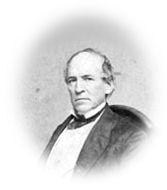
WEDNESDAY, JANUARY 16, 1861.
Another wet misty day. Splashy sidewalks and mudy crossings. Letter from Frank today through Chas dated Fort Kearney, N.T., attached to the U.S. Army acting as comdt clerk, well & healthy. The “Secession fever” seems to me to be rather subsiding. The “Secession” Clerks in the Census Bureau were notified today that they could resign, otherwise they would be dismissed. The same thing should be done in all the Departments of the Govt. Went to the Assemblys church tonight to hear Mr. Collins Lecture on Japan, but the Lecture was on So. America. It was not uninteresting. There was also a Lecture at the “Smithsonian” on the Polarization of light, but it is too far off and the walking was too bad for wife.

______
The three diary manuscript volumes, Washington during the Civil War: The Diary of Horatio Nelson Taft, 1861-1865, are available online at The Library of Congress.
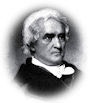
1861. January 16. — I have been kept for a week, and am still, in a state of great anxiety about the dangerous political excitements at home. The President has taken an attitude less friendly to the secessionists. This has been owing, it would seem, to the occupation of Fort Moultrie and the seizure of a revenue cutter, in the harbour of Charleston, by the South Carolina authorities. General Floyd, as Secretary of War, had pledged his honour to Governor Pickens that there should be no change in the status of the fortifications in the harbour.
Major Anderson, in command, with prudent strategy, shifted his little garrison of twenty men from Fort Moultrie to Fort Sumter. The South Carolina Commissioners at Washington protested, alleging breach of faith. Floyd demanded orders to Anderson to go back. The President declined. Governor Pickens sent militia into Fort Moultrie and seized a United States cutter. Floyd resigned on 29th of December, and his resignation was quietly accepted on the 31st by the President, who appointed Postmaster-General Holt to conduct the department until a successor was named. The President has addressed Congress, announced his determination to protect the property and collect the revenue of the United States with all the power at his disposal, and is said to have directed the frigate Brooklyn to be held in readiness at Norfolk, while two revenue cutters are proceeding to Charleston harbour, on board which a new Collector, McIntyre, of Pennsylvania, will exact the duties on imports. In the interim reinforcements are being sent to Southern garrisons, as a determination to seize them has shown itself in Georgia, Alabama, and North Carolina. These facts, if well founded, place the country in imminent risk of civil war; and if, at the bottom of the whole, there exist, as Mr. Daniel, our Minister to Turin, vehemently assured me on Monday last was the case, an immense majority in the South who desire disunion and have been preparing to accomplish it for twenty years, it would seem that a sanguinary convulsion is unavoidable. Perhaps a large movement of militia, similar to the one made by Washington in 1794 against our Whiskey Insurrection, would overawe the disaffected and restore tranquillity. Certainly, South Carolina has taken, by capturing forts and cutters, a more decisively insurrectionary character than could be attributed to the disorderly riots of Pennsylvania.
My old friend “Betsey Bonaparte” and her son have enlisted Berryer and Legrand in a trial to come of on the 25th inst., before the Court of First Instance in Paris, asserting the validity of the marriage of Jerome in Baltimore in 1803, and claiming to share in the property he has left. If the marriage be sustained, the necessary result would be the illegitimacy of Prince Napoleon and Princess Mathilde. Here is fine garbage for Imperial scandal! and “Betsey” is not one, though she can’t lack much of eighty, to shrink in the pursuit of money or to be scared by a crown.

WAR DEPARTMENT, January 16, 1861.
Maj. ROBERT ANDERSON,
First Artillery, Commanding Fort Sumter:
SIR: Your dispatch No. 17, covering your correspondence with the governor of South Carolina, has been received from the hand of Lieutenant Talbot. You rightly designate the firing into the Star of the West as “an act of war,” and one which was actually committed without the slightest provocation. Had their act been perpetrated by a foreign nation, it would have been your imperative duty to have resented it with the whole force of your batteries. As, however, it was the work of the government of South Carolina, which is a member of this confederacy, and was prompted by the passions of a highly-inflamed population of citizens of the United States, your forbearance to return the fire is fully approved by the President. Unfortunately, the Government had not been able to make known to you that the Star of the West had sailed from New York for your relief, and hence, when she made her appearance in the harbor of Charleston, you did not feel the force of the obligation to protect her approach as you would naturally have done had this information reached you.
Your late dispatches, as well as the very intelligent statement of Lieutenant Talbot, have relieved the Government of the apprehensions previously entertained for your safety. In consequence, it is not its purpose at present to re-enforce you. The attempt to do so would, no doubt, be attended by a collision of arms and the effusion of blood–a national calamity which the President is most anxious, if possible, to avoid. You will, therefore, report frequently your condition, and the character and activity of the preparations, if any, which may be being made for an attack upon the fort, or for obstructing the Government in any endeavors it may make to strengthen your command.
Should your dispatches be of a nature too important to be intrusted to the mails, you will convey them by special messengers. Whenever, in your judgment, additional supplies or re-enforcements are necessary for your safety, or for a successful defense of the fort, you will at once communicate the fact to this Department, and a prompt and vigorous effort will be made to forward them.
Very respectfully, your obedient servant,
J. HOLT.


