Following the American Civil War Sesquicentennial with day by day writings of the time, currently 1863.

Friday, January 28, 2011

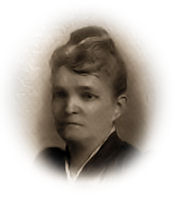
Jan. 28, Monday.—Sunday has now got to be a day of special excitement. The gentlemen save all the sensational papers to regale us with at the late Sunday breakfast. Rob opened the battle yesterday morning by saying to me in his most aggressive manner, “G., I believe these are your sentiments”; and then he read aloud an article from the “Journal des Debats” expressing in rather contemptuous terms the fact that France will follow the policy of non-intervention. When I answered: “Well, what do you expect? This is not their quarrel,” he raved at me, ending by a declaration that he would willingly pay my passage to foreign parts if I would like to go. “Rob,” said his father, “keep cool; don’t let that threat excite you. Cotton is king. Just wait till they feel the pinch a little; their tone will change.” I went to Trinity Church. Some Union people who are not Episcopalians go there now because the pastor has not so much chance to rail at the Lord when things are not going to suit: but yesterday was a marked Sunday. The usual prayer for the President and Congress was changed to the “governor and people of this commonwealth and their representatives in convention assembled.”

The city was very lively and noisy this evening with rockets and lights in honor of secession. Mrs. F., in common with the neighbors, illuminated. We walked out to see the houses of others gleaming amid the dark shrubbery like a fairy scene. The perfect stillness added to the effect, while the moon rose slowly with calm splendor. We hastened home to dress for a soirée, but on the stairs Edith said, “G., first come and help me dress Phoebe and Chloe [the negro servants]. There is a ball to-night in aristocratic colored society. This is Chloe’s first introduction to New Orleans circles, and Henry Judson, Phoebe’s husband, gave five dollars for a ticket for her.” Chloe is a recent purchase from Georgia. We superintended their very stylish toilets, and Edith said, “G., run into your room, please, and write a pass for Henry. Put Mr. D.’s name to it.” “Why, Henry is free,” I said.— “That makes no difference; all colored people must have a pass if out late. They choose a master for protection and always carry his pass. Henry chose Mr. D., but he’s lost the pass he had.” When the pass was ready, a carriage dashed up to the back-gate and the party drove off in fine style.

At the soirée we had secession talk sandwiched everywhere; between the supper, and the music, and the dance; but midnight has come, and silence, and a few too brief hours of oblivion.

______

Note: To protect Mrs. Miller’s job as a teacher in New Orleans, the diary was published anonymously, edited by G. W. Cable, names were changed and initials were often used instead of full names — and even the initials differed from the real person’s initials.
MONDAY, JANUARY 28, 1861.

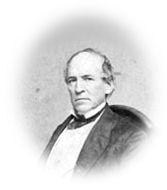
It has thawed only in the sun today but it has been bright and pleasant overhead. The day has passed without any startling news. The committee in Congress resolved to investigate the conspiracy said to exist to seize the City, or at least as far as Govt officials are concerned. Some persons in our office are said to be implicated. Many officials from States that have “seceded” are employed in all the Depts. I was at the “National” this evening. The Hotels and the Streets on the Ave. seem quite crowded at present. A collision at Pensacola (or Fort Pickens) is now expected daily. No Blood has yet been shed.

______

The three diary manuscript volumes, Washington during the Civil War: The Diary of Horatio Nelson Taft, 1861-1865, are available online at The Library of  Congress.

Post-office Department, January 28,1861.

Sir,—In answer to your letter of the 24th instant, asking if you have the right, “under existing relations,” to frank and distribute certain public documents, I have the honor to state that the theory of the administration is that the relations of South Carolina to the general Government have been in nothing changed by her recent act of secession; and this being so, you are of course entitled to the franking privilege until the first Monday in December next. If, however, as I learn is the case, you sincerely and decidedly entertain the conviction that by that act South Carolina ceased to be a member of the confederacy, and is now a foreign State, it will be for you to determine how far you can conscientiously avail yourself of a privilege the exercise of which assumes that your own conviction is erroneous, and plainly declares that South Carolina is still in the Union, and that you are still a member of the Congress of the United States.

I am, very respectfully,

your obedient servant,

Horatio King,

Acting P. M.-General.

Hon. John D. Ashmore,

Anderson, S. C.


see Franking Question

EXECUTIVE DEPARTMENT,
Montgomery, Ala., January 28, 1861.

Hon. WM. M. BROOKS, President State Convention:

SIR: The following resolution has been handed me by the secretary of the Convention:

Resolved, That his excellency the governor be requested to communicate to this Convention forthwith any information he may have in reference to the propriety of withdrawing or continuing in service the troops now at Pensacola.

In answer to the foregoing resolution, I submit the following facts: On the 19th January the following dispatch was received by Colonel Chase at Pensacola, to wit:

WASHINGTON, January 18, 1861.

Col. W. H. CHASE:

Yours received. We think no assault should be made. The possession of the fort is not worth one drop of blood to us. Measures pending unite us in this opinion. Bloodshed may be fatal to our cause.

Signed by Senators Mallory, Yulee, Slidell, Benjamin, Iverson, Hemphill, Wigfall, Clay, Fitzpatrick, and Davis.

Since the receipt of this dispatch, I have had a conference with Senator Mallory, of Florida, and Senator Fitzpatrick, of Alabama, in reference to the reasons upon which it was predicated, in which they informed me that they and Senator Slidell had a personal interview with the President and Secretary of the Navy, and were assured by them that no attack would be made upon Fort Sumter and Fort Pickens, or any excuse given for the shedding of blood, during the present administration, and that they deemed it of great importance that no attack should be made by South Carolina upon Fort Sumter, or by the troops of the seceding States upon Fort Pickens, in the present aspect of affairs. I was also informed by them that it was the policy of the Republican party to force a conflict between the Federal Government and the seceding States before the inauguration of Mr. Lincoln, so that the responsibility of commencing a war should not be cast upon him. It was further stated by Mr. Mallory that a special messenger had been sent by the Secretary of the Navy to the officer in command at Fort Pickens, directing that officer to prevent the ships which had been ordered to Pensacola from entering the bay. The officer sent was Captain Barron, of Virginia, in company with Mr. Mallory.

This is all the information now in my possession in reference to the attitude of the Federal Government and the seceding States.

In reference to the forces at Pensacola, I am informed by Colonel Chase that some companies from Mississippi, now at Pensacola, are desirous of returning home, being planters, business men, &c. He has asked me what must be done in regard to this matter. I have answered him by telegraph that the troops are under the orders of the governor of Florida, and that the governor of Alabama cannot specially interfere with the Mississippi troops.

I have also received a dispatch from his excellency J. J. Pettus, governor of Mississippi, inquiring how long the Mississippi troops were desired to remain at Pensacola. I have telegraphed him that the governors of Florida and Mississippi have alone the right to control the troops of Mississippi.

Notwithstanding it now appears from the authority above given that no attack is to be made upon the forts at Pensacola now in the possession of our forces at that point, I deem it inexpedient that all the troops should be withdrawn. It is important that we should be provided for any emergency that may occur, and that a sufficient number of troops should be drilled and ready to meet it. If the troops should all be withdrawn from Pensacola, it may have a demoralizing effect upon them and upon volunteers generally, unless kept under orders at some other point. It would be more expensive to the State to transport them to some other position and keep them under arms than to permit them to remain at Pensacola.

The withdrawal of the troops from Pensacola might induce the belief among the Black Republicans that resistance was not intended if coercion were attempted on their part, and thus give encouragement to them.

I have now briefly given the information in my possession, and also my opinion with regard to the withdrawal of the troops from Pensacola.

Very respectfully,

A. B. MOORE.

PENSACOLA, January 28, 1861.

To Hon. JOHN SLIDELL,  or, in his absence,

Hon. R. M. HUNTER, or Governor BIGLER:

We hear the Brooklyn is coming with re-enforcements for Fort Pickens. No attack on its garrison is contemplated, but, on the contrary, we desire to keep the peace, and if the present status be preserved we will guarantee that no attack will be made upon it, but if re-enforcements be attempted, resistance and a bloody conflict seem inevitable. Should the Government thus attempt to augment its force—when no possible call for it exists; when we are preserving a peaceful policy–an assault may be made upon the fort at a moment’s warning. All preparations are made. Our whole force–1,700 strong–will regard it as a hostile act. Impress this upon the President, and urge that the inevitable consequence of re-enforcement under present circumstances is instant war, as peace will be preserved if no re-enforcements be attempted. If the President wants an assurance of all I say from Colonel Chase, commanding the forces, I will transmit it at once. I am determined to stave off war if possible.

Answer promptly.

S.R. MALLORY.