Following the American Civil War Sesquicentennial with day by day writings of the time, currently 1863.

Saturday, January 29, 2011

TUESDAY 29

There are indications today that the Republicans are “coming down” from the Chicago Platform and that something like the Crittenden proposition will be accepted by them. Secession seems to be now a fixed fact and we have to look Disunion in the face, while a subversion of the Government is threatened. This City is still considered in danger. There is a thousand U.S. Soldiers now quartered here. An armed guard now tramps through the Halls of the Patent Office every night and the other Public Buildings are guarded in the same way. Warm & pleasant today.

______

The three diary manuscript volumes, Washington during the Civil War: The Diary of Horatio Nelson Taft, 1861-1865, are available online at The Library of  Congress.

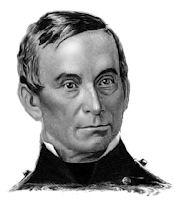
—The United States revenue cutter Robert McClelland, Captain Breshwood (a Virginian), was surrendered at New Orleans to the State of Louisiana.—Times, Feb. 8.

—Secretary Dix’s dispatch to Hemphill Jones, to “shoot on the spot” any one who attempts to “haul down the American flag” caused great enthusiasm.—(Doc. 28.)

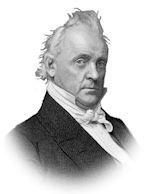
The Presidents reply to Senator Slidell’s query on Major Beauregard being relieved of command at West Point.

Washington, January 29, 1861.

My Dear Sir,—With every sentiment of personal friendship and regard, I am obliged to say, in answer to your note of Sunday, that I have full confidence in the Secretary of War, and his acts, in the line of his duty, are my own acts, for which I am responsible.

Yours very respectfully,

James Buchanan.

WAR DEPARTMENT, January 29, 1861.

Lieut. ADAM J. SLEMMER,

First Regiment Artillery, U. S. Army, Commanding Fort Pickens :

SIR: The dispatch of which the inclosed is a copy was transmitted today, and the hope is indulged that it will be received before the arrival of the Brooklyn. Lieutenant Saunders goes as the bearer of this communication in order that the Department may be assured that the dispatch has reached you safely, and has suffered no alteration in its transmission, and also that his return may afford you an opportunity of reporting fully all that has occurred in connection with your command since the transfer of your forces to Fort Pickens. In the absence of any detailed information as to the circumstances under which this movement was made, I can only commend its patriotic purpose and express the gratification felt by the Department at its success.

You are instructed to act strictly on the defensive, and avoid as far as possible a collision with the hostile troops concentrated at Pensacola and in the adjacent forts. Should you, however, be attacked you will make the best defense of which your position and resources are capable. The naval forces of the United States now at Pensacola, or which may hereafter arrive there, it is expected will cordially co-operate with you. You will observe that it is expressly understood as the basis of instructions forwarded to you that the communication between yourself and others in command at Pensacola and the Government is to be kept open and unobstructed. You will avail yourself of this provision, and report by special messenger to the Department as events may justify or require it.

In your dispatches by Lieutenant Saunders you will make known the details of the transfer of your command, the forces which you now have available for active service, the strength of your position, the character of the preparations, if any, in progress which look to an assault upon the fort, and all other matters in any manner bearing upon your ultimate safety.

Respectfully, your obedient servant,

J. HOLT,
Secretary of War.

[Inclosure.]

WASHINGTON, January 29, 1861.

To JAMES GLYNN,  commanding the Macedonian; Capt. W. S. WALKER, commanding the Brooklyn, and other naval officers in command; and Lieut. ADAM J. SLEMMER, First Regiment Artillery, U. S. Army, commanding Fort Pickens, Pensacola, Fla.:

In consequence of the assurances received from Mr. Mallory in a telegram of yesterday to Messrs. Slidell, Hunter, and Bigler, with a request it should be laid before the President, that Fort Pickens would not be assaulted, and an offer of such an assurance to the same effect from Colonel Chase, for the purpose of avoiding a hostile collision, upon receiving satisfactory assurances from Mr. Mallory and Colonel Chase that Fort Pickens will not be attacked, you are instructed not to land the company on board the Brooklyn unless said fort shall be attacked or preparations shall be made for its attack. The provisions necessary for the supply of the fort you will land. The Brooklyn and other vessels of war on the station will remain, and you will exercise the utmost vigilance and be prepared at a moment’s warning to land the company at Fort Pickens, and you and they will instantly repel an attack on the fort. The President yesterday sent a special message to Congress commending the Virginia resolutions of compromise. The commissioners of different States are to meet here on Monday, the 4th February, and it is important that during their session a collision of arms should be avoided, unless an attack should be made or there should be preparation for such an attack. In either event the Brooklyn and the other vessels will act promptly.

Your right, and that of the other officers in command at Pensacola, freely to communicate with the Government by special messenger, and its right in the same manner to communicate with yourself and them, will remain intact as the basis on which the present instruction is given.

J. HOLT,
Secretary of War.
ISAAC TOUCEY,
Secretary of the Navy.
Fort SUMTER, S.C., January 29, 1861.
(Received A. G. O., February 1.)

Col. S. COOPER,
Adjutant-General U.S. Army:

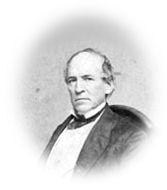
COLONEL: The South Carolinians are at work in large force on Cummings Point, apparently framing heavy timbers, for what purpose I am unable yet to state. They succeeded this morning, favored by a very high tide, in getting the Columbia off. I send herewith two slips cut from yesterday’s Mercury, which show unmistakably the animus of these people. They are determined to bring on a collision with the General Government. Everything around us shows this to be their determination and their aim. I had a contract made yesterday for the transportation of the women attached to this command. The number is much greater than the legal allowance, but under the present excited state of feeling toward our command it would not do to send to the city or to Sullivan’s Island any of the relatives of our soldiers’ wives who have been living with them. The number who will be sent (twenty) embraces those attached to the companies and the wives of the members of the band, and also the wives of the non-commissioned staff. Inclosed you will also receive the muster and pay rolls of this command, which have been signed by the husbands of the women. I will thank you to have them sent by the Pay Department to the paymaster in New York, with instructions to hand the pay to the women. I will thank you also to have the necessary instructions sent to New York for the rations, &c., for these women and children.

Very respectfully, your obedient servant,

ROBERT ANDERSON,

Major, First Artillery, Commanding.

[Inclosure No. 1.]

OBITUARY.–Died, on Saturday night, at the Marine. Hospital, Thaddeus S. Strawinski, aged 18 years and 7 days, from an accidental wound from a revolver. This promising young man was on duty in the Columbia Artillery at Fort Moultrie when the sad accident occurred. He was a noble fellow, and, just a week after entering the freshman class of the South Carolina College, with his spirited father joined the ranks at the call of the State. While on the litter being carried to the hospital he said to those who were conveying him: “Friends, O how sorry I am you are to attack Fort Sumter without me!” During his sufferings he mourned that he could not be at the taking of the fort. He was calm and resigned, and met his end prayerfully, with the Lord’s Prayer on his lips. A mother’s gentle influence soothed his  dying hour, and a soldier’s spirit nerved a fathers heart to resign his son to his Creator. The sympathy of the whole community is with them in their bereavement.

[Inclosure No. 2.]

Mr. Yeadon, from the committee of conference on the disagreeing votes of the two houses on that clause of the appropriation bill which appropriates $30,000 for dredging Maffitt’s Channel, submitted a report recommending the adoption of the following: “For deepening or otherwise improving Maffitt’s Channel, $30,000, to be drawn by and expended under the direction of a commission, as follows: Messrs. George A. Trenholm, Henry Gourdin, George N. Reynolds, W. G. De Saussure, F. I. Porcher, Hugh E. Vincent, and the mayor of Charleston ex officio: Provided, The work shall not be resumed until Fort Sumter passes into the possession of the authorities of the State, and all the troops of the United States shall be removed from the harbor of Charleston.

The report was agreed to.

Mr. Buist offered the following resolution:

Resolved, That it is the opinion of the general assembly that no sessions of courts of law or equity in this Stale should be holden so long as the Government at Washington has control of the fortress known as Fort Sumter?

Ten members objecting, the resolution was ordered for consideration on Monday.