Following the American Civil War Sesquicentennial with day by day writings of the time, currently 1863.

Monday, January 24, 2011

THURSDAY 24

There was a little snow last night and this morning it rained and the streets were in an awful condition. I did not go to the office until 10 o’clock. No news stirring. Was down at the “National” this evening. It seems to be filling up, as do all the Hotels. People seem less excited than they did, but await the events of the next month with much solicitude, but confidence is in a great measure restored and the Govt is expected to go on as usual. The Presidents Peace policy is generaly approved of as best for the time being.

______

The three diary manuscript volumes, Washington during the Civil War: The Diary of Horatio Nelson Taft, 1861-1865, are available online at The Library of  Congress.

—The Charleston Mercury continues the publication of anonymous incendiary appeals, intended to stir up the people to an attack on Fort Sumter. One, headed “Fort Sumter, the Bastion of the Federal Union,” concludes with these words:

“No longer hoping for concessions, let us be ready for war, and when we have driven every foreign soldier from our shores, then let us take our place in the glorious Republic the future promises us. Border southern States will never join us until we have indicated our power to free ourselves—until we have proven that a garrison of seventy men cannot hold the portal of our commerce. The fate of the Southern Confederacy hangs by the ensign halliards of Fort Sumter.”

—The Toronto Leader, the Government paper of Canada, this morning says it is in a position to announce in the most positive terms that it is the intention of the English Government to acknowledge the independence of the Southern Confederacy as soon as it is formed.

—The London Times, in an article on the disunion movement in America, asserts that the United States cannot “for many years be to the world what they have been.”—(Doc. 25.)

—An effort was made by the New York police to seize a quantity of fire-arms which were known to be shipped on board the steamer Montgomery. While the officers were searching on board for the arms, the captain ordered the vessel’s fasts to be cut, and she steamed away from the pier, scarcely giving the policemen time to jump ashore. The five hundred muskets found on board the schooner Caspian were returned to the captain, the authorities being satisfied that the vessel was bound to Carthagena.—Chicago Tribune.

—The United States arsenal at Augusta, Ga., was surrendered to the State authorities, upon the demand of Governor Brown.—Baltimore Sun, Jan. 25.

—The Catawba Indians of South Carolina offered their services to Governor Pickens, and were accepted.—Times, Jan. 25.

Honorable John D. Ashmore, Member of Congress from South Carolina, asks if he has the Right to the Franking Privilege, now that South Carolina has passed an Ordinance of Secession.

Anderson, S. C., Jan. 24, 1861.

My Dear Sir,—I have in my possession some one thousand to twelve hundred volumes of ” public documents,” being my proportion of the same as a member of the thirtysixth Congress. They were forwarded me in mail-sacks and are now lying in my library. Since the date of the ordinance of secession (December 20,1860) of South Carolina I have not used the franking privilege, nor will I attempt to do so without the special permission of the Department To pay the postage on these books, etc., would cost me a large sum, and one I am not prepared to expend. The books are of no use to me, but might be to my constituents, for whom they were intended, if distributed among them. Have I the right to frank and distribute them under existing relations? If so, please inform me. Having said that I have not used the franking privilege since the 20th December, I need hardly add that I shall not do so, even on a “public document,” unless you authorize it.

I am, with great respect,

Truly and sincerely yours,

J. D. Ashmore.

Hon. Horatio King,

Acting Postmaster-General.

(Answered on January 28th.)

AUGUSTA ARSENAL, GA., January 24, 1861.

SIR : I have the honor to report that the arsenal was surrendered this morning to the governor of Georgia upon honorable terms, herewith inclosed.

……….I am, sir, very respectfully, your obedient servant,

ARNOLD ELZEY,
Captain, Second Artillery.

Col. S. COOPER, Adjutant-General U. S. Army, Washington, D. C.

(Inolosure.)

AUGUSTA ARSENAL, GA., January 24, 1861.

His excellency the governor of Georgia having demanded the United States Arsenal at Augusta, commanded-by Capt. Arnold Elzey, Second Artillery, U. S. Army, the following terms are agreed upon, to wit:

1st. The flag to be saluted and lowered by the United States troops.

2d. The company to be marched out with military honors and to retain its arms and company property.

3d. The officers and soldiers to occupy quarters until removed beyond the limits of the State, and to have the use of the post transportation to and from the city and in the neighborhood, and the privilege of obtaining supplies from the city.

4th. The public property to be receipted for by the State authorities and accounted for upon adjustment between the State of Georgia and the United States of America.

5th: The troops to have unobstructed passage through and out of the State, by water, to New York, via Savannah.

JOSEPH E. BROWN,
Governor and Commander-in-Chief of the Army of the State of Georgia.
ARNOLD ELZEY,……
Captain, Second Artillery, Commanding Augusta Arsenal.
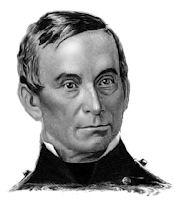
FORT SUMTER S.C., January 24, 1861.

Col. S. COOPER; Adjutant-General:

COLONEL: The storm continued until about daylight this morning. It is still cloudy, but the wind has abated sufficiently to enable our boat to take our mail over to Fort Johnson. I have written to our beef contractor in reference to furnishing us with beef, and also such vegetables as the doctor may deem suitable. The purchase of the latter will, I hope, under existing circumstances, be allowed. A letter has also been written to the agent of the New York line of steamboats about transporting our women and children to New York, where, I hope, the quartermaster will see that they are made comfortable. They will probably leave early next week.

I am, colonel, very respectfully, your obedient servant,

ROBERT ANDERSON,

Major, First Artillery, Commanding.