Following the American Civil War Sesquicentennial with day by day writings of the time, currently 1863.

Saturday, January 8, 2011

1861. January 8.—South Carolina, it appears, adopted her Ordinance of Secession on the 19th of December, unanimously. It has been hailed with exultation in most of the Southern States. Mr. Mason rather intimates that the movement is designed to compel adequate concessions from the North, or to form a basis upon which the confederacy may be reconstructed.

The first article of Blackwood’s Magazine for this month, “The Political Year,” is one of much ability. Its purpose is to depreciate the present government by special attacks on Mr. Gladstone and Lord John Russell. In the concluding paragraph I find the following: “The last news from America announces that, Lord John Russell having complained of the inactivity of the American cruisers in the suppression of the slave-trade, Mr. Dallas informed his Lordship, in October last, that ‘the British Foreign Office had better mind its own business.’ He wound up by stating that ‘the government at Washington did not require to be continually lectured as to its duty by our Foreign Secretary.’ Can anything be more absurd? We have a Foreign Secretary who writes letters and gives good advice to all the world, and who, at one time, cannot get his effusions answered, at another time gets snubbed for them, yet again finds them quoted as authorizing rebellion, and always finds himself doing more harm than good.” It is true, that, on the 24th of November, I read, as instructed, a despatch from General Cass, dated the 27th of October, to Lord John Russell. His Lordship did not like it; said that all Christendom had condemned the slave-trade, and he had a right to speak against it. I merely remarked that perhaps the serenity of the State Department at Washington would not be disturbed by one or two exhortations, but that his Lordship must be aware that too frequent recurrences in diplomatic correspondence to the obligations of humanity imply a neglect of them by those addressed, and cannot but be unacceptable. When I reported this matter to the Secretary of State, I added: “English statesmen generally have a complacent and irrepressible sense of superior morality, and are apt, without really meaning incivility, to be prodigal of their inculcations upon others.” Here is the basis of Blackwood’s remarks.
(Confidential.)

New York, Jan. 8,1861.

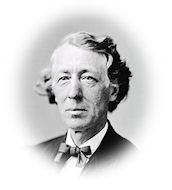
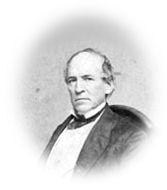
My Dear Sir,—Why is money to very large amounts being transferred to Washington? It may be all right, but it is unusual. Nearly a million of dollars has been sent on in specie within the last week. I write you in confidence. Are these transfers made by order of the President? Is he aware of them? These questions have suggested themselves to me. There is a good deal of uneasiness in regard to the Treasury Department. The Secretary and his assistant are known to be secessionists, and our capitalists, who furnish the Government with money, naturally feel a solicitude in regard to the disposition made of it. The transfers in specie have attracted attention and produced a good deal of unpleasant speculation. The Assistant Treasury Office is in Wall Street, and any considerable quantity of gold cannot be moved without being known. I met, a few days ago, a large number of boxes going out, and on inquiry I found $400,000 were going to Washington.

In haste, very truly yours,

John A. Dix.

Hon. Horatio King.

TUESDAY 8

The weather has been moderate today M[ercury]. 44 — Streets muddy, and the crossings bad. Statements that troops have been sent to reinforce Maj Anderson at Fort Sumpter created much excitement, a collision is expected. It is reported tonight that the Sec’y of Interior Mr Thompson has resigned, and also that a collision has occured at Charleston. U. S. troops have been ordered to this City to defend it if necessary. Genl Scott is here and will remain until after 4th March. 100 guns were fired today in remembrance of the Battle of New Orleans. I was at the “National” this evening, called with wife at Mr Fenwick’s on I St.

______

The three diary manuscript volumes, Washington during the Civil War: The Diary of Horatio Nelson Taft, 1861-1865, are available online at The Library of  Congress.

—The Southern Confederacy (published at Atlanta, Ga.), a paper which has been fighting most gallantly for the Union and the laws, says of the late election for members of the Georgia Convention:

“It is a notable fact, that, wherever the ‘Minute Men, as they are called, have had an organization, those counties have voted, by large majorities, for immediate secession. Those that they could not control by persuasion and coaxing, they dragooned and bullied, by threats, jeers, and sneers. By this means thousands of good citizens were induced to vote the immediate secession ticket through timidity. Besides, the towns and cities have been flooded with sensation dispatches and inflammatory rumors, manufactured in Washington city for the especial occasion. To be candid, there never has been as much lying and bullying practised, in the same length of time, since the destruction of Sodom and Gomorrah, as has been in the recent State campaign. The fault has been at Washington city; from that cess-pool have emanated all the abominations that ever cursed a free people.”

—The Baltimore Exchange says “the whole population of Maryland is united in the desire to preserve the Union; yet it may be that the people, by a blind and ill-advised course, may render the State obnoxious in future to the charge of having contributed, by her indecision and weakness, to the overthrow of the republic.”—Evening Post, Jan. 8.

—Governor Hicks, of Maryland, in a letter to J. L. Curry, Commissioner from Alabama, says he regards cooperation between the slave States as an infraction of the Constitution, which he, as Governor of Maryland, swore to support. The people of that State are firm in their friendship for the Union, and will never swerve from it; they have seen, with mortification and regret, the course taken by, South Carolina; for in their opinion it is better to use the Union for the enforcement of their rights than to break it up because of apprehensions that the provisions of the Constitution will be disregarded, and they will cling to it until it shall actually become the instrument of destruction to their rights and peace and safety. Disunion would be ruin to Maryland, and in the proposed Southern Confederacy she sees no refuge from the ills she must suffer in such an event. “Let us,” says Governor Hicks, “have our rights in the Union, and through and by the Constitution.”—Baltimore Sun.

—The N. C. troops, and persons residing in the vicinity of Forts Caswell and Johnson, took possession of those defences this day. (A correspondence on this subject took place immediately between Governor Ellis and Secretary Holt. The forts were surrendered and the State troops removed.—Doc. 17.)

—Secretary Thompson resigned his place in the Cabinet, upon learning that the Star of the West had sailed from New York with troops.

—From Charleston it is announced that the messages to Fort Sumter cannot be delivered, as there is no communication between the fort and the city.

—The Sub-Treasurer of Charleston has communicated to the Government, that the South Carolina authorities will not allow him to pay any more drafts, not even to pay Anderson’s. All the cash in his vaults is to be retained there.

—It is ascertained that all the seceding States lave drawn their quota of arms for 1861 in advance. The order from South Carolina was filled only a few days before the passage of the ordinance of secession.—Commercial, Jan. 8.

BARRANCAS BARRACKS, FLA.,
January 8, 1861.

SIR: There are rumors that the citizens of Florida and Alabama intend taking possession of the fortifications in this harbor. They have already taken those at Mobile and Savannah. I am stationed with one company (G, First Artillery) at Barrancas Barracks, having also Fort Barrancas in charge. There are no accommodations for troops in the fort. Fort Pickens (unoccupied) commands the harbor, and should that work be taken possession of, our position would be useless as far as any protection to the harbor goes. Please furnish me with orders for my direction in the case before me. I have already telegraphed to the same effect.

……….I am, sir, very respectfully, your most obedient servant,

A. J. SLEMMER,
First Lieutenant, First Artillery, Commanding.

Col. S. COOPER, Adjutant-General U. S. Army.

January 8th, 1861.—We are at home again after a day filled to overflowing with excitement and interest. We were in such a hurry to get to town that the convention had not assembled when we reached the Capitol. There were groups of men talking earnestly and there were other men running hither and thither with papers in their hands. Father has a great many friends and I stood quietly beside him while he and they discussed the situation. The ambassador from South Carolina had evidently made an impression on his audience of yesterday and somebody had been busy last night, for in every direction could be seen Palmetto cockades, fastened with a blue ribbon; there were hundreds of them. When at last the hall of representatives was opened and Father and I took our seats, Judge Gwynn came in and pinned a cockade on Father and one on me. Oh, I was so proud.

Judge McGeehee is Father’s friend and he shook hands with us as he entered the hall.

The members of the convention took their seats and Mr. Blake, our dear Mr. Blake, whom we love so well, opened the day’s session with prayer; such a beautiful prayer. I had never seen a convention until Father brought me here and it is strange to me. I wish I could tell all I heard today but the language the members used is not familiar to me and some of the things they talk about are just as new. Then, too, I am just a little girl. A message was read on the floor of the convention, from Governor Brown of Georgia, to Governor Milton. As near as I can remember it was this way: “Georgia will certainly secede. Has Florida occupied the fort?”

Mr. Sanderson was very interesting. He recounted the rights which the states retained when they delegated other rights to the general government in the Constitution. He made it so perfectly clear that all and every state had the right to withdraw from the Union, if her rights and liberty were threatened. He said the Committee on Ordinances had carefully examined into the question and they could find no reason why Florida should not exercise her right to withdraw from a compact, which now threatened her with such dire disaster. I cannot understand all the work assigned to the different committees; perhaps I am not old enough; people grow wiser as they grow older; so aunt Robinson says. I am going again tomorrow. My palmetto cockade lies on the table beside me.

[STATE OF ALABAMA,] EXECUTIVE DEPARTMENT,
January 8, 1861.

Hon. WILLIAM M. BROOKS,
President of the Convention of the State of Alabama:

In reply to a verbal communication from the body over which you preside, made by one of its members, I make the following statement:

My information in regard to Pensacola is that Governor Perry, of Florida, has informed me by dispatch that he has ordered the forts to be occupied by the troops of Florida and asks aid from Alabama.

The force at his command in West Florida is small and not sufficient to take and maintain the forts. Troops from Alabama could reach that point before the troops of East and Middle Florida. This fact, with the importance of the position to Alabama as well as to Florida, induces him to make the request, as I am informed. It is believed at Washington, in South Carolina, and Georgia, as I am advised from high sources, that it is not only the policy of the Federal Government to coerce the seceding States, but as soon as possible to put herself in position by re-enforcing all the forts in the States where secession is expected. I need not suggest the danger to Florida and Alabama that must result from permitting a strong force to get possession of these forts.

With sentiments of high consideration and respect,

A. B. MOORE.