Following the American Civil War Sesquicentennial with day by day writings of the time, currently 1863.

Sunday, January 23, 2011

WEDNESDAY 23

United States troops are quietly being brought here and are now quartered in different parts of the City. The President is undoubtedly informed of all the movements of the Traitors, and preparations are being made for the reception of any such visitors. The conspiracy has its ramifications through all the departments without a doubt. Men receiving pay from the Govt (as Clerks &c) but ready to turn against it at a moments warning. I can hardly hope that that [sic] all will be well six weeks hence. Heaven grant that it may be. Was at Willards an hour tonight.

______

The three diary manuscript volumes, Washington during the Civil War: The Diary of Horatio Nelson Taft, 1861-1865, are available online at The Library of  Congress.

HEADQUARTERS FORT JEFFERSON, TORTUGAS,
January 23, 1861.

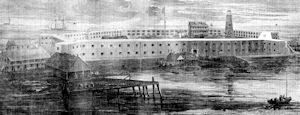
SIR: I have the honor to report for the information of the General-in-Chief that I found on my arrival here, notwithstanding the energetic, well-directed, and highly-commendable efforts of Captain Meigs, the Engineer in charge, that Fort Jefferson could not be successfully defended from a judiciously-planned and concerted attack with a formidable force without having each front of the work and each bastion armed with artillery.

By the advice of Captain Meigs I dispatched the steamer Joseph Whitney, with Captain Meigs, Engineers, and Lieutenant Benson, Second Artillery, to Key West, where there is an abundance of guns and munitions, with a letter to Captain Brannan, commanding Fort Taylor, directing him to confer with Captain Meigs, and to send me such guns, &c., as Captain Meigs might deem necessary for the immediate defense of Fort Jefferson, in order that the honor of the Government and the defense of both forts might be maintained.

I am happy to report that Captain Meigs has returned from Key West in the steamer Joseph Whitney with six 8-inch columbiads and four field pieces and an ample supply of ammunition, which, with the two field pieces I brought from Fort Independence, will enable me as soon as they are in position to make a strong defense, most probably to hold this important position–the key of the Gulf–against any force that is likely to be brought against it.

I herewith inclose a copy of Captain Meigs’ report, and I will here  take occasion to express my high sense of the services of Captain Meigs to render this fort defensible.

I am, very respectfully, your most obedient servant,

L. G. ARNOLD,
Brevet Major, U. S. Army, Commanding.

Lieut. Col. L. THOMAS,
Asst. Adj. Gen., U.S. Army, Headquarters Army, New York City.

[Inclosure.]

ENGINEER OFFICE, FORT JEFFERSON,
Harbor of Tortugas, U.S., January 23, 1861.

SIR: I have to report that I returned this morning on board the steamer Joseph Whitney, towing the Horace Beale, loaded with guns and ammunition, which I obtained from Fort Taylor. Lieutenant Benson, in whose charge you had placed the steamer, rendered me valuable assistance in embarking the heavy materials. Captain Maffit, of the U.S. steamer Crusader, to guard against every possible contingency, kindly convoyed us from Key West.

I recommend that one 8-inch columbiad be placed in the first right-curtain casemate on the right and left of bastions A, C, and E; one flanking gun in the casemate next the curtains in each bastion.

The artillerymen will be able to disembark and transport the guns and ammunition, and from the laborers of the Engineer Department all needful manual aid will be afforded. Two mules belonging to the Engineer Department are also at your service, if useful. A casemate gun and sling cart are on board the brigantine. A truck and wheelbarrow are in the Engineers’ park. The guns, I believe, can all be in place by to-night.

The Mohawk, which at my request came here on our arrival at Key West, will, I doubt not, if you desire it, remain here until the guns are in place; after which it would hardly be necessary to detain her, so far as the safety of this work is concerned, if she has other duties of importance to look after. Her presence, however, would, if she is not urgently needed elsewhere, be only a prudent and proper precaution.

I am, very respectfully and truly, your obedient servant,

M. C. MEIGS,
Captain, Engineers, Eng. in charge of Fort Jefferson.

Maj. L. G. ARNOLD,
Commanding Fort Jefferson.
WASHINGTON, D. C., January 23, 1861.

Hon. J. HOLT,  Secretary of War:

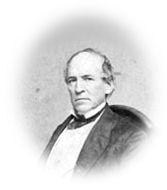
SIR: I proceeded to Pensacola, Fla., pursuant to orders received from the General-in-Chief, with dispatches to Commodore Armstrong, U. S. Navy, commanding the navy-yard at that place, and agreeably to your request submit the following statement respectfully to your notice:

On my arrival at Pensacola I, as soon as the light of day would permit, went to the beach (having learned on the cars when about twenty miles from the city that the yard had been surrendered, and that two vessels—the Wyandotte and Supply–of the U. S. Navy, were in the harbor) to make a signal to Captain Berryman, of the Wyandotte, in order to place in his hands the dispatches intended for Commodore Armstrong, the latter being a prisoner of war. I there found no sign of a naval vessel, and leaned that they were distant some seven miles. I then returned to the hotel, and after having arrived on the porch, where I had been only a few minutes, I was arrested by two persons, who said they were authorized by Colonel Chase to arrest me. They carried me to the latter’s house, where I was brought before the colonel, in the presence of some six or eight persons, and requested, or rather demanded, to surrender my dispatches, which I refused to do, as my dispatches were for Commodore Armstrong. Colonel Chase then said he would allow me to deliver them to Commodore Armstrong in the presence of Captain Randolph, then in charge of the navy-yard for the State of Florida. I proceeded to the yard in company with three troopers belonging to the State troops, and saw the commodore, who received my dispatches sealed, and they, still sealed, were demanded from him by Captain Randolph, who opened them and then forwarded them to Colonel Chase. I remained at the yard all of one day, having been placed on parole of honor not to communicate with any officer of the United States Government either at the forts or at the yard, but learned from reports and what I saw that the fort occupied by the United States had been re-enforced by some thirty or more sailors belonging to the navy-yard. The yard had been surrendered, and all the officers, with the marine guard, had been placed on their parole, and the latter had been placed on board of the Supply, to be conveyed to New York. The yard, as also Fort Barrancas, was occupied by State troops, and Fort McRee was to be occupied so soon as troops should arrive.
I left on the 15th instant, and was given by Colonel Chase the following, in order to allow me a safe passage through the country:

HEADQUARTERS PENSACOLA DISTRICT,
January 15, 1861.

Lieut. J. S. Saunders, of the Ordnance, is under parole to me, and is free to go to any part of the country he desires; and this is his safe-conduct for that purpose.

WM. H. CHASE,
Colonel, Commanding Forces of Florida.

I have the honor to remain, respectfully, your obedient servant,

JNO. S. SAUNDERS,
Brevet Second Lieutenant, Ordnance, U. S. Army.

HEADQUARTERS AUGUSTA, GA., ARSENAL,
January 23, 1861—1 o’clock p. m.

SIR: I am just officially informed by the governor of Georgia, now in Augusta, supported by a superior military force, that Georgia having resumed exclusive sovereignty over her soil, it has become his duty to require me to withdraw. the troops under my command at the earliest practicable moment from the limits of the State. He declares his intention to take possession of the arsenal, and proposes to receipt for the public property and account for the same on adjustment between the State of Georgia and the United States of America. He further declares that the retention of the troops upon the soil of Georgia after remonstrance is, under the laws of nations, an act of hostility, claiming that the State now is not only at peace but anxious to cultivate the most amicable relations with the United States Government, and that an answer from me to his demand is required at 9 o’clock a. m. to-morrow. An immediate answer to this communication is-respectfully requested.

……..Very respectfully, your obedient servant,

ARNOLD ELZEY, …….
Captain, Second Artillery, Commanding.

Col. S. COOPER, Adjutant-General U. S. Army.

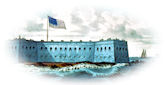
FORT SUMTER, S.C., January 23, 1861.
(Received A. G. O., January 27.)

Col. S. COOPER Adjutant-General:

COLONEL: I have the honor to send herewith a copy of the reply of the Hon. D. F. Jamison to my letter to him about supplies for this garrison and the removal of our women and children, and also a copy of my acknowledgment of the Same. I am highly gratified at the courtesy and proper tone of this reply.

The storm which was raging yesterday has continued with unabated severity up to the present moment, and has put a stop to all outdoor work, both with the South Carolinians and ourselves. It is now raining and blowing so heavily and the bay is so rough that I shall not venture to send our boat to Fort Johnson for the mail. Should the storm abate so that I can send our letters off in time for the evening mail I shall send them over. I see by the Coast Survey map that Maffitt’s and the Swash Channel are not the same. I was led into that mistake by an old pilot, who told me that Maffitt’s Channel was formerly called the Swash. I will thank you to be pleased, therefore, to erase the words “Swash or” in my letter to the honorable Secretary of War dated the 21st instant, and also to change the word “enfilade” into “defilade,” where in the same letter I am describing the work which has been recently executed at Fort Moultrie. [Corrections were made in the text.]

I am, colonel, very respectfully, &c.,

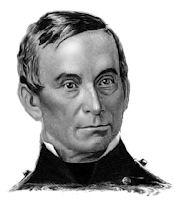
ROBERT ANDERSON,

Major, First Artillery, Commanding.

[Inclosure No. 1.]

EXECUTIVE OFFICE, DEPARTMENT OF WAR,
Charleston, January 21, 1861.

Maj. ROBERT ANDERSON:

SIR. In offering to permit you to purchase in this city, through the instrumentality of an officer of the State, such fresh supplies of provisions as you might need, his excellency the governor was influenced solely by considerations of courtesy; and if he had no other motive for refusing to any of your garrison free access to the city to procure such supplies, he would have been moved by prudential reasons for the safety of your people, in preventing a collision between them and our own citizens. As to the manner of procuring your supplies, his excellency is indifferent whether it is done by the officer referred to, or whether your market supplies are delivered to you at Fort Johnson by the butcher whom you say you have before employed. It is only insisted on that the supplies, if sent, shall be carried over in a boat under an officer of the State who takes to Fort Johnson your daily mails. His excellency desires me to say that he willingly accedes to your request as to the women and children in Fort Sumter, and that he will afford every facility in his power to enable you to remove them from the fort at any time and in any manner that will be most agreeable to them.

I am, sir, respectfully, yours,

D. F. JAMISON.

[Inclosure No. 2.]

FORT SUMTER, S. C., January 22, 1861.

Hon. D. F. JAMISON,
Executive Office, Department of War, Charleston:

SIR: I have the honor to acknowledge the receipt of your favor of the 21st instant, and to express my gratification at its tenor. I shall direct my staff officer to write to the contractor in reference to his supplying us with beef, and will communicate with you as soon as the necessary preliminaries are arranged, in order that you may then, if you please, give the requisite instructions for carrying them into effect. Be pleased to express to his excellency the governor my thanks for the kind and prompt manner in which he gave his consent to the proposed transfer of the women and children of this garrison. As there are on Sullivan’s Island the families of two of our non-commissioned officers, with their furniture, &c., and also a quantity of private property (including some musical instruments–not public property) belonging to this command, which the first commander of Fort Moultrie, Colonel De Saussure, sent me word he had collected and placed under lock and key, it will be necessary to permit the two non-commissioned officers to go to the island to assist in moving their families, &c. The lighter, it occurs to me, which will be needed to take the families to the steamer, had better go to the island for the property there before coming for the women and children here. As we are all very desirous of guarding against causing any unnecessary excitement, it will afford me great pleasure to have everything done in the most quiet way possible. I shall, consequently, cheerfully govern myself, as far as possible, by the views and wishes of his excellency in reference to this matter, and will be pleased to hear from you what they are. It is my wish, if the weather prove favorable, to ship the families in the Saturday steamer, or the first one after that day.

I am, very respectfully, your obedient servant,

ROBERT ANDERSON,

Major, First Artillery, Commanding.