Following the American Civil War Sesquicentennial with day by day writings of the time, currently 1863.

January 2011

EXECUTIVE DEPARTMENT,
Montgomery, Ala., January 4 [?], 1861.

To his Excellency JAMES BUCHANAN, President of the United States:

SIR: In a spirit of frankness I hasten to inform you by letter that by my order Fort Morgan and Fort Gaines, and the United States Arsenal at Mount Vernon were on yesterday (*) peacefully occupied, and are now held by the troops of the State of Alabama. That this act on my part may not be misunderstood by the Government of the United States, I proceed to state the motives which have induced it, and the reasons which justify it, and also the course of conduct with which I design to follow that act.

A convention of the people of this State will, in pursuance of a previously-enacted law, assemble on the 7th instant. I was fully convinced by the evidences which I had that that convention would at an early day, in the exercise of an authority which in my judgment of right belongs to it, withdraw the State of Alabama from the Government of the United States and place it in the attitude of a separate and independent power. Being thus convinced I deemed it my duty to take every precautionary step to make the secession of the State peaceful, and prevent detriment to her people.

While entertaining such a conviction as to my duty, I received such information as left but little, if any, room to doubt that the Government of the United States, anticipating the secession of Alabama, and preparing to maintain its authority within this State by force, even to the shedding of the blood and the sacrifice of the lives of the people, was about to re-enforce those forts and put a guard over the arsenal. Having that information, it was but an act of self-defense, and the plainest dictate of prudence, to anticipate and guard against the contemplated movement of the authorities of the General Government. Appreciating, as I am sure you do, the courage and spirit of our people, you must be sensible that no attempt at the coercion of the State, or at the enforcement by military power of the authority of the United States within its jurisdiction in contravention of the ordinance of secession can be effectual, unless our utmost capacity for resistance can be exhausted. It would have been an unwise policy, suicidal in its character, to have permitted the Government of the United States to have made undisturbed preparations within this State to enforce by war and bloodshed an authority which it is the fixed purpose of the people of the State to resist to the uttermost of their power. A policy so manifestly unwise would probably have been overruled by an excited and discontented people, and popular violence might have accomplished that which has been done by the State much more appropriately and much more consistently with the prospect of peace and the interests of the parties concerned.

The purpose with which my order was given and has been executed was to avoid and not to provoke hostilities between the State and Federal Government. There is no object, save the honor and independence of my State, which is by me so ardently desired as the preservation of amicable relations between this State and the Government of the United States. That the secession of the State, made necessary by the conduct of others, may be peaceful is my prayer as well as the prayer of every patriotic man in the State.

An inventory of the property in the forts and arsenal has been ordered, and the strictest care will be taken to prevent the injury or destruction of it while peaceable relations continue to subsist, as I trust they will. The forts and arsenal will be held by my order only for the precautionary purpose for which they were taken, and subject to the control of the convention of the people to assemble on the 7th instant.

……….With distinguished consideration, I am your obedient servant,

A. B. MOORE.
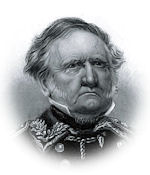
HEADQUARTERS OF THE ARMY
Washington, January 4, 1861.

Captain MEIGS,  U. S. Engineers:

SIR: With this letter you will receive one hundred muskets and accouterments complete, with one hundred rounds of cartridges for each musket, to be used in defense of Fort Jefferson if you can find hands to use them. Major Arnold with his company will probably sail from Boston on the 7th instant to garrison your work. In the mean time it is quite possible that some attempt may be made to seize the fort by an expedition sailing from Charleston, say in the Isabel, and secessionists from Florida. All that it is possible for you to do without troops we know will be performed.

WINFIELD SCOTT.

—The order for the removal of guns from the Allegheny arsenal to southern forts is revoked by the War Department, under a decision of the Cabinet.

—Fort Pulaski, at Savannah, Ga., is taken possession of by State troops, by order of the Governor.

—A book is opened in New York city, for the enrolment of volunteers to meet any demand which may be made by the Governor of the State for troops to aid in preserving the Union.—Times, Jan. 4.

—The Florida State Convention assembled at Tallahassee.

—Hon. H. Dickenson, Commissioner from Mississippi, addresses both Houses of the Delaware Legislature, inviting Delaware to join a Southern Confederacy. The House, having heard him, passed unanimously the following resolution, in which the Senate concurred:

Resolved, That, having extended to Hon. H Dickenson, Commissioner from Mississippi, the courtesy due him as a representative of a sovereign State of the Confederacy, as well as to the State he represents, we deem it proper and due to ourselves and the people of Delaware to express our unqualified disapproval of the remedy for the existing difficulties suggested by the resolutions of the Legislature of Mississippi.—Philadelphia Ledger.

—The South Carolina Commissioners left Washington for Charleston, upon the President’s declination to receive any further communication from them. They consider the abrupt termination of their business by the President an insult to themselves and their State, and treat it as a declaration of war.—(Doc.12.)

—In Washington, reports that armed bands were organizing to take possession of the capital before the votes for President and Vice President are counted, meet with general credence. General Scott is actively engaged in the preparations to put down this mob.

THURSDAY 3

The affairs of the Country appear so desperate that the subject engrosses the attention of all men in all places. Public questions are discussed in my room at the patent office full as much as applications for Patents. It is frequently asked what patents will be worth if the Union is dissolved. But applications continue to be made from both north and south, altho there is something of a falling off. Tomorrow is the Fast day recommended by the Prest of the U.S. Offices closed.

______

The three diary manuscript volumes, Washington during the Civil War: The Diary of Horatio Nelson Taft, 1861-1865, are available online at The Library of  Congress.

(Private.)

New York, Jan. 3, 1861.

My Dear Sir,—I have been so pressed with outside business during the last ten days (trying to save the Union) that I have been unable to write to you.

The first time we began to breathe freely was when Mr. Holt took Governor Floyd’s place in the War Department. The feeling here is strong and undivided in regard to sustaining the administration in its determination to stand by Major Anderson, to protect the public property, and to enforce the revenue laws. On these points the people of the Northern States are as one man; and I am satisfied the President will have with him the conservative men of all sections of the country.

I have been very busy corresponding with prominent men in and out of Congress. We must preserve the Union. Congress should do what is right, and the rest will be easy. Why cannot enabling acts be passed admitting Kansas and New Mexico, and like enabling acts dividing the residue of our territory by 36° 30′, and admitting two more States, at once, with no other restriction than that of ‘a republican form of government,’ which Congress under the Constitution is bound to guaranty? This will dispose of the whole territorial question; and all may support it without surrender of principle. What if New Mexico has a very small population ? This fact should weigh nothing against restoration of harmony and preservation of the Union.

Do not things look better? Let me hear from you.

Yours very truly,

John A. Dix.

Hon. Horatio King.

Governor Hicks, on the 3d of January, issued an address to the people of Maryland, in which he said:

I have been repeatedly warned by persons having the opportunity to know, and who are entitled to the highest confidence, that the secession leaders in Washington have resolved that the Border States, and especially Maryland, shall be precipitated into secession with the Cotton States before the 4th of March. They have resolved to seize the Federal capital and public archives, so that they may be in a position to be acknowledged by foreign governments as the United States; and the assent of Maryland is necessary, as the District of Columbia would revert to her in case of a dissolution of the Union. The plan contemplates forcible opposition to Mr. Lincoln’s inauguration, and consequently civil war upon Maryland soil, and a transfer of its horrors from the States which are to provoke it.

January 3rd, 1861. —I would not write this morning because I wanted to put down in my diary the first news of the convention. Tonight father has told me what they did; it was simply to organize and then they adjourned. Some of the delegates had not arrived and this will give them the opportunity to get to Tallahassee and present their credentials. Father says the Capitol was full of men from all over the State and they look very serious.

ORDNANCE OFFICE,
Washington, D.C., January 3, 1861.

Hon. J. HOLT,  Secretary of War:

SIR: I have the honor to acknowledge the reference to this office of a letter from the honorables Messrs. Yulee and Mallory, of the Senate, dated 2d instant, and, in compliance with their request, to report that there is only one arsenal in the State of Florida, and that is one of deposit only. It is called Apalachicola Arsenal, and is situated near the town of Chattahoochee, at the junction of the Flint and Chattahoochee Rivers. The arms, ammunition, &c., now at that post, are one 6-pounder iron gun and carriage, with 326 shot and canisters for the same, 57 flintlock muskets, 5,122 pounds of powder, 173,476 cartridges for small-arms, and a small quantity of different kinds of accouterments.

The ordnance and ordnance stores at the other military posts in Florida are as follows:

At Fort Barrancas.–Forty-four sea-coast and garrison cannon and 43 carriages, viz: Thirteen 8-inch columbiads and howitzers; two 10-inch mortars, and eleven 32, ten 24, five 18, and three 19-pounder guns; 3,152 projectiles for the same; 20,244 pounds of powder, and 2,966 cartridge bags.

At Barrancas Barracks.–A field battery, consisting of four 6-pounder guns and two 12-pounder howitzers, with carriages, and six caissons, with 300 projectiles and 270 cartridge bags for the same.

At Fort Pickens.–Two hundred and one sea-coast and garrison cannon, viz: Four 10-inch columbiads and four 10-inch mortars, fifty 8-inch and flanking howitzers, and two 42, sixty-two 32, fifty-nine 24, six 18, and fourteen 12 pounder guns, and 128 carriages for the same; also, 4,974 projectiles of all kinds; 3,195 grape-shot, loose; 500 24-pounder stands canister shot; 12,712 pounds of powder, and 1,728 cartridge bags.

At Fort Taylor.–Sixty sea-coast and garrison cannon, viz: Fifty 8-inch columbiads and ten 24-inch flanking howitzers, with caissons, and four 12-pounder field howitzers, mounted; 4,530 projectiles, suited to the guns; 34,459 pounds of powder; 2,826 cartridge bags; 962 priming tubes, and 759 cartridges for small arms.

At Fort McRee.–One hundred and twenty-five sea-coast and garrison cannon, including three 10-inch and twelve 8-inch columbiads; twenty-two 42, twenty-four 32, and sixty-four 24 pounder guns, with 64 gun carriages; 9,026 projectiles, and 1,258 stands of grape and canister, and 19,298 pounds of powder.

At Key West Barracks.–Four 6-pounder field guns and carriages; 1,101 rounds of shot and other ammunition for the same; 171 pounds of powder; 158 cartridge bags; 538 priming tubes; 7 rifles, and 2,000 rifle cartridges.

At Fort Marion.–Six field batteries, of four 6-pounder guns and two 12-pounder howitzers, and twenty sea coast and garrison cannon, viz: Four 8-inch howitzers and sixteen 32-pounder guns; also, six 6-pounder old iron guns, and 31 foreign guns of various calibers; 2,021 projectiles; 330 rounds of fixed ammunition; 873 priming tubes, and 931 pounds of powder. Also, 110 muskets, 103 rifles, 118 Hall’s carbines, 98 pistols, 147,720 cartridges for small-arms, and 15,000 percussion caps.

Very respectfully, your obedient servant,

WM. MAYNADIER,
Captain of Ordnance.

WAR DEPARTMENT,
Washington, January 3, 1861.

Hon. DAVID CLOPTON, House of Representatives:

SIR : I have the honor to acknowledge the receipt of your letter of the 15th ultimo, asking for the plat and plan of the magazines at Mount Vernon Arsenal, Alabama. In reply, I have to say that I would cheerfully comply with your request did not the interests of the service in the present condition of affairs forbid the publication of information of that description.

…………Very respectfully, your obedient servant,

J. HOLT,
Secretary of War ad interim.

.
CHARLESTON, S. C.,
January 1, 1861.

What disposition shall I make of the detachment under my command? We are very unpleasantly situated here.

F. C. HUMPHREYS,

U. S. Army.

Capt. WM. MAYNADIER,

Charge of Ordnance Bureau.

_________

ORDNANCE OFFICE,
January 2, 1861.

F. C. HUMPHREYS

U. S. Arsenal, Charleston, S.C.:

I want a report in detail of what has occurred; of the present position and condition of your command and property; as regards quarters and other accommodations, freedom of movement, and any statements or views in the matter that you may deem proper for a full understanding.

W. MAYNADIER,

Captain of Ordnance.

_________

CHARLESTON ARSENAL, S.C.,
January 3, 1861.

SIR: I received your dispatch last night and sent a reply by telegraph. I will now proceed to make a detailed report of the facts relative to the surrender of this arsenal, which I should have done before but that my time has been fully occupied in getting proper vouchers for the property recently in my charge.

On Sunday morning last Colonel Cunningham marched a strong detachment of armed men into this arsenal (having several days before entirely surrounded it outside of the inclosure) and demanded the surrender in the name of South Carolina and by order of Governor Pickens. Having no force to make a defense, I surrendered under a protest, and demanded the privilege of saluting my flag before lowering it and of taking it with me, and that the command should occupy the quarters until instructions could be received from the War Department, which was granted.

Soon after, the arsenal and magazine were both opened, and the property has been constantly issued since–arms, ammunition, accouterments, &c.

Myself and men and our families are very unpleasantly situated. There are some 200 men here constantly, and we are in actual danger from accident when so many inexperienced persons are at every turn with loaded arms. Our movements are watched and restricted, and I would earnestly request that we may be moved elsewhere. The times are so unsettled that I have not issued to my command this month either subsistence or fuel–in fact, we have no conveniences for anything, and all is confusion and turmoil.

I understand that all communication with Fort Sumter is cut off, and that a barge with its men from that post has been captured at the city wharf and are held in durance.

I am, sir, very respectfully, your most obedient servant,

F. C. HUMPHREYS,

Military Storekeeper Ordnance, U. S. Army.

Capt. WM. MAYNADIER,

In charge of Ordnance Bureau, Washington, D.C.