—Governor Pickens, of South Carolina, sent to Washington for a balance of $3,000 due him as late Minister to Russia. The Department adjusted his accounts by sending him a draft on the Charleston Sub-Treasury, the money in which has been seized by the State.
January 2011
.
.
FORT COLUMBUS, N. Y. H.,
January 13, 1861.
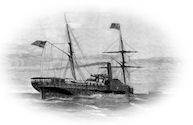
COLONEL: Pursuant to instructions, dated Headquarters of the Army, January 5, 1861, I embarked on the evening of Saturday, 5th instant, from Governor’s Island, at 6 o’clock p.m., on a steam-tug, which transferred us to the steamer Star of the West.
My command consisted of two hundred men, recruits from the depot, fifty of whom were of the permanent party. My officers were First Lieut. W. A. Webb, Fifth Infantry; Second Lieut. C. W. Thomas, First Infantry, and Assist. Surg. P. G. S. Ten Broeck, Medical Department.
On Tuesday afternoon, 8th instant, arms and ammunition were issued to all the men. About midnight same evening we arrived off Charleston Harbor, and remained groping in the dark until nearly day, when we discovered the light on Fort Sumter, which told us where we were. The other coast light marking the approaches to the harbor had been extinguished, and the outer buoy marking the channel across the bar gone.
During the night we saw what we supposed to be the light of a steamer cruising off the harbor, but she did not discover us, as our lights were all out. Just before day we discovered a steamer lying off the main ship channel. As soon as they made us out they burned one blue light and two red lights, and, receiving no response from us, immediately steamed up the channel. As soon as we had light enough we crossed the bar, and steamed up the main ship channel. This was on the first of the ebb tide, the steamer ahead of us firing rockets and burning lights as she went up. We proceeded without interruption until we arrived within one and three-quarter miles of Forts Sumter and Moultrie–they being apparently equidistant–when we were opened on by a masked battery near the north end of Morris Island. This battery was about five-eighths of a mile distant from us, and we were keeping as near into it as we could, to avoid the fire of Fort Moultrie. Before we were fired upon we had discovered a red palmetto flag flying, but could see nothing to indicate that there was a battery there.
We went into the harbor with the American ensign hoisted on the flagstaff, and as soon as the first shot was fired a full-sized garrison flag was displayed at our fore, but the one was no more respected than the other. We kept on, still under the fire of the battery, most of the balls passing over us, one just missing the machinery, another striking but a few feet from the rudder, while a ricochet shot struck us in the fore-chains, about two feet above the water line, and just below where the man was throwing the lead. The American flag was flying at Fort Sumter, but we saw no flag at Fort Moultrie, and there were no guns fired from either of these fortifications.
Finding it impossible to take my command to Fort Sumter, I was obliged most reluctantly to turn about, and try to make my way out of the harbor before my retreat should be cut off by vessels then in sight, supposed to be the cutter Aiken, coming down the channel in tow of a steamer, with the evident purpose of cutting us off. A brisk fire was kept up on us by the battery as long as we remained within range, but, fortunately, without damage to us, and we succeeded in recrossing the bar in safety, the steamer touching two or three times. Our course was now laid for New York Harbor, and we were followed for some hours by a steamer from Charleston for the purpose of watching us.
During the whole trip downward the troops were kept out of sight whenever a vessel came near enough to us to distinguish them, and the morning we entered the harbor of Charleston they were sent down before daylight, and kept there until after we got out of the harbor again. From the preparations that had been made for us I have every reason to believe the Charlestonians were perfectly aware of our coming.
We arrived in New York Harbor on the morning of the 12th instant, and disembarked at 8 o’clock this morning, the 13th, by orders from Headquarters of the Army.
The conduct of the officers and men under my command during the whole trip, and particularly while under fire, was unexceptionable.
Capt. John McGowan, commanding the steamer Star of the West, deserves the highest praise for the energy, perseverance, and ability displayed in trying to carry out his orders to put the troops in Fort Sumter. He was ably assisted by Mr. Walter Brewer, the New York pilot taken from this place.
I am, colonel, very respectfully, your obedient servant,
CHAS. R. WOODS,
First Lieutenant, Ninth Infantry, Commanding.
Col. L. THOMAS,
Assistant Adjutant-General, U.S.A., Washington. D.C.
SATURDAY 12
Mr Sewards Speech is the great event of the day. Did not hear it. The Senate Chamber was crowded by 9 o’clock. Got letter from Julia through Chas. Wrote her today. Hardly know how to get her Home, or (in fact) whether it is best for her to come here to Washington at this Crisis. Went round to the Hotels this evening. Gave Mr Hoard M.C. from N.Y. name of exmr in Pat office who got pay in advance and then “Seceded” (R. R. Rhodes of Mississippi). Pay Clerk Hugh McCormick, all unlawful. The indications now are that Virginia & Maryland will both “secede.” Cold and windy today. Temperature about the same as yesterday.

______
The three diary manuscript volumes, Washington during the Civil War: The Diary of Horatio Nelson Taft, 1861-1865, are available online at The Library of Congress.
—The Star of the West arrived at New York, having failed to land her troops at Fort Sumter. The Captain reported that unexpected obstacles in the removal of buoys, lights, and ranges, which, though he arrived in the night, compelled him to wait till daybreak outside the harbor, rendered a successful entrance impossible.—(Doc. 21.)
—Senator Seward, in his place in the Senate, spoke upon the present troubles of the country, and avowed his “adherence to the Union, in its integrity and with all its parts; with his friends, with his party, with his State, or without either, as they may determine; in every event, whether of peace or of war; with every consequence of honor or dishonor, of life or death.” He said that “Union is not less the body than liberty is the soul of the nation.” The speech is denounced by both extremes, and is understood by the Southerners to mean “coercion,” while the political friends of the Senator consider it a relinquishment of his principles.—Times, Jan. 18.
Four Barrancas and the navy yard at Pensacola, were seized. The late commandant of the navy yard, in a dispatch to Government, says:
“Armed bodies of Florida and Alabama troops appeared before the gate of the navy yard, and demanded possession. Having no means of resistance, I surrendered and hauled down my flag. They are now in possession.”
A dispatch to the Florida senators announced the same as follows:
“We repaired down here and captured Fort Barrancas and navy yard, and then paroled the officers, granting them permission to continue to occupy their quarters. We are now in possession. This move was in consequence of the Government garrisoning Fort Pickens, which has before remained unoccupied. You will propose to the Administration, resuming the status quo ante bellum and we will immediately evacuate.”
The Pensacola navy yard contains a hundred and fifty-six thousand dollars’ worth of ordnance stores.—Richmond Enquirer, Jan. 14.
—Artillery were ordered to Vicksburg by the Governor early this morning, to hail and question passing boats on the Mississippi river.
A salute of fifteen guns was fired last night at Jackson, on the reception of the news from Alabama and Florida.—Raleigh Standard, Jan. 14.
.
.
NEW YORK HARBOR,
January 12, 1861.
COLONEL: I have the honor to report that I reached this post at 8½ o’clock this morning with my command, having been unable to reach Fort Sumter. I will make a detailed report without delay.
I am, colonel, very respectfully, your obedient servant,
CHARLES R. WOODS,
First Lieutenant, Ninth Infantry.
Col. H. L. SCOTT, A. D.C.
EXECUTIVE DEPARTMENT,
Raleigh, January 12, 1861.
His Excellency JAMES BUCHANAN,
………………….. President of the United States:
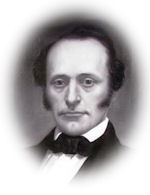
SIR: Reliable information has reached this Department that on the 9th instant Forts Johnston and Caswell were taken possession of by State troops and persons resident in that vicinity, in an irregular manner. Upon the receipt of this information I immediately issued a military order requiring the forts to be restored to the authorities of the United States, which order will be executed this day.
My information satisfies me that this popular outbreak was caused by a report very generally credited, but which, for the sake of humanity, I hope is not true, that it was the purpose of the administration to coerce the Southern States, and that troops were on their way to garrison the Southern forts and to begin the work of our subjugation. This impression is not yet erased from the public mind, which is deeply agitated at the bare contemplation of so great an indignity and wrong, and I now most earnestly appeal to your Excellency to strengthen my hands in my efforts to preserve the public order here by placing it in my power to give public assurances that no measures of force are contemplated towards us.
Your Excellency will therefore pardon me for asking whether the United States forts in this State will be garrisoned with Federal troops during your administration? This question I ask in perfect respect, and with an earnest desire to prevent consequences which I know would be regretted by your Excellency as much as myself. Should I receive assurances that no troops will be sent to this State prior to 4th March next, then all will be peace and quiet here, and the property of the United States will be fully protected as heretofore. If, however I am unable to get such assurances, I will not undertake to answer for the consequences.
The forts in this State have long been unoccupied, and their being garrisoned at this time will unquestionably be looked upon as a hostile demonstration, and will, in my opinion, be certainly resisted.
Believing your Excellency to be sincerely desirous of preserving peace and preventing the effusion of the blood of your countrymen. I have deemed it my duty to yourself, as well as to the people of North Carolina, to make the foregoing inquiry, and to acquaint you with the state of the public mind here.
………………..Very respectfully, your obedient servant,
JOHN W. ELLIS.
CINCINNATI, January 12, 1861.
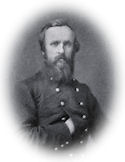
DEAR UNCLE:—I will write oftener hereafter. I have some work, the days are short, and the state of the country is a never-ending topic which all you meet must discuss, greatly to the interruption of regular habits. I rather enjoy the excitement, and am fond of speculating about it.
We are in a revolution; the natural ultimate result is to divide us into two nations, one composed of free States, the other of slave States. What we shall pass through before we reach this inevitable result is matter for conjecture. While I am in favor of the Government promptly enforcing the laws for the present, defending the forts and collecting the revenue, I am not in favor of a war policy with a view to the conquest of any of the slave States; except such as are needed to give us a good boundary. If Maryland attempts to go off, suppress her in order to save the Potomac and the District of Columbia. Cut a piece off of western Virginia and keep Missouri and all the Territories.
To do this we shall not need any long or expensive war, if the Government does its duty. A war of conquest we do not want. It would leave us loaded with debt and would certainly fail of its object. The sooner we get into the struggle and out of it the better.
There, you can read that perhaps. If you can’t, you lose nothing. If you can, it is no more worthless than the dispatches from Congress.
Sincerely,
R. B. HAYES.
S. BIRCHARD.
FRIDAY 11
Yesterdays Telegraphic news was incorrect as to Maj Anderson. The “Inteligencer” this morning publishes a letter from an ex-Congressman from the south exposing the treasonable proceedings at their Secret meetings of the Senators from the Cotton States now here. Yulee (brother of the Senator from Fla) in my room today said they were acting from patriotic motives. I denounced them as conspirators and traitors. Y “looked daggers” but was silent. Whitaker (from S.C.) looked blank. He is our 2nd assistant and is emphaticaly a “literary know nothing.” No particular news today. Treason is rife in the City, and we know not what a day may bring forth. A pretty cold day. M. about 20.
______
The three diary manuscript volumes, Washington during the Civil War: The Diary of Horatio Nelson Taft, 1861-1865, are available online at The Library of Congress.
—To-day a party of Louisiana State troops, under command of Captain Bradford, took possession of the United States Marine Hospital, about two miles below New Orleans. The patients in the Hospital, numbering two hundred and sixteen, were ordered to be removed; those who are convalescent, immediately, and those who are confined to their beds, as soon as possible. The reason assigned for this inhuman action is that the authorities want the quarters for their own troops.
—A Union meeting was held at Wilmington, N. C., this evening, which was attended by over one thousand persons.—Evening Post, Jan. 15.
—Florida and Alabama adopted ordinances of secession; Florida passed her ordinance by a vote of 62 to 7, and Alabama by yeas 61, nays 39. The Alabama Convention was far from unanimous; a large part of that State is decidedly opposed to extreme measures.
The Alabama ordinance of secession cells upon the people of all the Southern States to meet in convention at Montgomery, on the 4th of February next, for the purpose of forming a provisional or permanent government. Immediately after the passage of the ordinance, an immense mass meeting was held in front of the capitol; a secession flag, presented by the women of Montgomery, was raised on the State House, cannon were fired, guns fired, etc., and in the evening the whole town was illuminated.—(Doc. 19.)—Evening Post, Jan. 12.
—Judge Jones, of the United States District Court, this afternoon announced from the windows of the court-room in the custom-house building, at Mobile, that the United States Court for the Southern District of Alabama was “adjourned forever.”
Mr. George M. Brewer, of the same place, gave one hundred cords of wood for the use of the garrison at Fort Morgan, and proffered the services of twenty negro men as laborers on the works.—Mobile Advertiser, Jan. 12.
At Richmond, Va., a banquet was given to John B. Floyd, late Secretary of the Navy. That gentleman made a speech, wherein he related a conversation with the President, which he claimed showed a breach of faith on the part of the latter, leading to the former’s resignation. He also counselled resistance to Federal coercion. Speeches were made by Lieutenant-Governor Montague, Attorney-General Tucker, and others. The policy of the Legislature was severely commented upon.
—Abolitionists attempted to hold a meeting at Rochester, N. Y. It was broken up by citizens, and resolutions in favor of the Union were passed, and cheers given for General Scott and Major Anderson. A flag bearing the inscription, “No compromise with slavery,” was not allowed to be suspended across Buffalo street. The authorities prevented a general riot. —N. Y. Herald, Jan. 12.
—Both branches of the New York Legislature adopted strong Union resolutions, tendering the assistance of the State to the President, and ordered them sent to the President, and the Governors of all the States.—(Doc. 20.)
FORT CASWELL, N. C., January 11, 1861.
SIR: I have the honor to report herewith that this post is reoccupied by a party of citizens from Wilmington and Smithville. They took possession at 7 o’clock on the night of the 10th instant. The individual who represents them as commanding officer is a Mr. Hedrick, from Wilmington; he has signed receipts to me for all the ordnance stores at the post, and is using such of them as he needs.
I would have used every effort to communicate this matter to the Department before this, only that Sergeant-Reilly was pleased to write on the night of its occurrence. Please send me instructions how I am to act, and if I am to receive what portion of the stores that is left; and how I am to expend the property they have destroyed, in the event of my receiving the stores back.
…………..I am, sir, very respectfully, your obedient servant,
FREDERICK DARDINGKILLER,
Ordnance Sergeant, U. S. Army.
Col. S. COOPER,
Adjutant-General, U. S. Army, Washington, D. C.


