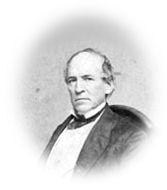
 Note: This particular diary entry—a document written in 1861—includes terms and topics that may be offensive to many today. No attempt will be made to censor or edit 19th century material to today’s standards.
June 5th.—The smart negro who waited on me this morning spoke English. I asked him if he knew how to read and write.—”We must not do that, sir.” “Where were you born?”—” I were raised on the plantation, Massa, but I have been to New Orleens;” and then he added, with an air of pride, “I sp’ose, sir, Massa Burnside not take less than 1500 dollars for me.” Downstairs to breakfast, the luxuries of which are fish, prawns, and red meat which has been sent for to Donaldsonville by boat rowed by an old negro. Breakfast over, I walked down to the yard, where the horses were waiting, and proceeded to visit the saccharine principality. Mr. Seal, the overseer of this portion of the estate, was my guide, if not philosopher and friend. Our road lay through a lane formed by a cart-track, between fields of Indian corn just beginning to flower—as it is called technically, to “tassel”—and sugar-cane. There were stalks of the former twelve or fifteen feet in height, with three or four ears each, round which the pea twined in leafy masses. The maize affords food to the negro, and the husks are eaten by the horses and mules, which also fatten on the peas in rolling time.
The wealth of the land is inexhaustible: all the soil requires is an alternation of maize and cane; and the latter, when cut in the stalk, called “ratoons,” at the end of the year, produces a fresh crop, yielding excellent sugar. The cane is grown from stalks which are laid in pits during the winter till the ground has been ploughed, when each piece of cane is laid longitudinally on the ridge and covered with earth, and from each joint of the stalk springs forth a separate sprout when the crop begins to grow. At present the sugar-cane is waiting for its full development, but the negro labor around its stem has ceased. It is planted in long continuous furrows, and although the palm-like tops have not yet united in a uniform arch over the six feet which separates row from row, the stalks are higher than a man. The plantation is pierced with wagon roads, for the purpose of conveying the cane to the sugar-mills, and these again are intersected by and run parallel with drains and ditches, portions of the great system of irrigation and drainage, in connection with a canal to carry off the surplus water to a bayou. The extent of these works may be estimated by the fact that there are thirty miles of road and twenty miles of open deep drainage through the estate, and that the main canal is fifteen feet wide, and at present four feet deep; but in the midst of this waste of plenty and wealth, where are the human beings who produce both? One must go far to discover them; they are buried in sugar and in maize, or hidden in negro quarters. In truth, there is no trace of them, over all this expanse of land, unless one knows where to seek; no “ploughboy whistles o’er the lea;” no rustic stands to do his own work, but the gang is moved off in silence from point to point, like a corps d’armée of some despotic emperor manœuvring in the battle-field.
Admitting everything that can be said, I am the more persuaded, from what I see, that the real foundation of slavery in the Southern States lies in the power of obtaining labor at will at a rate which cannot be controlled by any combination of the laborers. Granting the heat and the malaria, it is not for a moment to be argued that planters could not find white men to do their work if they would pay them for the risk. A negro, it is true, bears heat well, and can toil under the blazing sun of Louisiana, in the stifling air between the thick-set sugar-canes, but the Irishman who is employed in the stoke-hole of a steamer is exposed to a higher temperature and physical exertion even more arduous. The Irish laborer can, however, set a value on his work; the African slave can only determine the amount of work to be got from him by the exhaustion of his powers. Again, the indigo planter in India, out from morn till night amidst his ryots, or the sportsman toiling under the midday sun through swamp and jungle, proves that the white man can endure the utmost power of the hottest sun in the world as well as the native. More than that, the white man seems to be exempt from the inflammatory disease, pneumonia, and attacks of the mucous membrane and respiratory organs to which the blacks are subject; and if the statistics of negro mortality were rigidly examined, I doubt that they would exhibit as large a proportion of mortality and sickness as would be found amongst gangs of white men under similar circumstances. But the slave is subjected to rigid control; he is deprived of stimulating drinks in which the free white laborer would indulge; and he is obliged to support life upon an antiphlogistic diet, which gives him, however, sufficient strength to execute his daily task.
It is in the supposed cheapness of slave labor and its profitable adaptation in the production of Southern crops, that the whole gist and essence of the question really lie. The planter can get from the labor of a slave for whom he has paid £200, a sum of money which will enable him to use up that slave in comparatively a few years of his life, whilst he would have to pay to the white laborer a sum that would be a great apparent diminution of his profits, for the same amount of work. It is calculated that each field-hand, as an able-bodied negro is called, yields seven hogsheads of sugar a year, which, at the rate of fourpence a pound, at an average of a hogshead an acre, would produce to the planter £140 for every slave. This is wonderful interest on the planter’s money; but he sometimes gets two hogheads an acre, and even as many as three hogsheads have been produced in good years on the best lands; in other words, two and a quarter tons of sugar and refuse stuff, called “bagasse” have been obtained from an acre of cane. Not one planter of the many I have asked has ever given an estimate of the annual cost of a slave’s maintenance; the idea of calculating it never comes into their heads.
Much depends upon the period at which frost sets in; and if the planters can escape till January without any cold to nip the juices and the cane, their crop is increased in value each day; but it is not till October they can begin to send cane to the mill, in average seasons; and if the frost does not come till December, they may count upon the fair average of a hogshead of 1200 pounds of sugar to every acre.
The labor of ditching, trenching, cleaning the waste lands, and hewing down the forests is generally done by Irish laborers, who travel about the country under contractors, or are engaged by resident gangsmen for the task. Mr. Seal lamented the high prices of this work; but then, as he said, “It was much better to have Irish to do it, who cost nothing to the planter if they died, than to use up good field-hands in such severe employment.” There is a wonderful mine of truth in this observation. Heaven knows how many poor Hibernians have been consumed and buried in these Louisianian swamps, leaving their earnings to the dramshop keeper and the contractor, and the results of their toil to the planter. This estate derives its name from an Indian tribe called Houmas; and when Mr. Burnside purchased it for £300,000 he received in the first year £63,000 as the clear value of the crops on his investment.
The first place I visited with the overseer was a new sugar-house, which negro carpenters and masons were engaged in erecting. It would have been amusing had not the subject been so grave, to hear the overseer’s praises of the intelligence and skill of these workmen, and his boast that they did all the work of skilled laborers on the estate, and then to listen to him, in a few minutes, expatiating on the utter helplessness and ignorance of the black race, their incapacity to do any good, or even to take care of themselves.
There are four sugar-houses on this portion of Mr. Burnside’s estate, consisting of grinding-mills, boiling-houses, and crystallizing sheds.
The sugar-house is the capital of the negro quarters, and to each of them is attached an enclosure, in which there is a double row of single-storied wooden cottages, divided into two or four rooms. An avenue of trees runs down the centre of the negro street, and behind each hut are rude poultry-hutches, which, with geese and turkeys and a few pigs, form the perquisites of the slaves, and the sole source from which they derive their acquaintance with currency. Their terms are strictly cash. An old negro brought up some ducks to Mr. Burnside last night, and offered the lot of six for three dollars. “Very well, Louis; if you come to-morrow, I’ll pay you.” “No, massa; me want de money now.” “But won’t you give me credit, Louis? Don’t you think I’ll pay the three dollars?” “Oh, pay some day, massa, sure enough. Massa good to pay de tree dollar; but this nigger want money now to buy food and things for him leetle famly. They will trust massa at Donaldsville, but they won’t trust this nigger.” I was told that a thrifty negro will sometimes make ten or twelve pounds a year from his corn and poultry; but he can have no inducement to hoard; for whatever is his, as well as himself, belongs to his master.
Mr. Seal conducted me to a kind of forcing-house, where the young negroes are kept in charge of certain old crones too old for work, whilst their parents are away in the cane and Indian corn. A host of children of both sexes were seated in the verandah of a large wooden shed, or playing around it, very happily and noisily. I was glad to see the boys and girls of nine, ten, and eleven years of age were at this season, at all events, exempted from the cruel fate which befalls poor children of their age in the mining and manufacturing districts of England. At the sight of the overseer the little ones came forward in tumultuous glee, babbling out, “Massa Seal,” and evidently pleased to see him.
As a jolly agriculturist looks at his yearlings or young beeves, the kindly overseer, lolling in his saddle, pointed with his whip to the glistening fat ribs and corpulent paunches of his woolly-headed flock. “There’s not a plantation in the State,” quoth he, “can show such a lot of young niggers. The way to get them right is not to work the mothers too hard when they are near their time; to give them plenty to eat, and not to send them to the fields too soon.” He told me the increase was about five per cent, per annum. The children were quite sufficiently clad, ran about round us, patted the horses, felt our legs, tried to climb up on the stirrup, and twinkled their black and ochrey eyes at Massa Seal. Some were exceedingly fair; and Mr. Seal, observing that my eye followed these, murmured something about the overseers before Mr. Burnside’s time being rather a bad lot. He talked about their color and complexion quite openly; nor did it seem to strike him that there was any particular turpitude in the white man who had left his offspring as slaves on the plantation.
A tall, well-built lad of some nine or ten years stood by me, looking curiously into my face. “What is your name?” said I. “George,” he replied. “Do you know how to read or write?” He evidently did not understand the question. “Do you go to church or chapel?” A dubious shake of the head. “Did you ever hear of our Saviour?” At this point Mr. Seal interposed, and said, “I think we had better go on, as the sun is getting hot,” and so we rode gently through the little ones; and when we had got some distance he said, rather apologetically, “We don’t think it right to put these things into their heads so young, it only disturbs their minds, and leads them astray.”
Now, in this one quarter there were no less than eighty children, some twelve and some even fourteen years of age. No education—no God—their whole life—food and play, to strengthen their muscles and fit them for the work of a slave. “And when they die?” “Well,” said Mr. Seal, “they are buried in that field there by their own people, and some of them have a sort of prayers over them, I believe.” The overseer, it is certain, had no fastidious notions about slavery; it was to him the right thing in the right place, and his summum bonum was a high price for sugar, a good crop, and a healthy plantation. Nay, I am sure I would not wrong him if I said he could see no impropriety in running a good cargo of regular black slaves, who might clear the great backwood and swampy undergrowth, which was now exhausting the energies of his field-hands, in the absence of Irish navvies.
Each negro gets 5 lbs. of pork a week, and as much Indian corn bread as he can eat, with a portion of molasses, and occasionally they have fish for breakfast. All the carpenters and smiths’ work, the erection of sheds, repairing of carts and ploughs, and the baking of bricks for the farm buildings, are done on the estate by the slaves. The machinery comes from tho manufacturing cities of the North; but great effort are made to procure it from New Orleans, where factories have been already established. On the borders of the forest the negroes are allowed to plant corn for their own use, and sometimes they have an overplus, which they sell to their masters. Except when there is any harvest pressure on their hands, they have from noon on Saturday till dawn on Monday morning to do as they please, but they must not stir off the plantation on the road, unless with special permit, which is rarely granted.
There is an hospital on the estate, and even shrewd Mr. Seal did not perceive the conclusion that was to be drawn from his testimony to its excellent arrangements. “Once a nigger gets in there, he’d like to live there for the rest of his life.” But are they not the happiest, most contented people in the world—at any rate, when they are in hospital? I declare that to me the more orderly, methodical, and perfect the arrangements for economizing slave labor—regulating slaves—are, the more hateful and odious does slavery become. I would much rather be the animated human chattel of a Turk, Egyptian, Spaniard, or French creole, than the laboring beast of a Yankee or of a New England capitalist.
When I returned back to the house I found my friends enjoying a quiet siesta, and the rest of the afternoon was devoted to idleness, not at all disagreeable with a thermometer worthy of Agra. Even the mocking-birds were roasted into silence, and the bird which answers to our rook or crow sat on the under branches of the trees, gaping for air with his bill wide open. It must be hot indeed when the mocking-bird loses his activity. There is one, with its nest in a rose-bush trailed along the verandah under my window, which now sits over its young ones with outspread wings, as if to protect them from being baked; and it is so courageous and affectionate, that when I approach quite close, it merely turns round its head, dilates its beautiful dark eye, and opens its beak, within which the tiny sharp tongue is saying, I am sure, “Don’t for goodness sake disturb me, for if you force me to leave, the children will be burned to death.”