Following the American Civil War Sesquicentennial with day by day writings of the time, currently 1863.

Monday, June 6, 2011


Note: This letter—a document written in 1861—includes terms and topics that may be offensive to many today.  No attempt will be made to censor or edit 19th century material to today’s standards.

Cairo, June 9, 1861.

I have been over to Bird’s Point this morning for the first time. They have thrown up breastworks and dug a deep ditch outside of them, making a pretty strong camp. We don’t apprehend a shade of a fuss here but the officers are making as much preparation as if a Waterloo No. 2 were coming. I went to old Bird’s house this morning. It is just like the pictures we have seen in Harper’s of southern planters’ homes. A wide, railed porch extends around two sides of the house from the floor of each story. On the lower porch sat Bird and his family talking with a number of officers and their ladies. Looked very pleasant. Back of the house were the quarters filled with 46 of the ugliest, dirtiest niggers I ever saw, dressed in dirty white cotton. Awful nasty! The soldiers at the point have plenty of shade. We have but one tree on our grounds. The boys took a lot of ammunition from Bird the other day, and also another lot from a nest five miles back in Missouri. It was all given back, however, as private property. Our whole brigade of six regiments had a parade yesterday. We are all uniformed now and I think we made a respectable appearance. The general gave us a special notice. Are the Canton boys going or not? Do they drill? We have been sleeping on hay up to this week, but have thrown it away, and now have but the bare boards. The change has been so gradual from featherbed at home to plank here that I can’t think where it troubled me the least. I had a mattress in Peoria, straw in Springfield, and hay here. Our living is now very good. Fresh beef every day, potatoes, rice and beans.

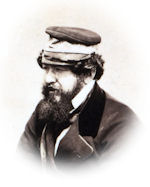
Post image for William Howard Russell’s Diary: Spirits in the morning.—Breakfast.—More slaves.—Creole planters.
Note: This particular diary entry—a document written in 1861—includes terms and topics that may be offensive to many today.  No attempt will be made to censor or edit 19th century material to today’s standards.

June 6th.—My chattel Joe, “adscriptus mihi domino,” awoke me to a bath of Mississippi water with huge lumps of ice in it, to which he recommended a mint-julep as an adjunct. It was not here that I was first exposed to an ordeal of mint-julep, for in the early morning a stranger in a Southern planter’s house may expect the offer of a glassful of brandy, sugar, and peppermint beneath an island of ice—an obligatory panacea for all the evils of climate. After it has been disposed of, Pompey may come up again with glass number two: “Massa say fever very bad this morning —much dew.” It is possible that the degenerate Anglo-Saxon stomach has not the fine tone and temper of that of an Hibernian friend of mine, who considered the finest thing to counteract the effects of a little excess was a tumbler of hot whiskey and water the moment the sufferer opened his eyes in the morning. Therefore, the kindly offering may be rejected. But on one occasion before breakfast the negro brought up mint-julep number three, the acceptance of which he enforced by the emphatic declaration, “Massa says, sir, you had better take this, because it’ll be the last he make before breakfast.”

Breakfast is served: there is on the table a profusion of dishes—grilled fowl, prawns, eggs and ham, fish from New Orleans, potted salmon from England, preserved meats from Prance, claret, iced water, coffee and tea, varieties of hominy, mush, and African vegetable preparations. Then come the newspapers, which are perused eagerly with ejaculations, “Do you hear what they are doing now—infernal villains! that Lincoln must be mad!” and the like. At one o-clock, in spite of the sun, I rode out with Mr. Lee, along the road by the Mississippi, to Mr. Burnside’s plantation, called Orange Grove, from a few trees which still remain in front of the overseer’s house. We visited an old negro, called “Boatswain,” who lives with his old wife in a wooden hut close by the margin of the Mississippi. His business is to go to Donaldsonville for letters, or meat, or ice for the house—a tough row for the withered old man. He is an African born, and he just remembers being carried on board ship and taken to some big city before he came upon the plantation.

“Do you remember nothing of the country you came from, Boatswain?” “Yes, sir. Jist remember trees and sweet things my mother gave me, and much hot sand I put my feet in, and big leaves that we play with—all us little children—and plenty to eat, and big birds and shells.” “Would you like to go back, Boatswain?” “What for, sir? no one know old Boatswain there. My old missus Sally inside.” “Are you quite happy, Boatswain?” “I’m getting very old, massa. Massa Burnside very good to Boatswain, but who care for such dam old nigger? Golla Mighty gave me fourteen children, but he took them all away again from Sally and me. No budy care much for dam old nigger like me.”

Further on Mr. Seal salutes us from the verandah of his house, but we are bound for overseer Gibbs, who meets us, mounted, by the roadside—a man grim in beard and eye, and silent withal, with a big whip in his hand and a large knife stuck in his belt. He leads us through a magnificent area of cane and maize, the latter towering far above our heads; but I was most anxious to see the forest primeval which borders the clear land at the back of the estate, and spreads away over alligator-haunted swamps into distant bayous. It was not, however, possible to gratify one’s curiosity very extensively beyond the borders of the cleared land, for rising round the roots of the cypress, swamp pine, and live oak there was a barrier of undergrowth and bush twined round the cane brake which stands some sixteen feet high, so stiff that the united force of man and horse could not make way against the rigid fibres, and indeed, as Mr. Gibbs told us, “When the niggers take to the cane brake they can beat man or dog, and nothing beats them but snakes and starvation.”

He pointed out some sheds around which were broken bottles where the last Irish gang had been working, under one “John Loghlin,” of Donaldsonville, a great contractor, who, he says, made plenty of money out of his countrymen, whose bones are lying up and down the Mississippi. “They due work like fire,” he said. “Loghlin does not give them half the rations we give our negroes, but he can always manage them with whiskey, and when he wants them to do a job he gives them plenty of ‘forty rod’ and they have their fight out—reglar free fight, I can tell you, while it lasts. Next morning they will sign anything and go anywhere with him.”

On the Orange Grove Plantation, although the crops were so fine, the negroes unquestionably seemed less comfortable than those in the quarters of Houmas, separated from them by a mere nominal division. Then, again, there were more children with fair complexions to be seen peeping out of the huts; some of these were attributed to the former overseer, one Johnson by name, but Mr. Gibbs, as if to vindicate his memory, told me confidentially he had paid a large sum of money to the former proprietor of the estate for one of his children, and had carried it away with him when he left. “You could not expect him, you know,” said Gibbs, “to buy them all at the prices that were then going in ’56. All the children on the estate,” added he, “are healthy, and I can show my lot against Seal’s over there, though I hear tell he had a great show of them out to you yesterday.”

The bank of the river below the large plantation was occupied by a set of small Creole planters, whose poor houses were close together, indicating very limited farms, which had been subdivided from time to time, according to the French fashion; so that the owners have at last approached pauperism; but they are tenacious of their rights, and will not yield to the tempting price offered by the large planters. They cling to the soil without enterprise and without care. The Spanish settlers along the river are open to the same reproach, and prefer their own ease to the extension of their race in other lands, or to the aggrandizement of their posterity; and an Epicurean would aver, they were truer philosophers than the restless creatures who wear out their lives in toil and labor to found empires for the future.

It is among these men that, at times, slavery assumes its harshest aspect, and that the negroes are exposed to the severest labor; but it is also true that the slaves have closer relations with the families of their owners, and live in more intimate connection with them than they do under the strict police of the large plantations. These people sometimes get forty bushels of corn to the acre, and a hogshead and a half of sugar. We saw their children going to school, whilst the heads of the houses sat in the verandah smoking, and their mothers were busy with household duties; and the signs of life, the voices of women and children, and the activity visible on the little farms, contrasted not unpleasantly with the desert-like stillness of the larger settlements. Rode back in a thunderstorm.

At dinner in the evening Mr. Burnside entertained a number of planters in the neighborhood — M. Bringier, M. Coulon (French creoles), Mr. Duncan Kenner, a medical gentleman named Cotmann, and others—the last-named gentleman is an Unionist, and does not hesitate to defend his opinions; but he has during a visit to Russia formed high ideas of the necessity and virtues of an absolute and centralized government.
THURSDAY, JUNE 6, 1861.

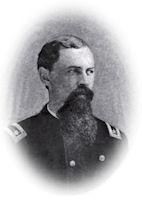
News seems to be quite scarce just now, nothing of importance having occured today that I am aware of. But we are in expectation of hearing of fights, or battles, in various directions. Doct King has been sick for the last three days and I have been nearly alone in the office. I am suffering from a severe cold with sore throat and some cough. Went down to the Parade of the 12th with Julia and Miss Hartley, then down to Willards and got the NY papers. Got some groceries at Whites, and came home early.

______

The three diary manuscript volumes, Washington during the Civil War: The Diary of Horatio Nelson Taft, 1861-1865, are available online at The Library of  Congress.

Post image for “Oh, that I had many things that are locked up at home! so many relics—hair of the dead, little golden memorials, etc.—all valueless to others, but very dear to our hearts.”—Diary of a Southern Refugee.

June 6.—Still at Chantilly. Every thing quiet, nothing particularly exciting; yet we are so restless. Mrs. C. and myself rode to the camp at Fairfax Court-House a day or two ago to see many friends; but my particular object was to see my nephew, W. B. N., first lieutenant in the Hanover troop. He looks well and cheerful, full of enthusiasm and zeal; but he feels that we have a great work before ns, and that we have entered upon a more important revolution than our ancestors did in 1775. How my heart yearned over him, when I thought of his dear wife and children, and his sweet home, and how cheerfully he had left all for the sake of his country. His bright political prospects, his successful career at the bar, which for one so young was so remarkable, his future in every respect so full of hope and promise—all, all laid aside. But it is all right, and when he returns to enjoy his unfettered country, his hardships will be all forgotten, in joy for his country’s triumphs. The number in camp there has greatly increased since we came away. We came home, and made havelocks and haversacks for the men. The camp at Harper’s Ferry is said to be strong and strengthening.

Mrs. General Lee has been with us for several days. She is on her way to the lower country, and feels that she has left Arlington for an indefinite period. They removed their valuables, silver, etc., but the furniture is left behind. I never saw her more cheerful, and she seems to have no doubt of our success. We are looking to her husband as our leader with implicit confidence; for besides his great military abilities, he is a God-fearing man, and looks for help where alone it is to be found. Letters from Richmond are very cheering. It is one great barracks. Troops are assembling there from every part of the Confederacy, all determined to do their duty. Ladies assemble daily, by hundreds, at the various churches, for the purpose of sewing for the soldiers. They are fitting out company after company. The large stuccoed house at the corner of Clay and Twelfth streets, so long occupied by Dr. John Brockenbrough, has been purchased as a residence for the President. I am glad that it has been thus appropriated. We expect to leave this place in a day or two for Clarke County for the summer, and we part with this dear family with a sad feeling that they may too soon have to leave it too. Mrs. S. has already sent off her plate and paintings to a place of safety. Mrs. C. is here with her mother. She left home when the army approached our neighborhood; she could not stay alone with her little son. Like ourselves, she brought off in her carriage what valuables she could, but necessarily has left much, which she fears may be ruined. Oh, that I had many things that are locked up at home! so many relics—hair of the dead, little golden memorials, etc.—all valueless to others, but very dear to our hearts. Alas, alas! I could not go back for them, and thieves may break through and steal. I trust that the officers will not allow it to be done, and try to rest contented.

Post image for Rebel War Clerk

JUNE 6TH.—We have hard work at the War Department, and some confusion owing to the loss of a box of papers in transitu from Montgomery. I am not a betting man, but I would wager a trifle that the contents of the box are in the hands of some correspondent of the New York Herald or Tribune. Our careless people think that valor alone will win the day. The Yankees desire, above all things, information of our condition and movements, of which they will take advantage. We must learn by dear-bought experience.

Post image for “I had never heard of Davin in my life until I heard he was to be hanged.”—Mary Chesnut’s Diary

June 6th.—Davin! Have had a talk concerning him to-day with two opposite extremes of people.

Mrs. Chesnut, my mother-in-law, praises everybody, good and bad. “Judge not,” she says. She is a philosopher; she would not give herself the pain to find fault. The Judge abuses everybody, and he does it so well— short, sharp, and incisive are his sentences, and he revels in condemning the world en bloc, as the French say. So nobody is the better for her good word, or the worse for his bad one.

In Camden I found myself in a flurry of women. “Traitors,” they cried. “Spies; they ought to be hanged; Davin is taken up, Dean and Davis are his accomplices.” “What has Davin done? ” “He’ll be hanged, never you mind.” “For what?” “They caught him walking on the trestle work in the swamp, after no good, you may be sure.” “They won’t hang him for that!” “Hanging is too good for him!” “You wait till Colonel Chesnut comes.” “He is a lawyer,” I said, gravely. “Ladies, he will disappoint you. There will be no lynching if he goes to that meeting to-day. He will not move a step except by habeas corpus and trial by jury, and a quantity of bench and bar to speak long speeches.”

Mr. Chesnut did come, and gave a more definite account of poor Davin’s precarious situation. They had intercepted treasonable letters of his at the Post Office. I believe it was not a very black treason after all. At any rate, Mr. Chesnut spoke for him with might and main at the meeting. It was composed (the meeting) of intelligent men with cool heads. And they banished Davin to Fort Sumter. The poor Music Master can’t do much harm in the casemates there. He may thank his stars that Mr. Chesnut gave him a helping hand. In the red hot state our public mind now is in there will be a short shrift for spies. Judge Withers said that Mr. Chesnut never made a more telling speech in his life than he did to save this poor Frenchman for whom Judge Lynch was ready. I had never heard of Davin in my life until I heard he was to be hanged.

Judge Stephen A. Douglas, the ” little giant,” is dead; one of those killed by the war, no doubt; trouble of mind.

Charleston people are thin-skinned. They shrink from Russell’s touches. I find his criticisms mild. He has a light touch. I expected so much worse. Those Englishmen come, somebody says, with three P’s—pen, paper, prejudices. I dread some of those after-dinner stories. As to that day in the harbor, he let us off easily. He says our men are so fine looking. Who denies it? Not one of us. Also that it is a silly impression which has gone abroad that men can not work in this climate. We live in the open air, and work like Trojans at all manly sports, riding hard, hunting, playing at being soldiers. These fine, manly specimens have been in the habit of leaving the coast when it became too hot there, and also of fighting a duel or two, if kept long sweltering under a Charleston sun. Handsome youths, whose size and muscle he admired so much as they prowled around the Mills House, would not relish hard work in the fields between May and December. Negroes stand a tropical or semitropical sun at noon-day better than white men. In fighting it is different. Men will not then mind sun, or rain, or wind.

Major Emory,¹ when he was ordered West, placed his resignation in the hands of his Maryland brothers. After the Baltimore row the brothers sent it in, but Maryland declined to secede. Mrs. Emory, who at least is two-thirds of that copartnership, being old Franklin’s granddaughter, and true to her blood, tried to get it back. The President refused point blank, though she went on her knees. That I do not believe. The Franklin race are stiff-necked and stiff-kneed; not much given to kneeling to God or man from all accounts.

If Major Emory comes to us won’t he have a good time? Mrs. Davis adores Mrs. Emory. No wonder I fell in love with her myself. I heard of her before I saw her in this wise. Little Banks told me the story. She was dancing at a ball when some bad accident maker for the Evening News rushed up and informed her that Major Emory had been massacred by ten Indians somewhere out West. She coolly answered him that she had later intelligence; it was not so. Turning a deaf ear then, she went on dancing. Next night the same officious fool met her with this congratulation: “Oh, Mrs. Emory, it was all a hoax! The Major is alive.” She cried: “You are always running about with your bad news,” and turned her back on him; or, I think it was, ”You delight in spiteful stories,” or, “You are a harbinger of evil.” Banks is a newspaper man and knows how to arrange an anecdote for effect.

______

¹William H. Emory had served in Charleston harbor during the Nullification troubles of 1831-1836. In 1846 he went to California, afterward served in the Mexican War, and later assisted in running the boundary line between Mexico and the United States under the Gadsden Treaty of 1853. In 1854 he was in Kansas and in 1858 in Utah. After resigning his commission, as related by the author, he was reappointed a Lieutenant-Colonel in the United States Army and took an active part in the war on the side of the North.

Post image for August Belmont (DNC Chairman) letter to William Seward

To The Hon. W. H. Seward,

Washington, D. C.

New York, June 6, 1861

My Dear Sir,—In your last kind letter, you requested me to inform you, from time to time, of the phases of public opinion in Europe, as they may come to my knowledge. I shall do so with pleasure, but hope that you will excuse my request if I beg you to consider my communications as strictly confidential.

The letters received by last steamer from England are any thing but satisfactory. The cotton interest seems to have gained so complete an ascendency over every other consideration, that the anti-slavery feeling is entirely pushed into the background.

I fear that the British cabinet is seriously contemplating the recognition of the Southern Confederacy, and what is worse is the almost certainty that France will act in concert with England.

If you will not take it amiss, I will make bold enough to give you, as my candid opinion, that the Morrill tariff has had as much to do with the unfortunate state of feeling in Europe as any other circumstance.

England and France are compelled to keep their army and navy on the most extensive war footing, both mistrusting each other. In order to obtain the enormous sums required for such a state of things, both governments must bring every sacrifice of principle rather than see their commercial and manufacturing interests endangered. Our tariff and our blockade strike a mortal blow to both, and as we cannot, of course, give up the latter, it is certainly worthy the serious consideration of our government and people to see whether sound policy does not dictate the modification of tlje first. Apart from the change of public feeling which a return to free-trade principles would produce in England and France, I think that we absolutely require it in order to increase our revenue, which, under the present system, must continue to be very low. The only interest, in my opinion, for which the plea of protection can be advanced with any degree of justice, is our iron interest, and that can be sufficiently done by a specific duty.

For the rest there ought, in my opinion, to be an average duty of fifteen per cent., and coffee and tea might be taken from the free list.

The government will very soon require a new loan, probably not less than thirty or forty millions, and I confess, candidly, that I do not see any chance for the negotiation of it in Europe, unless the chances of an increased revenue are secured by such a measure.

Before the war can be brought to a satisfactory termination we shall require from fifty to one hundred millions of dollars at least, and I think it will be absolutely necessary to look to the European money market for at least a portion of that amount.

By a reduction of our tariff to fifteen per cent., we take away a very great inducement for France and England to force our blockade and to recognize the South. They evidently expect now, not only to get their supply of cotton, but also to export their produce and manufactures into the Southern ports, to be from there smuggled into the West and North.

With a duty of fifteen per cent., the South cannot defray her expenses of a war, even if the blockade should not exist, and will be obliged to have recourse to an export duty on cotton and tobacco, and nothing will bring out a Union feeling so soon as that, among the influential planting interest.

Excuse the freedom of the expression of my views—they are based upon the best information I can command, abroad and at home, and they are dictated by a sincere devotion to my government.

Post image for A Diary of American Events – June 6, 1861

—Gov. Pickens of South Carolina issued a proclamation saying:—“I have understood that many good people have been remitting funds to creditors in Northern States. In the existing relations of the country such conduct is in conflict with public law, and all citizens—are hereby warned against the consequences.”—N. Y. Tribune, June 14.

—This evening the Town Guard of Harrodsburg, Ky., were attracted to the Spring Grounds by a noise in that direction. When they came near the old shooting gallery they heard voices responding to one who seemed to be officiating as an officer. Surrounding the building, they pushed open the door, and lo! an assembly of Knights of the Golden Circle in masks! One of the Guard, on entering, knocked off the mask of one of the Knights; and a lawyer and secessionist stood forth. No examination of the arcana was made, a majority of the Guards being secessionists. Several Virginia gentlemen were in Harrodsburg that night.—Louisville Journal, June 14.

—The Nineteenth N. Y. Regiment, Colonel Clark commander, left Elmira for Washington, via Harrisburg. An immense concourse of people witnessed the departure. Great enthusiasm prevailed—N. Y: Herald, June 7.

—A meeting was held at the Cooper Institute, in New York, for the purpose of securing the cooperation of citizens in the endeavor to provide for the religious wants of volunteers. Wm. E. Dodge, Esq., presided, and addresses were made by Rev. Drs. Tyng and Hitchcock, after which the following resolutions were adopted:

Resolved, That in the opinion of this meeting the project of the Young Men’s Christian Association, to provide for the religious wants of the Volunteers, is worthy of public confidence and cooperation, and that we commend the same to the support of the churches and the community.

Resolved, That Messrs. William E. Dodge, Wilson G. Hunt, Benj. F. Maniere, Benj. W. Bonney, and Alexander W. Bradford, be appointed a committee to receive donations in furtherance of the proposed object, to be expended under the supervision of the army committee of the Young Men’s Christian Association.—N. Y: Commercial, June 7.

—A secession camp at Ellicott’s Mills, in Kentucky, ten miles distant from Cairo, Ill., was dispersed by two companies sent thither by General Prentiss. Colonel Wickliffe protested against the act as an invasion of the soil of Kentucky, to which Gen. Prentiss said, in reply, that the act had been prompted by a letter claiming protection for the Union men there. He declared his intention also to send troops any place needed for the protection of loyal citizens.—National Intelligencer, June 8.

—In the New York Chamber of Commerce it was Resolved, That the Executive Committee of this Chamber, after consultation with and subject to the approval of Col. Anderson, or his second is command, cause to be prepared a suitable medal for each of the soldiers and non-commissioned officers of the late garrison of Fort Sumter, and to have them presented at as early a day as possible, at the expense of this Chamber.

By amendment the resolution was made to include the garrison of Fort Pickens under Lieutenant Slemmer, and the officers of both garrisons.—N. Y. Tribune, June 7.

—Thirty-five of the prisoners captured at Alexandria, took the oath of allegiance with cheerful alacrity, and were discharged.— Washington Star, June 7.