Following the American Civil War Sesquicentennial with day by day writings of the time, currently 1863.

Wednesday, June 15, 2011

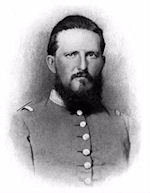
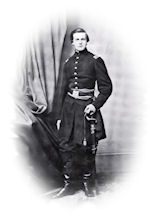
Post image for “He did not move and I ran my bayonet into his side an inch or so.”–Army letters of Oliver Willcox Norton.

Camp Wright, Hulton, Penm.,
Saturday, June 15, 1861.

Dear Father:—

Our camp this week has been the scene of a good deal of confusion and uneasiness. I clip an extract from this morning’s Dispatch that explains the cause.

We have been told by some officers that “We were accepted; we were going to Chambersburg; we were not accepted; we were accepted for three years; those who would not enlist for the war would be sent home; they would be kept here till their three months expires; that Companies A, B, C, F and I only, would go for the war, and the rest would be disbanded,” and within ten minutes Major Schlaudecker has told me “that none of the companies would go; that we would all go together, one way or the other.”

Acting on the statement that our company would not go, I went this morning and put my name on Company B’s roll for the war. Our Captain said “No man should leave his company till it was disbanded.” The Colonel said “Any man who chose could enlist in any company in the regiment to go for the war. Captains notwithstanding.” “Father said I might and mother said I shouldn’t,” and I concluded I would do as I was a mind to.

The statement that the companies could not be filled in time to report according to orders, is probably the true one, and so that performance will not amount to much.

Such a feeling pervades the minds of the soldiers that discipline is played out. Company K refused to turn out to roll call the other morning, and day before yesterday, not a man of them appeared on dress parade. Company F would not come out on parade yesterday.

Night before last a row broke out in a beer saloon near the depot and some of the Pittsburgh boys cleaned out the whole thing, broke in the doors and windows, smashed up the glass and furniture. A crowd collected and Colonel Grant was obliged to call out Companies B, G and I with their guns to disperse them. Company G charged down the road and across the railroad track through the thickest of them. They made quite a determined stand on the track, and some six or eight were wounded before they would leave. A man stood before me and I called to him twice to stand back. He did not move and I ran my bayonet into his side an inch or so. He started then. He was awful mad. The wound was not a serious one, only a flesh wound, but he swears he will shoot the man who stabbed him. He has been hanging round our quarters with a revolver several times lately, and pointed out a man who, he says, stabbed him, but he has got the wrong man. I think I am safe enough unless some one peaches. Only three or four in our company know who it was. M. W. Goold pricked one man, Godfrey. Wheeler and others pricked some, but none were seriously hurt. I have carried a revolver for a day or so, and I think I am all right.

The way we have been treated is enough to make a preacher swear, almost. We are cheated in our rations about half the time. Our clothes are all dropping off from us. We don’t know whether we are accepted or not, or that we will ever get any pay.

We have been practicing at target shooting lately. Our guns beat everything I ever saw to shoot. The balls are very heavy, eleven to the pound. We were shooting at “Old Jeff” yesterday, at forty rods, and over half the boys hit him. We broke his back, legs, arms, and knocked his teeth out. This morning, since I commenced writing, nineteen of us have been shooting at a target at twelve rods. Thirteen balls struck the board, nine inside the ring and four hit the center. I call that good shooting. I, of course, am not among the best, though I hit inside the ring. One ball went plumb through an oak tree, nine inches in diameter.

The orders this morning are that we must commence drilling again, and have every man attending to his duties or lying in the guard house.

I hope you will write as often as you can. It seems to me my letters are like “angels’ visits.” My health is excellent. It never was better. I am in the river every day. The river is about one hundred rods wide here, with a swift current. I rolled up in my blanket the other night and slept under an apple tree. I slept first-rate, did not wake till reveille, nor take the least cold. The boys are all getting considerably copper-colored in the hot sun. The weather is warm and dry. The Dispatch says the thermometer stood at 102 yesterday at noon.

P. S.—At 12 m. It is definitely settled now that we are to stay in the State service the remainder of the three months. No companies will leave the regiment. According to past experience, we expect this changed in a couple of hours.
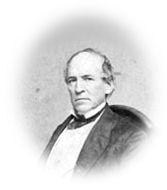
SATURDAY, JUNE 15, 1861.

This has been the hotest day yet. M. 92 with a pretty good breeze all day. More troops have crossed the River, and many are looking for an assault upon the City. I do not. The Flying Artillery at Arlington House were practicing this evening, we could see the smoke and hear the guns very plain. Went down to market for strawberries, [cost] more than meat. Sergeant Mandeville was at the house this eve’g. Went down to Willards and on the Ave, bot the NY papers, home at 10 o’clock.

______

The three diary manuscript volumes, Washington during the Civil War: The Diary of Horatio Nelson Taft, 1861-1865, are available online at The Library of  Congress.

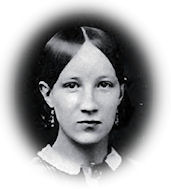
Post image for “Men are constantly enlisting.”—Caroline Cowles Richards.

June, 1861.—There was a patriotic rally this afternoon on the campus of Canandaigua Academy and we Seminary girls went. They raised a flag on the Academy building. General Granger presided, Dr Coleman led the choir and they sang “The Star Spangled Banner.” Mr Noah T. Clarke made a stirring speech and Mr Gideon Granger, James C. Smith and E. M. Morse followed. Canandaigua has already raised over $7,000 for the war. Capt. Barry drills the Academy boys in military tactics on the campus every day. Men are constantly enlisting. Lester P. Thompson, son of “Father Thompson,” among the others.

A young man asked Anna to take a drive to-day, but Grandmother was not willing at first to let her go. She finally gave her consent, after Anna’s plea that he was so young and his horse was so gentle. Just as they were ready to start, I heard Anna run upstairs and I heard him say, “What an Anna!” I asked her afterwards what she went for and she said she remembered that she had left the soap in the water.

June.—Dr Dagget’s war sermon from the 146th Psalm was wonderful.

June 15.—Yesterday was set apart by the President as a day of prayer and fasting, and I trust that throughout the Confederacy the blessing of God was invoked upon the army and country. We went to church at Millwood, and heard Bishop Meade. His sermon was full of wisdom and love; he urged us to individual piety in all things, particularly to love and charity to our enemies. He is full of enthusiasm and zeal for our cause. His whole heart is in it, and from the abundance of the heart the mouth speaketh, for he talks most delightfully and encouragingly on the subject. He says that if our ancestors had good reason for taking up arms in 1775, surely we had much better, for the oppression they suffered from the mother-country was not a tithe of the provocation we have received from the Government at Washington.

Post image for “I hardly thought I would have been able to stand forty miles’ walk so well. Last night I felt very tired, but this evening entirely recovered.”–Letters from Elisha Franklin Paxton.

Winchester, June 15, 1861.

On Tuesday last we marched on foot from Harper’s Ferry to Shepherdstown, thence seven miles farther up the Potomac. There we remained a day and a half, when we were ordered to this place, on foot again, and reached here, forty miles, in a day and a half. How long we remain here, or when we move again, I have not an idea. I hardly thought I would have been able to stand forty miles’ walk so well. Last night I felt very tired, but this evening entirely recovered. The last three nights I have slept in the open air on the ground, and never enjoyed sleep more. I saw Capt. Jim White to-day, and his college boys. Lexington has been well drained of its youth and manhood. I heartily wish, Love, that I was with you again, I hardly know what I would not give for one day with wife and little ones. But I must not think of it. I would soon make myself very unhappy if I suffered my mind to wander in that direction. I ought to be grateful to Omnipotence for such a love as that which you give me. Blood and kindred never made a stronger tie. We have just received orders to hitch up again—for what destination I do not know. Harper’s Ferry has been abandoned by our forces, and hereafter direct your letters to the address below. Kiss the dear little baby boys for their absent papa, and for yourself accept the best love of a fond husband.

Post image for Petty office politics in the war office.

JUNE 15 TH—Another clerk has been appointed; a sedate one, by the name of Shepherd, and a former pupil of the colonel’s.

I received several hints that the Chief of the Bureau was not at all a favorite with the Secretary, who considered him utterly unfit for the position; and that it could hardly be good policy for me to be on terms of such intimacy with him. Policy! A word I never appreciated, a thing I never knew. All I know is that Col. Bledsoe has been appointed by the President to fill an important position; and the same power appoints the secretaries, and can unmake them. Under these circumstances I find him permitted to sit for hours and days in the department with no one to inform him of the condition of the business or to facilitate him in the performance of his official duties. Not for any partiality in his be-half, or prejudice against the Secretary, I step forward and endeavor to discharge my own duty. I strive to serve the cause, whatsoever may be the consequences to my personal interests.

Post image for A Diary of American Events – June 15, 1861

—Privateer No. 1—of the Confederate States—(the Savannah) captured May 3d, by U. S. brig Perry, arrived in the port of New York.—(Doc. 251.)

—The obstructions of the Baltimore and Ohio Railroad at Point of Rocks, Md., were removed, and the road was re-opened to Harper’s Ferry for the first time this morning since the occupation and obstruction of the road by the secessionists. The immense boulder, weighing about one hundred tons, thrown from the Point of Rocks upon the road by the Confederate troops, was removed last night by blasting, and the track now passes over its crushed fragments, which served to fill up the depression in the bed of the road, caused by its fall. An immense mass of the rock projects into the canal, leaving sufficient space, however, for the passage of the canal boats. The culverts which were attempted to have been blown up are now fully repaired, the solid character of the work rendering the attempted destruction but partial in extent.—Baltimore American, June 15.

—The First Massachusetts Regiment, under the command of Colonel Cowdin, left Boston for the seat of war.—(Doc. 252.)

—Jefferson City, Mo., was occupied by Gen. Lyon, in command of the Union force, who was warmly welcomed by the mass of the citizens. Gen. Lyon there learned that Gov. Jackson and the whole military and civil government of the State had fled to Booneville, forty miles above, and that they have not far from fifteen hundred men there, the most of them armed with their own rifles and shot-guns, six or eight iron cannon, and are throwing up earthworks to protect the town from attack, both by river and by land.—N. Y. Herald, June 20.

—An experiment with Sawyer’s American rifled cannon was made at the Rip Raps, in Hampton Roads. Seven of eleven 48-pound shells exploded a short distance from the rebel camp, on Sewall’s Point, and one of them over their intrenchments. It created a sensation among the secessionists. A house near the secession banner displayed a white flag.—N. Y. Times, June 18.